
Hukaung Valley Wildlife Sanctuary: Difference between revisions
No edit summary |
No edit summary |
||
| (One intermediate revision by the same user not shown) | |||
| Line 17: | Line 17: | ||
= Site characteristics = | = Site characteristics = | ||
Hukaung Valley Wildlife Sanctuary (HVWS), also known as Hukaung Tiger Reserve, is located in northwestern Myanmar. The site was established in 2001 and is currently in the tentative list for becoming a UNESCO World Heritage site. Due to its large size, connection to other protected areas, and diversity of forest types and elevations, HVWS contains a diverse assemblage of wildlife. HVWS includes many threatened and wide-ranging species such as the Asian Elephant, Tiger, and Rufous-necked Hornbill. The Hoolock Gibbon and Shortridge’s Langur are also present (UNESCO 2014). | Hukaung Valley Wildlife Sanctuary (HVWS), also known as Hukaung Tiger Reserve, is located in northwestern Myanmar. The site was established in 2001 and is currently in the tentative list for becoming a UNESCO World Heritage site. Due to its large size, connection to other protected areas, and diversity of forest types and elevations, HVWS contains a diverse assemblage of wildlife. HVWS includes many threatened and wide-ranging species such as the Asian Elephant, Tiger, and Rufous-necked Hornbill. The Hoolock Gibbon and Shortridge’s Langur are also present ([[#R00751|UNESCO 2014]]). | ||
'''Table 1. Basic site information for Hukaung Valley Wildlife Sanctuary''' | '''Table 1. Basic site information for Hukaung Valley Wildlife Sanctuary''' | ||
| Line 58: | Line 58: | ||
!Comments | !Comments | ||
!A.P.E.S. database ID | !A.P.E.S. database ID | ||
|- | |- | ||
|''Hoolock leuconedys'' & ''Hoolock hoolock'' | |''Hoolock leuconedys'' & ''Hoolock hoolock'' | ||
| Line 79: | Line 68: | ||
|NWCD/WCS 2016 | |NWCD/WCS 2016 | ||
|Gibbon Face photo taking and collect faecal for DNA Analysis | |Gibbon Face photo taking and collect faecal for DNA Analysis | ||
| | |||
|- | |||
|''Hoolock leuconedys'' | |||
|2005-2006 | |||
|2.81 | |||
| | |||
| | |||
|Hukaung Valley Wildlife Sanctuary | |||
|Auditory survey method | |||
|[[#R00749|Htun et al. 2006]] | |||
| | |||
| | | | ||
|} | |} | ||
| Line 131: | Line 131: | ||
= Conservation activities = | = Conservation activities = | ||
WCS established an Eastern Hoolock gibbon conservation project for population monitoring and community outreach at a number of protected areas, including Hukaung Valley Wildlife Sanctuary (Thompson et al. 2023). | WCS established an Eastern Hoolock gibbon conservation project for population monitoring and community outreach at a number of protected areas, including Hukaung Valley Wildlife Sanctuary ([[#R00750|Thompson et al. 2023]]). | ||
'''Table 4. Conservation activities reported for Hukaung Valley Wildlife Sanctuary''' | '''Table 4. Conservation activities reported for Hukaung Valley Wildlife Sanctuary''' | ||
| Line 143: | Line 143: | ||
|2 Counter-wildlife crime | |2 Counter-wildlife crime | ||
|2.11 Implement monitoring surveillance strategies (e.g., SMART) or use monitoring data to improve effectiveness of patrols | |2.11 Implement monitoring surveillance strategies (e.g., SMART) or use monitoring data to improve effectiveness of patrols | ||
|(Ko Aung Ye Tun pers. comm. 2023, Thompson et al. 2023) | |(Ko Aung Ye Tun pers. comm. 2023, [[#R00750|Thompson et al. 2023]]) | ||
| | | | ||
|2019-Ongoing (2023) | |2019-Ongoing (2023) | ||
| Line 288: | Line 288: | ||
= References = | = References = | ||
Htun, S., Aung, Z. H., Naing, W., Khaing, Z. W., Htay, T., Tun, N. L., ... & Moe, T. K. (2006). Final Report on conservation of the hoolock gibbon (Hylobates hoolock) in the Hukaung Tiger Reserve, north Myanmar: Population surveys, threat assessment and conservation outreach, September 2006. Forest Department, Nature and Wildlife Conservation Division, and Wildlife Conservation Society–Myanmar Program, Yangon. | <span id="R00749"></span>Htun, S., Aung, Z. H., Naing, W., Khaing, Z. W., Htay, T., Tun, N. L., ... & Moe, T. K. (2006). Final Report on conservation of the hoolock gibbon (Hylobates hoolock) in the Hukaung Tiger Reserve, north Myanmar: Population surveys, threat assessment and conservation outreach, September 2006. Forest Department, Nature and Wildlife Conservation Division, and Wildlife Conservation Society–Myanmar Program, Yangon. | ||
Thompson, C., Lwin, N., Aung, P. P., Aung, T. H., Htike, T. S. M., San, A. M., | <span id="R00750"></span>Thompson, C., Lwin, N., Aung, P. P., Aung, T. H., Htike, T. S. M., San, A. M., …, & Evans, T. S. (2023). The status of primates and primatology in Myanmar. ''Global Ecology and Conservation'', 47, e02662. [https://doi.org/10.1016/j.gecco.2023.e02662 doi:10.1016/j.gecco.2023.e02662] | ||
UNESCO (2014). Hukaung Valley Wildlife Sanctuary. Online: https://whc.unesco.org/en/tentativelists/5875/ | <span id="R00751"></span>UNESCO (2014). Hukaung Valley Wildlife Sanctuary. Online: https://whc.unesco.org/en/tentativelists/5875/ | ||
'''Page created by: '''Ko Aung Ye Tun''' Date:''' 2023-11-15 | '''Page created by: '''Ko Aung Ye Tun''' Date:''' 2023-11-15 | ||
Latest revision as of 16:28, 12 October 2026
Asia > Myanmar > Hukaung Valley Wildlife Sanctuary
Français | Português | Español | Bahasa Indonesia | Melayu
Summary
- Eastern Hoolock Gibbons (Hoolock leuconedys) and Western Hoolock Gibbons (Hoolock hoolock) are present in Hukaung Valley Wildlife Sanctuary .
- The population size is unknown.
- The gibbon population trend is stable.
- The site has a total size of 21,802 km².
- Gibbons are mainly threatened by commercial hunting.
- Conservation activities include biomonitoring, patrolling, and environmental education.
-
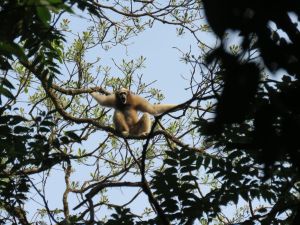
© WCS MP_AYTun -
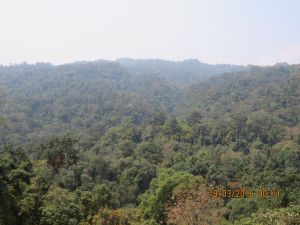
Hukaung Valley Wildlife Sanctuary © WCS MP_AYTun -
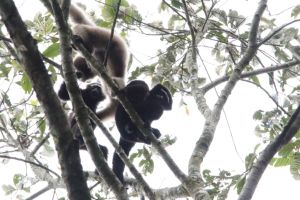
© WCS MP_AYTun


Site characteristics
Hukaung Valley Wildlife Sanctuary (HVWS), also known as Hukaung Tiger Reserve, is located in northwestern Myanmar. The site was established in 2001 and is currently in the tentative list for becoming a UNESCO World Heritage site. Due to its large size, connection to other protected areas, and diversity of forest types and elevations, HVWS contains a diverse assemblage of wildlife. HVWS includes many threatened and wide-ranging species such as the Asian Elephant, Tiger, and Rufous-necked Hornbill. The Hoolock Gibbon and Shortridge’s Langur are also present (UNESCO 2014).
Table 1. Basic site information for Hukaung Valley Wildlife Sanctuary
| Species | Hoolock leuconedys, Hoolock hoolock |
| Area | 21,802.53 km² |
| Coordinates | Lat: 26.168635 , Lon: 95.986726 |
| Type of site | Protected area (Wildlife Sanctuary) |
| Habitat types | Subtropical/tropical moist lowland forest, Grassland |
| Type of governance |
Types of sites Governance types Habitat types

Ape status
Table 2. Ape population estimates reported for Hukaung Valley Wildlife Sanctuary
| Species | Year | Total number groups (95% CI) | Density [groups/km²] (95% CI) | Total number indiv. (95% CI) | Area | Method | Source | Comments | A.P.E.S. database ID |
|---|---|---|---|---|---|---|---|---|---|
| Hoolock leuconedys & Hoolock hoolock | 2016 | Hukaung Valley Wildlife Sanctuary | Camera trap, Full count | NWCD/WCS 2016 | Gibbon Face photo taking and collect faecal for DNA Analysis | ||||
| Hoolock leuconedys | 2005-2006 | 2.81 | Hukaung Valley Wildlife Sanctuary | Auditory survey method | Htun et al. 2006 |
Sampling methods Analytical frameworks
Threats
Table 3. Threats to apes reported for Hukaung Valley Wildlife Sanctuary
| Category | Specific threats | Threat level | Description | Year of threat |
|---|---|---|---|---|
| 11 Climate change & severe weather | 11.1 Habitat shifting & alteration | Present (unknown severity) | (Ko Aung Ye Tun pers. obs. 2023) | Ongoing (2023) |
| 3 Energy production & mining | 3.2 Mining & quarrying | Present (unknown severity) | (Ko Aung Ye Tun pers. obs. 2023) | Ongoing (2023) |
| 5 Biological resource use | 5.1 Hunting & collecting terrestrial animals | Present (unknown severity) | (Ko Aung Ye Tun pers. obs. 2023) | Ongoing (2023) |
| 5 Biological resource use | 5.2 Gathering terrestrial plants | Present (unknown severity) | (Ko Aung Ye Tun pers. obs. 2023) | Ongoing (2023) |
| 5 Biological resource use | 5.3 Logging & wood harvesting | Present (unknown severity) | (Ko Aung Ye Tun pers. obs. 2023) | Ongoing (2023) |
Conservation activities
WCS established an Eastern Hoolock gibbon conservation project for population monitoring and community outreach at a number of protected areas, including Hukaung Valley Wildlife Sanctuary (Thompson et al. 2023).
Table 4. Conservation activities reported for Hukaung Valley Wildlife Sanctuary
| Category | Specific activity | Description | Implementing organization(s) | Year of activity |
|---|---|---|---|---|
| 2 Counter-wildlife crime | 2.11 Implement monitoring surveillance strategies (e.g., SMART) or use monitoring data to improve effectiveness of patrols | (Ko Aung Ye Tun pers. comm. 2023, Thompson et al. 2023) | 2019-Ongoing (2023) | |
| 2 Counter-wildlife crime | 2.12 Implement community control of patrolling, banning hunting and removing snares | (Ko Aung Ye Tun pers. comm. 2023) | Ongoing (2023) | |
| 4 Education & awareness | 4.1 Educate local communities about apes and sustainable use | (Ko Aung Ye Tun pers. comm. 2023) | Ongoing (2023) | |
| 5 Protection & restoration | 5.2 Legally protect ape habitat | The site is a protected area. | 2001-Ongoing (2026) | |
| 8 Permanent presence | 8.3 Permanent presence of staff/manager | (Ko Aung Ye Tun pers. obs. 2023) | Ongoing (2023) |
Challenges
Challenge to the implementation of conservation activities include armed conflict and limited financial resources, as well as the challenge of protecting such a huge area (Ko Aung Ye Tun pers. obs. 2023).
Table 5. Challenges reported for Hukaung Valley Wildlife Sanctuary
| Challenges | Specific challenges | Source | Year(s) |
|---|---|---|---|
| 2 Resources and capacity | 2.3 General lack of funding | Ko Aung Ye Tun pers. obs. 2023 | |
| 6 Safety and stability | 6.3 Civil unrest/war | Ko Aung Ye Tun pers. obs. 2023 |
Enablers
Table 6. Enablers reported for Hukaung Valley Wildlife Sanctuary
| Enablers | Specific enablers | Source | Year(s) |
|---|---|---|---|
| 1 Site management | |||
| 2 Resources and capacity | |||
| 3 Engaged community | |||
| 4 Institutional support | |||
| 5 Ecological context | |||
| 6 Safety and stability |
Research activities
Documented behaviours
Table 7. Behaviours documented for Hukaung Valley Wildlife Sanctuary
| Category | Behavior | Observation type | Prevalence | Observation dates | Source | Habituation | Species | Comment |
|---|---|---|---|---|---|---|---|---|
| Not reported |
Exposure to climate change impacts
External links
References
Htun, S., Aung, Z. H., Naing, W., Khaing, Z. W., Htay, T., Tun, N. L., ... & Moe, T. K. (2006). Final Report on conservation of the hoolock gibbon (Hylobates hoolock) in the Hukaung Tiger Reserve, north Myanmar: Population surveys, threat assessment and conservation outreach, September 2006. Forest Department, Nature and Wildlife Conservation Division, and Wildlife Conservation Society–Myanmar Program, Yangon.
Thompson, C., Lwin, N., Aung, P. P., Aung, T. H., Htike, T. S. M., San, A. M., …, & Evans, T. S. (2023). The status of primates and primatology in Myanmar. Global Ecology and Conservation, 47, e02662. doi:10.1016/j.gecco.2023.e02662
UNESCO (2014). Hukaung Valley Wildlife Sanctuary. Online: https://whc.unesco.org/en/tentativelists/5875/
Page created by: Ko Aung Ye Tun Date: 2023-11-15