
Northern block (Maringa-Lopori-Wamba): Difference between revisions
No edit summary |
No edit summary |
||
| (3 intermediate revisions by the same user not shown) | |||
| Line 13: | Line 13: | ||
* Key threats to bonobos are poaching, habitat destruction and degradation, risk of disease transmission. | * Key threats to bonobos are poaching, habitat destruction and degradation, risk of disease transmission. | ||
* Conservation activities have focused on land-use planning. | * Conservation activities have focused on land-use planning. | ||
= Site characteristics = | = Site characteristics = | ||
The site consists of a block of forest corresponding approximately to the Maringa-Lopori-Wamba landscape delineated by the Congo Basin Forest Partnership and the Commission des Forêts d’Afrique Centrale (IUCN & ICCN 2012). The landscape is situated in the Maringa and Lopori river basins in the Equateur Province, Democratic Republic of the Congo. Approximately 67% of the site is covered by forest, with swamps covering an additional 26%. The remaining area is a young secondary forest and rural complex (IUCN & ICCN 2012). The block contains four areas offering various levels of protection: [[Lomako-Yokokala Faunal Reserve]], [[Luo Scientific Reserve]], [[Kokolopori Bonobo Reserve]], and [[Iyondji Community Bonobo Reserve]] (IUCN & ICCN 2012). | The site consists of a block of forest corresponding approximately to the Maringa-Lopori-Wamba landscape delineated by the Congo Basin Forest Partnership and the Commission des Forêts d’Afrique Centrale ([[#R01427|IUCN & ICCN 2012]]). The landscape is situated in the Maringa and Lopori river basins in the Equateur Province, Democratic Republic of the Congo. Approximately 67% of the site is covered by forest, with swamps covering an additional 26%. The remaining area is a young secondary forest and rural complex ([[#R01427|IUCN & ICCN 2012]]). The block contains four areas offering various levels of protection: [[Lomako-Yokokala Faunal Reserve]], [[Luo Scientific Reserve]], [[Kokolopori Bonobo Reserve]], and [[Iyondji Community Bonobo Reserve]] ([[#R01427|IUCN & ICCN 2012]]). | ||
'''Table 1. Basic site information for Northern block (Maringa-Lopori-Wamba)''' | '''Table 1. Basic site information for Northern block (Maringa-Lopori-Wamba)''' | ||
| Line 48: | Line 44: | ||
= Ape status = | = Ape status = | ||
Through analysis of all available data from surveys conducted between 2003–2010, it has been estimated that there is a minimum population of 5,000 individuals in the Maringa-Lopori-Wamba block, making it an important stronghold for bonobos (IUCN & ICCN 2012). | Through analysis of all available data from surveys conducted between 2003–2010, it has been estimated that there is a minimum population of 5,000 individuals in the Maringa-Lopori-Wamba block, making it an important stronghold for bonobos ([[#R01427|IUCN & ICCN 2012]]). | ||
'''Table 2. Ape population estimates reported for Northern block (Maringa-Lopori-Wamba)''' | '''Table 2. Ape population estimates reported for Northern block (Maringa-Lopori-Wamba)''' | ||
| Line 74: | Line 70: | ||
|Other | |Other | ||
| | | | ||
|[ | |[[#R01427|IUCN & ICCN 2012]] | ||
|minimum estimate | |minimum estimate | ||
| | | | ||
| Line 83: | Line 79: | ||
= Threats = | = Threats = | ||
The main threats to bonobos in the forest block are poaching, habitat loss, and the risk of disease transmission. The area is far from urban centres and experiences high levels of poverty and reliance on natural resources obtained through slash-and-burn agriculture, fishing, and hunting (IUCN & ICCN 2012). | The main threats to bonobos in the forest block are poaching, habitat loss, and the risk of disease transmission. The area is far from urban centres and experiences high levels of poverty and reliance on natural resources obtained through slash-and-burn agriculture, fishing, and hunting ([[#R01427|IUCN & ICCN 2012]]). | ||
'''Table 3. Threats to apes reported for Northern block (Maringa-Lopori-Wamba)''' | '''Table 3. Threats to apes reported for Northern block (Maringa-Lopori-Wamba)''' | ||
| Line 96: | Line 92: | ||
|2.1 Annual & perennial non-timber crops | |2.1 Annual & perennial non-timber crops | ||
|High (more than 70% of population affected) | |High (more than 70% of population affected) | ||
|Slash-and-burn agriculture, leading to habitat destruction and fragmentation (IUCN & ICCN 2012). | |Slash-and-burn agriculture, leading to habitat destruction and fragmentation ([[#R01427|IUCN & ICCN 2012]]). | ||
|Ongoing (2012) | |Ongoing (2012) | ||
|- | |- | ||
| Line 102: | Line 98: | ||
|5.1 Hunting & collecting terrestrial animals | |5.1 Hunting & collecting terrestrial animals | ||
|High (more than 70% of population affected) | |High (more than 70% of population affected) | ||
|Poaching is the most serious threat to bonobos across their range (IUCN & ICCN 2012). | |Poaching is the most serious threat to bonobos across their range ([[#R01427|IUCN & ICCN 2012]]). | ||
|Ongoing (2012) | |Ongoing (2012) | ||
|} | |} | ||
| Line 110: | Line 106: | ||
= Conservation activities = | = Conservation activities = | ||
Since 2006, a major participative land-use planning exercise has been conducted, covering about 70% of the landscape (IUCN & ICCN 2012). This work has designated a mosaic of protected areas, community-based natural resource management areas, sylvo-agro-pastoral zones and logging concessions, with the objective of maintaining forest cover and forest connectivity (IUCN & ICCN 2012). | Since 2006, a major participative land-use planning exercise has been conducted, covering about 70% of the landscape ([[#R01427|IUCN & ICCN 2012]]). This work has designated a mosaic of protected areas, community-based natural resource management areas, sylvo-agro-pastoral zones and logging concessions, with the objective of maintaining forest cover and forest connectivity ([[#R01427|IUCN & ICCN 2012]]). | ||
| Line 126: | Line 122: | ||
|4 Institutional support | |4 Institutional support | ||
|4.1 Lack of law enforcement | |4.1 Lack of law enforcement | ||
|IUCN & ICCN 2012 | |[[#R01427|IUCN & ICCN 2012]] | ||
| | | | ||
|} | |} | ||
| Line 214: | Line 210: | ||
<div><ul><li style="display: inline-block; vertical-align: top;"> [[File:PrecipAnomaly_Maringa-Lopori-Wamba_1_K7.png| 450px | thumb| none | Precipitation anomaly | <div><ul><li style="display: inline-block; vertical-align: top;"> [[File:PrecipAnomaly_Maringa-Lopori-Wamba_1_K7.png| 450px | thumb| none | Precipitation anomaly in Northern block (Maringa-Lopori-Wamba)]] </li><li style="display: inline-block; vertical-align: top;"> [[File:TempAnomaly_Maringa-Lopori-Wamba_1_K7.png | 450px | thumb| none | Temperature anomaly in Northern block (Maringa-Lopori-Wamba)]] </li></ul></div> | ||
= External links = | = External links = | ||
| Line 222: | Line 218: | ||
= References = | = References = | ||
IUCN & ICCN (2012). Bonobo (Pan paniscus): Conservation Strategy 2012–2022. Gland, Switzerland: IUCN/SSC Primate Specialist Group & Institut Congolais pour la Conservation de la Nature. | <span id="R01427"></span>IUCN, & ICCN (2012). Bonobo (Pan paniscus): Conservation Strategy 2012–2022. Gland, Switzerland: IUCN/SSC Primate Specialist Group & Institut Congolais pour la Conservation de la Nature. [http://www.primate-sg.org/storage/pdf/Bonobo_Conservation_Strategy.pdf link] | ||
'''Page created by: '''APES Atlas Team''' Date:''' 2022-05-30 | '''Page created by: '''APES Atlas Team''' Date:''' 2022-05-30 | ||
Latest revision as of 20:10, 14 October 2026
Central Africa > Democratic Republic of the Congo > Northern block (Maringa-Lopori-Wamba)
Français | Português | Español | Bahasa Indonesia | Melayu
Summary
- Bonobos (Pan paniscus) are present in the Northern block (Maringa-Lopori-Wamba).
- It has been estimated that a minimum of 5,000 individuals occur in the site.
- The population trend is unknown.
- The site has a total size of 74,000 km².
- Key threats to bonobos are poaching, habitat destruction and degradation, risk of disease transmission.
- Conservation activities have focused on land-use planning.
Site characteristics
The site consists of a block of forest corresponding approximately to the Maringa-Lopori-Wamba landscape delineated by the Congo Basin Forest Partnership and the Commission des Forêts d’Afrique Centrale (IUCN & ICCN 2012). The landscape is situated in the Maringa and Lopori river basins in the Equateur Province, Democratic Republic of the Congo. Approximately 67% of the site is covered by forest, with swamps covering an additional 26%. The remaining area is a young secondary forest and rural complex (IUCN & ICCN 2012). The block contains four areas offering various levels of protection: Lomako-Yokokala Faunal Reserve, Luo Scientific Reserve, Kokolopori Bonobo Reserve, and Iyondji Community Bonobo Reserve (IUCN & ICCN 2012).
Table 1. Basic site information for Northern block (Maringa-Lopori-Wamba)
| Species | Pan paniscus |
| Area | 74,000 km² |
| Coordinates | Lat: 0.661443 , Lon: 21.892545 |
| Type of site | Non-protected area |
| Habitat types | Subtropical/tropical moist lowland forest, Subtropical/tropical swamp forest |
| Type of governance |
Types of sites Governance types Habitat types
Ape status
Through analysis of all available data from surveys conducted between 2003–2010, it has been estimated that there is a minimum population of 5,000 individuals in the Maringa-Lopori-Wamba block, making it an important stronghold for bonobos (IUCN & ICCN 2012).
Table 2. Ape population estimates reported for Northern block (Maringa-Lopori-Wamba)
| Species | Year | Occurrence | Encounter or vistation rate (nests/km; ind/day) | Density estimate [ind./ km²] (95% CI) | Abundance estimate (95% CI) | Survey area | Sampling method | Analytical framework | Source | Comments | A.P.E.S. database ID |
|---|---|---|---|---|---|---|---|---|---|---|---|
| Pan paniscus | 2003-2010 | 5000.0 | Northern block (Maringa-Lopori-Wamba) | Other | IUCN & ICCN 2012 | minimum estimate |
Sampling methods Analytical frameworks
Threats
The main threats to bonobos in the forest block are poaching, habitat loss, and the risk of disease transmission. The area is far from urban centres and experiences high levels of poverty and reliance on natural resources obtained through slash-and-burn agriculture, fishing, and hunting (IUCN & ICCN 2012).
Table 3. Threats to apes reported for Northern block (Maringa-Lopori-Wamba)
| Category | Specific threats | Threat level | Description | Year of threat |
|---|---|---|---|---|
| 2 Agriculture & aquaculture | 2.1 Annual & perennial non-timber crops | High (more than 70% of population affected) | Slash-and-burn agriculture, leading to habitat destruction and fragmentation (IUCN & ICCN 2012). | Ongoing (2012) |
| 5 Biological resource use | 5.1 Hunting & collecting terrestrial animals | High (more than 70% of population affected) | Poaching is the most serious threat to bonobos across their range (IUCN & ICCN 2012). | Ongoing (2012) |
Conservation activities
Since 2006, a major participative land-use planning exercise has been conducted, covering about 70% of the landscape (IUCN & ICCN 2012). This work has designated a mosaic of protected areas, community-based natural resource management areas, sylvo-agro-pastoral zones and logging concessions, with the objective of maintaining forest cover and forest connectivity (IUCN & ICCN 2012).
Challenges
Table 5. Challenges reported for Northern block (Maringa-Lopori-Wamba)
| Challenges | Specific challenges | Source | Year(s) |
|---|---|---|---|
| 4 Institutional support | 4.1 Lack of law enforcement | IUCN & ICCN 2012 |
Enablers
Table 6. Enablers reported for Northern block (Maringa-Lopori-Wamba)
| Enablers | Specific enablers | Source | Year(s) |
|---|---|---|---|
| 1 Site management | |||
| 2 Resources and capacity | |||
| 3 Engaged community | |||
| 4 Institutional support | |||
| 5 Ecological context | |||
| 6 Safety and stability |
Research activities
Documented behaviours
Table 7. Behaviours documented for Northern block (Maringa-Lopori-Wamba)
| Category | Behavior | Observation type | Prevalence | Observation dates | Source | Habituation | Species | Comment |
|---|---|---|---|---|---|---|---|---|
| Not reported |
Exposure to climate change impacts
-
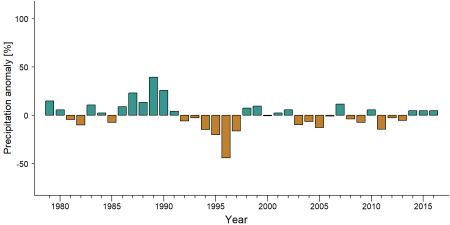
Precipitation anomaly in Northern block (Maringa-Lopori-Wamba) -
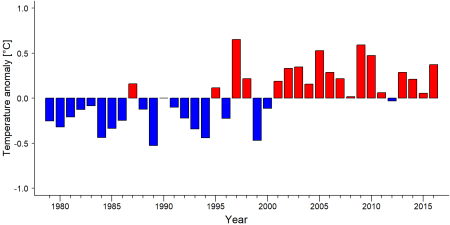
Temperature anomaly in Northern block (Maringa-Lopori-Wamba)


External links
References
IUCN, & ICCN (2012). Bonobo (Pan paniscus): Conservation Strategy 2012–2022. Gland, Switzerland: IUCN/SSC Primate Specialist Group & Institut Congolais pour la Conservation de la Nature. link
Page created by: APES Atlas Team Date: 2022-05-30