
Maiko National Park: Difference between revisions
No edit summary |
No edit summary Tag: Manual revert |
||
| (12 intermediate revisions by the same user not shown) | |||
| Line 11: | Line 11: | ||
* The site has a total size of 10,830 km². | * The site has a total size of 10,830 km². | ||
* Civil conflict and the rise of armed groups controlling artisanal mines have led to widespread poaching in the area. | * Civil conflict and the rise of armed groups controlling artisanal mines have led to widespread poaching in the area. | ||
* The main conservation activities reported include, monitoring surveillance patrols, local community engagement, and providing non-monetary benefits to the local community. | |||
* The Dian Fossey Gorilla Fund (DFGF) and Flora and Fauna International (FFI) have implemented community conservation projects near Maiko National Park. | * The Dian Fossey Gorilla Fund (DFGF) and Flora and Fauna International (FFI) have implemented community conservation projects near Maiko National Park. | ||
= Site characteristics = | = Site characteristics = | ||
Located in eastern DRC, Maiko National Park is the only protected area that harbours Grauer’s gorilla alongside important populations of okapi, Congo peafowl and forest elephant (Maldonado et al. 2012). | Located in eastern DRC, Maiko National Park is the only protected area that harbours Grauer’s gorilla alongside important populations of okapi, Congo peafowl and forest elephant ([[#R01148|Maldonado et al. 2012]]). | ||
'''Table 1. Basic site information for Maiko National Park''' | '''Table 1. Basic site information for Maiko National Park''' | ||
| Line 48: | Line 44: | ||
= Ape status = | = Ape status = | ||
Based on the encounter rates of nests of the 2005 and 2014 surveys, both chimpanzee and gorilla populations at Maiko National Park declined by 95.24% and 99.52% respectively (Plumptre et al. 2015). However, due to security issues, the surveys conducted have been infrequent, and they only covered sections of the park. For a more accurate assessment on the status of great apes, a survey covering the entire area is needed (Plumptre et al. 2015). | Based on the encounter rates of nests of the 2005 and 2014 surveys, both chimpanzee and gorilla populations at Maiko National Park declined by 95.24% and 99.52% respectively ([[#R01149|Plumptre et al. 2015]]). However, due to security issues, the surveys conducted have been infrequent, and they only covered sections of the park. For a more accurate assessment on the status of great apes, a survey covering the entire area is needed ([[#R01149|Plumptre et al. 2015]]). | ||
'''Table 2. Ape population estimates reported for Maiko National Park''' | '''Table 2. Ape population estimates reported for Maiko National Park''' | ||
| Line 66: | Line 62: | ||
|- | |- | ||
|''Gorilla beringei graueri'' | |''Gorilla beringei graueri'' | ||
| | |2020-2023 | ||
|Present | |||
| | | | ||
| | | | ||
|127 | |||
|Maiko National Park | |||
|Reconnaissance walk | |||
| | | | ||
| | |[[#R01147|Kyungu Kasolene et al. 2024]] | ||
|Maiko National Park | |The survey was carried out in the accessible zones of Maiko National Park, using patrol-based reconnaissance routes (RECCE), GPS, CyberTracker, and SMART Mobile. The analysis also employed the SMART database, IKA (Indice Kilométrique d’Abondance), and other tools. | ||
| | | | ||
|- | |- | ||
|'' | |''Pan troglodytes schweinfurthii'' | ||
| | |2020-2023 | ||
|Present | |||
| | | | ||
| | | | ||
| | |196 | ||
|Maiko National Park | |||
|Maiko National Park | |||
|Reconnaissance walk | |Reconnaissance walk | ||
| | | | ||
| | |[[#R01147|Kyungu Kasolene et al. 2024]] | ||
|The survey was carried out in the accessible zones of Maiko National Park, using patrol-based reconnaissance routes (RECCE), GPS, CyberTracker, and SMART Mobile. The analysis also employed the SMART database, IKA (Indice Kilométrique d’Abondance), and other tools. | |||
| | | | ||
|- | |- | ||
| Line 100: | Line 96: | ||
|Survey data, Reconnaissance walk, Line transects | |Survey data, Reconnaissance walk, Line transects | ||
| | | | ||
|Plumptre et al. 2015 | |[[#R01149|Plumptre et al. 2015]] | ||
|Abundance and density estimates are based on encounter rate data (from transects whenever possible). | |Abundance and density estimates are based on encounter rate data (from transects whenever possible). | ||
| | |COD0080, COD0081<div class="mw-collapsible mw-collapsed" data-expandtext="+10 more" data-collapsetext="less">COD0082, COD0084, COD0086, COD0088, COD0122, COD0144, COD0158, COD0159, COD0162, COD0226</div> | ||
|- | |- | ||
|''Pan troglodytes schweinfurthii'' | |''Pan troglodytes schweinfurthii'' | ||
| Line 113: | Line 109: | ||
|Survey data, Reconnaissance walk, Line transects | |Survey data, Reconnaissance walk, Line transects | ||
| | | | ||
|Plumptre et al. 2015 | |[[#R01149|Plumptre et al. 2015]] | ||
|Abundance and density estimates are based on encounter rate data (from transects whenever possible). | |Abundance and density estimates are based on encounter rate data (from transects whenever possible). | ||
| | |COD0080, COD0081<div class="mw-collapsible mw-collapsed" data-expandtext="+10 more" data-collapsetext="less">COD0082, COD0084, COD0086, COD0088, COD0122, COD0144, COD0158, COD0159, COD0162, COD0226</div> | ||
|- | |- | ||
|''Gorilla beringei graueri'' | |''Gorilla beringei graueri'' | ||
| | |2011-2012 | ||
| | | | ||
| | | | ||
| | | | ||
|Maiko National Park | |111-417 | ||
| | |Maiko National Park North | ||
|Informed guess | |||
| | | | ||
| | |[[#R01149|Plumptre et al. 2015]] | ||
| | | | ||
|COD0080, COD0081<div class="mw-collapsible mw-collapsed" data-expandtext="+10 more" data-collapsetext="less">COD0082, COD0084, COD0086, COD0088, COD0122, COD0144, COD0158, COD0159, COD0162, COD0226</div> | |||
|- | |- | ||
|'' | |''Gorilla beringei graueri'' | ||
| | |2011-2012 | ||
| | | | ||
| | | | ||
| | | | ||
|Maiko National Park | |306-866 | ||
|Maiko National Park South | |||
|Reconnaissance walk | |Reconnaissance walk | ||
| | | | ||
| | |Nixon et al. 2005, Nixon 2010, as cited by [[#R01149|Plumptre et al. 2015]] | ||
| | | | ||
|COD0080, COD0081<div class="mw-collapsible mw-collapsed" data-expandtext="+10 more" data-collapsetext="less">COD0082, COD0084, COD0086, COD0088, COD0122, COD0144, COD0158, COD0159, COD0162, COD0226</div> | |||
|} | |} | ||
| Line 148: | Line 144: | ||
= Threats = | = Threats = | ||
In eastern DRC, the civil war gave rise to the formation of armed groups that controlled artisanal mines in the area. Armed groups and miners relied on hunting bushmeat. Gorillas are highly prized as bushmeat because of their large size and they are killed relatively easily since they move in groups on the ground. Insecurity and lack of law enforcement continue to be a concern; the presence of militia groups have made it very difficult to assess great ape populations at the site and protect them (Plumptre et al. 2016). | In eastern DRC, the civil war gave rise to the formation of armed groups that controlled artisanal mines in the area. Armed groups and miners relied on hunting bushmeat. Gorillas are highly prized as bushmeat because of their large size and they are killed relatively easily since they move in groups on the ground. Insecurity and lack of law enforcement continue to be a concern; the presence of militia groups have made it very difficult to assess great ape populations at the site and protect them ([[#R01150|Plumptre et al. 2016]]). | ||
'''Table 3. Threats to apes reported for Maiko National Park''' | '''Table 3. Threats to apes reported for Maiko National Park''' | ||
| Line 158: | Line 154: | ||
!Year of threat | !Year of threat | ||
|- | |- | ||
| | |11 Climate change & severe weather | ||
| | |11.2 Droughts | ||
|Present (unknown severity) | |Present (unknown severity) | ||
| | |Droughts reported among the climate change events, that negatively impact Grauer’s gorillas and their habitats ([[#R01145|Consolee, Luan, & Cong, 2024]]). | ||
| | |Ongoing (2024) | ||
|- | |- | ||
| | |11 Climate change & severe weather | ||
| | |11.3 Temperature extremes | ||
| | |Present (unknown severity) | ||
| | |Increasing global temperatures reported among the climate change events, negatively impact Grauer’s gorillas and their habitats ([[#R01145|Consolee, Luan, & Cong, 2024]]). | ||
| | |Ongoing (2024) | ||
|- | |- | ||
| | |11 Climate change & severe weather | ||
| | |11.4 Storms & flooding | ||
|Present (unknown severity) | |Present (unknown severity) | ||
| | |Floods and extreme weather reported among the climate change events, that negatively impact Grauer’s | ||
| | gorillas and their habitats ([[#R01145|Consolee, Luan, & Cong, 2024]]). | ||
|Ongoing (2024) | |||
|- | |- | ||
| | |2 Agriculture & aquaculture | ||
| | |2.1 Annual & perennial non-timber crops | ||
|Present (unknown severity) | |Present (unknown severity) | ||
| | |Forest being cleared for agricultural plantations reported ([[#R01145|Consolee, Luan, & Cong, 2024]]). | ||
| | |Ongoing (2024) | ||
|- | |- | ||
|3 Energy production & mining | |3 Energy production & mining | ||
|3.2.3 Artisanal mining | |3.2.3 Artisanal mining | ||
|High (more than 70% of population affected) | |High (more than 70% of population affected) | ||
|Widespread artisanal and semi-industrial extraction gold, diamond, coltan, and cassiterite (Plumptre et al. 2015; Kyungu Kasolene et al. 2024; Consolee, Luan, & Cong, 2024). | |Widespread artisanal and semi-industrial extraction gold, diamond, coltan, and cassiterite ([[#R01149|Plumptre et al. 2015]]; [[#R01147|Kyungu Kasolene et al. 2024]]; [[#R01145|Consolee, Luan, & Cong, 2024]]). | ||
|2015-Ongoing (2024) | |2015-Ongoing (2024) | ||
|- | |- | ||
| | |5 Biological resource use | ||
| | |5.1 Hunting & collecting terrestrial animals | ||
| | |High (more than 70% of population affected) | ||
| | |Hunting of gorillas in the southern part of the park has been recorded; outside of the park, a nearby population has been exterminated (Nixon 2006, [[#R01149|Plumptre et al. 2015]]). Armed hunting and trapping with nylon snares and metal collars reported ([[#R01147|Kyungu Kasolene et al. 2024]]). | ||
| | |2006-Ongoing (2024) | ||
|- | |- | ||
|5 Biological resource use | |5 Biological resource use | ||
|5. | |5.1.1 Subsistence bushmeat hunting | ||
|Present (unknown severity) | |Present (unknown severity) | ||
| | |Artisanal miners rely on bushmeat once they are deep in the forest ([[#R01149|Plumptre et al. 2015]]). High demand for bushmeat; armed conflicts exacerbate poaching ([[#R01145|Consolee, Luan, & Cong, 2024]]). | ||
|Ongoing (2024) | |2015-Ongoing (2024) | ||
|- | |- | ||
| | |5 Biological resource use | ||
| | |5.1.4 Capture for the live animal trade | ||
|Present (unknown severity) | |Present (unknown severity) | ||
| | |Opportunistic live trade of chimpanzee and gorilla infants in the region; ICCN confiscated 16 gorilla infants between 2003 and approx. 2012 ([[#R01148|Maldonado et al. 2012]]). | ||
|Ongoing ( | |2003-Ongoing (2012) | ||
|- | |- | ||
| | |5 Biological resource use | ||
| | |5.3 Logging & wood harvesting | ||
|Present (unknown severity) | |Present (unknown severity) | ||
| | |Forest clearing for charcoal, and timber reported ([[#R01145|Consolee, Luan, & Cong, 2024]]). | ||
|Ongoing (2024) | |Ongoing (2024) | ||
|- | |- | ||
| | |6 Human intrusions & disturbance | ||
| | |6.2 War, civil unrest & military exercises | ||
|Present (unknown severity) | |Present (unknown severity) | ||
| | |Rebels, miners and poachers live in temporary or more permanent settlements in the park ([[#R01144|BirdLife International 2020]]). Presence of armed groups in all sectors (north, center, south) reported ([[#R01145|Consolee, Luan, & Cong, 2024]]; [[#R01147|Kyungu Kasolene et al. 2024]]). | ||
|2020-Ongoing (2024) | |||
|Ongoing (2024) | |||
|- | |- | ||
| | |7 Natural system modifications | ||
| | |7.1 Fire & fire suppression | ||
|Present (unknown severity) | |Present (unknown severity) | ||
| | |Wildfires also reported among the events that negatively impact Grauer’s gorillas and their habitats ([[#R01145|Consolee, Luan, & Cong, 2024]]). | ||
gorillas and their habitats (Consolee, Luan, & Cong, 2024). | |||
|Ongoing (2024) | |Ongoing (2024) | ||
|- | |- | ||
| | |8 Invasive & other problematic species, genes & diseases | ||
| | |8.4 Pathogens | ||
|Present (unknown severity) | |Present (unknown severity) | ||
| | |Great apes are also at risk from disease transmission from miners, including ebola, respiratory infections, and other zoonotic diseases ([[#R01149|Plumptre et al. 2015]]; [[#R01145|Consolee, Luan, & Cong, 2024]]). | ||
|2015-Ongoing (2024) | |||
|Ongoing (2024) | |||
|} | |} | ||
| Line 239: | Line 232: | ||
= Conservation activities = | = Conservation activities = | ||
The Dian Fossey Gorilla Fund (DFGF) and Flora and Fauna International (FFI) established three community conservation projects near Maiko. DFGF works at Nkubu Conservation Area, which covers about 1,000 square kilometers between Maiko National Park and Kahuzi-Biega National Park, a second stronghold for Gauer's gorillas. On the western edge of Maiko, FFI works in two unofficially designated reserves; REGOLU, founded in 2004, and REGUMUKI, founded in 2007. Both sites are in the process of becoming officially recognized community forests, and they cover 500 and 1,000 square kilometers respectively (Fritts 2019). | The Dian Fossey Gorilla Fund (DFGF) and Flora and Fauna International (FFI) established three community conservation projects near Maiko. DFGF works at Nkubu Conservation Area, which covers about 1,000 square kilometers between Maiko National Park and Kahuzi-Biega National Park, a second stronghold for Gauer's gorillas. On the western edge of Maiko, FFI works in two unofficially designated reserves; REGOLU, founded in 2004, and REGUMUKI, founded in 2007. Both sites are in the process of becoming officially recognized community forests, and they cover 500 and 1,000 square kilometers respectively ([[#R01146|Fritts 2019]]). | ||
'''Table 4. Conservation activities reported for Maiko National Park''' | '''Table 4. Conservation activities reported for Maiko National Park''' | ||
| Line 251: | Line 244: | ||
|2 Counter-wildlife crime | |2 Counter-wildlife crime | ||
|2.11 Implement monitoring surveillance strategies (e.g., SMART) or use monitoring data to improve effectiveness of patrols | |2.11 Implement monitoring surveillance strategies (e.g., SMART) or use monitoring data to improve effectiveness of patrols | ||
|Patrols and monitoring using SMART and | |Patrols and monitoring using SMART, and other monitoring tools reported ([[#R01147|Kyungu Kasolene et al. 2024]]). | ||
| | | | ||
|Ongoing (2024) | |Ongoing (2024) | ||
|- | |- | ||
|2 Counter-wildlife crime | |2 Counter-wildlife crime | ||
|2.12 Implement community control of patrolling, banning hunting and removing snares | |2.12 Implement community control of patrolling, banning hunting and removing snares | ||
|Community engagement and supporting activities for in order to implement robust monitoring (Consolee, Luan, & Cong, 2024). | |Community engagement and supporting activities for in order to implement robust monitoring ([[#R01145|Consolee, Luan, & Cong, 2024]]). | ||
|Maiko National Park (MNP), DRC Government | |Maiko National Park (MNP), DRC Government | ||
|Ongoing (2024) | |Ongoing (2024) | ||
| Line 269: | Line 256: | ||
|4 Education & awareness | |4 Education & awareness | ||
|4.1 Educate local communities about apes and sustainable use | |4.1 Educate local communities about apes and sustainable use | ||
|Working with local community members to facilitate educational and awareness programs on behalf of the MNP (Consolee, Luan, & Cong, 2024). | |Working with local community members to facilitate educational and awareness programs on behalf of the MNP ([[#R01145|Consolee, Luan, & Cong, 2024]]). | ||
|Maiko National Park (MNP), DRC Government | |Maiko National Park (MNP), DRC Government | ||
|Ongoing (2024) | |Ongoing (2024) | ||
|- | |||
|5 Protection & restoration | |||
|5.2 Legally protect ape habitat | |||
|The site is a National Park since, 1970. | |||
| | |||
|1970-Ongoing (2026) | |||
|- | |- | ||
|7 Economic & other incentives | |7 Economic & other incentives | ||
|7.2 Provide non-monetary benefits to local communities for sustainably managing their forest and its wildlife (e.g., better education, infrastructure development) | |7.2 Provide non-monetary benefits to local communities for sustainably managing their forest and its wildlife (e.g., better education, infrastructure development) | ||
|Infrastructure improvement activities reported (Consolee, Luan, & Cong, 2024). | |Infrastructure improvement activities reported ([[#R01145|Consolee, Luan, & Cong, 2024]]). | ||
|Maiko National Park (MNP), DRC Government | |Maiko National Park (MNP), DRC Government | ||
|Ongoing (2024) | |Ongoing (2024) | ||
| Line 292: | Line 285: | ||
!Source | !Source | ||
!Year(s) | !Year(s) | ||
|- | |- | ||
|1 Site management | |1 Site management | ||
|1.2 Need for improved coordination | |1.2 Need for improved coordination | ||
|Maldonado et al. 2012 | |[[#R01148|Maldonado et al. 2012]] | ||
| | |Ongoing (2012) | ||
|- | |- | ||
|2 Resources and capacity | |2 Resources and capacity | ||
| Line 327: | Line 310: | ||
|Kyungu JC. pers. comm. 2025 | |Kyungu JC. pers. comm. 2025 | ||
|Ongoing (2025) | |Ongoing (2025) | ||
|- | |||
|3 Engaged community | |||
|3.1 General lack of community engagement or support | |||
|[[#R01145|Consolee, Luan, & Cong, 2024]] | |||
|Ongoing (2024) | |||
|- | |||
|4 Institutional support | |||
|4.1 Lack of law enforcement | |||
|[[#R01149|Plumptre et al. 2015]] | |||
|Ongoing (2015) | |||
|- | |- | ||
|6 Safety and stability | |6 Safety and stability | ||
|6.2 Insecurity | |6.2 Insecurity | ||
|Kyungu Kasolene et al. 2024; Consolee, Luan, & Cong, 2024 | |[[#R01147|Kyungu Kasolene et al. 2024]]; [[#R01145|Consolee, Luan, & Cong, 2024]] | ||
|Ongoing (2024) | |Ongoing (2024) | ||
|- | |- | ||
|6 Safety and stability | |6 Safety and stability | ||
|6.3 Civil unrest/war | |6.3 Civil unrest/war | ||
| | |[[#R01148|Maldonado et al. 2012]] | ||
|Ongoing ( | |Ongoing (2012) | ||
|- | |- | ||
| | |6 Safety and stability | ||
|3 | |6.3 Civil unrest/war | ||
|Consolee, Luan, & Cong, 2024 | |[[#R01145|Consolee, Luan, & Cong, 2024]] | ||
|Ongoing (2024) | |Ongoing (2024) | ||
|} | |} | ||
| Line 426: | Line 419: | ||
= Exposure to climate change impacts = | = Exposure to climate change impacts = | ||
As part of a study on the exposure of African great ape sites to climate change impacts, Kiribou et al. | As part of a study on the exposure of African great ape sites to climate change impacts, [[#R02255|Kiribou et al. (2024)]] extracted climate data and data on projected extreme climate impact events for the site. Climatological characteristics were derived from observation-based climate data provided by the Inter-Sectoral Impact Model Intercomparison Project (ISIMIP, www.isimip.org). Parameters were calculated as the average across each 30-year period. For 1981-2010, the EWEMBI dataset from ISIMIP2a was used. For the two future periods (2021-2050 and 2071-2099) ISIMIP2b climate data based on four CMIP5 global climate models were used. For future projections, two Representative Concentration Pathways (RCP) were used. RCP 2.6 is a scenario with strong mitigation measures in which global temperatures would likely rise below 2C. RCP 6.0 is a scenario with medium emissions in which global temperatures would likely rise up to 3C by 2100. For the number of days with heavy precipitation events, the 98th percentile of all precipitation days (>1mm/d) was calculated for the 1979-2013 reference period as a threshold for a heavy precipitation event. Then, for each year, the number of days above that threshold was derived. The figures on temperature and precipitation anomaly show the deviation from the mean temperature and mean precipitation for the 1979-2013 reference period. | ||
The estimated exposure to future extreme climate impact events (crop failure, drought, river flood, wildfire, tropical cyclone, and heatwave) is based on a published dataset by Lange et al. 2020 derived from ISIMIP2b data. The same global climate models and RCPs as described above were used. Within each 30-year period, the number of years with an extreme event and the average proportion of the site affected were calculated ( | The estimated exposure to future extreme climate impact events (crop failure, drought, river flood, wildfire, tropical cyclone, and heatwave) is based on a published dataset by Lange et al. 2020 derived from ISIMIP2b data. The same global climate models and RCPs as described above were used. Within each 30-year period, the number of years with an extreme event and the average proportion of the site affected were calculated ([[#R02255|Kiribou et al. 2024]]). | ||
'''Table 8. Estimated past and projected climatological characteristics in Maiko National Park''' | '''Table 8. Estimated past and projected climatological characteristics in Maiko National Park''' | ||
| Line 551: | Line 544: | ||
= References = | = References = | ||
<span id="R01144"></span>BirdLife International. (2020). Important Bird Areas factsheet: Maiko National Park. Online: http://datazone.birdlife.org/site/factsheet/maiko-national-park-iba-congo-the-democratic-republic-of-the/text [https://web.archive.org/web/20250114140051/https://datazone.birdlife.org/site/factsheet/maiko-national-park-iba-congo-the-democratic-republic-of-the/text link] | |||
<span id="R01145"></span>Consolee, K. T., Luan, X., & Cong, L. (2024). Anthropogenic Pressures on Gorillas: A Case of Grauer’s Gorillas in Maiko National Park, the Democratic Republic of Congo. ''Diversity'', 16(4), 236. [https://doi.org/10.3390/d16040236 doi:10.3390/d16040236] | |||
<span id="R01146"></span>Fritts, R. (2019, July 16). Agriculture, mining, hunting push critically endangered gorillas to the brink. Online: https://news.mongabay.com/2019/07/agriculture-mining-hunting-push-critically-endangered-gorillas-to-the-brink/ | |||
<span id="R01147"></span>Kyungu Kasolene, K., Malema, C., & Mayanga, P. (2024). La diversité faunique face aux activités anthropiques entre 2020 et 2023, un enjeu pour la conservation du Parc national de Maiko. Annales de l’Université de Goma, XIV(2), 510–522. | |||
<span id="R01148"></span>Maldonado, O., Aveling, C., Cox, D., Nixon, S., Nishuli, R., Merlo, D., Pintea, L., & Williamson, E. A. (2012). Grauer’s gorillas and chimpanzees in Eastern Democratic Republic of Congo (Kahuzi-Biega, Maiko, Tayna and Itombwe Landscape): Conservation Action Plan 2012–2022. Gland, Switzerland: IUCN/SSC Primate Specialist Group, Ministry of Environment, Nature Conservation & Tourism, Institut Congolais pour la Conservation de la Nature & the Jane Goodall Institute. 66 pp. [http://www.primate-sg.org/storage/pdf/Eastern_DRC_CAP.pdf link] | |||
<span id="R01149"></span>Plumptre, A. J., Nixon, S., Critchlow, R., Vieilledent, G., Nishuli, R., Kirkby, A., …, & Kujirakwinja, D. (2015). Status of Grauer's Gorilla and Chimpanzees in Eastern Democratic Republic of Congo: Historical and Current Distribution and Abundance. Wildlife Conservation Society. [https://doi.org/10.19121/2015.report.dmx3094100000 doi:10.19121/2015.report.dmx3094100000] | |||
<span id="R01150"></span>Plumptre, A. J., Nixon, S., Kujirakwinja, D. K., Vieilledent, G., Critchlow, R., Williamson, E. A., …, & Hall, J. S. (2016). Catastrophic Decline of World's Largest Primate: 80% Loss of Grauer's Gorilla (Gorilla beringei graueri) Population Justifies Critically Endangered Status. ''PLOS ONE'', 11(10), e0162697. [https://doi.org/10.1371/journal.pone.0162697 doi:10.1371/journal.pone.0162697] | |||
<span id="R02255"></span>Kiribou, R., Tehoda, P., Chukwu, O., Bempah, G., Kühl, H. S., Ferreira, J., …, & Heinicke, S. (2024). Exposure of African ape sites to climate change impacts. ''PLOS Climate'', 3(2), e0000345. [https://doi.org/10.1371/journal.pclm.0000345 doi:10.1371/journal.pclm.0000345] | |||
Latest revision as of 17:53, 15 October 2026
Central Africa > Democratic Republic of the Congo > Maiko National Park
Français | Português | Español | Bahasa Indonesia | Melayu
Summary
- Eastern chimpanzees (Pan troglodytes schweinfurthii) & Grauer's gorillas (Gorilla beringei graueri) are present in Maiko National Park.
- The chimpanzee and gorilla population trends are decreasing.
- The site has a total size of 10,830 km².
- Civil conflict and the rise of armed groups controlling artisanal mines have led to widespread poaching in the area.
- The main conservation activities reported include, monitoring surveillance patrols, local community engagement, and providing non-monetary benefits to the local community.
- The Dian Fossey Gorilla Fund (DFGF) and Flora and Fauna International (FFI) have implemented community conservation projects near Maiko National Park.
Site characteristics
Located in eastern DRC, Maiko National Park is the only protected area that harbours Grauer’s gorilla alongside important populations of okapi, Congo peafowl and forest elephant (Maldonado et al. 2012).
Table 1. Basic site information for Maiko National Park
| Species | Gorilla beringei graueri, Pan troglodytes schweinfurthii |
| Area | 10,830 km² |
| Coordinates | Lat: -0.438204 , Lon: 27.470303 |
| Type of site | Protected area (National Park) |
| Habitat types | Sutropical/tropical moist lowland forest |
| Type of governance | Governance by government |
Types of sites Governance types Habitat types
Ape status
Based on the encounter rates of nests of the 2005 and 2014 surveys, both chimpanzee and gorilla populations at Maiko National Park declined by 95.24% and 99.52% respectively (Plumptre et al. 2015). However, due to security issues, the surveys conducted have been infrequent, and they only covered sections of the park. For a more accurate assessment on the status of great apes, a survey covering the entire area is needed (Plumptre et al. 2015).
Table 2. Ape population estimates reported for Maiko National Park
| Species | Year | Occurrence | Encounter or vistation rate (nests/km; ind/day) | Density estimate [ind./ km²] (95% CI) | Abundance estimate (95% CI) | Survey area | Sampling method | Analytical framework | Source | Comments | A.P.E.S. database ID |
|---|---|---|---|---|---|---|---|---|---|---|---|
| Gorilla beringei graueri | 2020-2023 | Present | 127 | Maiko National Park | Reconnaissance walk | Kyungu Kasolene et al. 2024 | The survey was carried out in the accessible zones of Maiko National Park, using patrol-based reconnaissance routes (RECCE), GPS, CyberTracker, and SMART Mobile. The analysis also employed the SMART database, IKA (Indice Kilométrique d’Abondance), and other tools. | ||||
| Pan troglodytes schweinfurthii | 2020-2023 | Present | 196 | Maiko National Park | Reconnaissance walk | Kyungu Kasolene et al. 2024 | The survey was carried out in the accessible zones of Maiko National Park, using patrol-based reconnaissance routes (RECCE), GPS, CyberTracker, and SMART Mobile. The analysis also employed the SMART database, IKA (Indice Kilométrique d’Abondance), and other tools. | ||||
| Gorilla beringei graueri | 2014-2015 | 0.001 | 15.0 | Maiko National Park | Survey data, Reconnaissance walk, Line transects | Plumptre et al. 2015 | Abundance and density estimates are based on encounter rate data (from transects whenever possible). | COD0080, COD0081 COD0082, COD0084, COD0086, COD0088, COD0122, COD0144, COD0158, COD0159, COD0162, COD0226
| |||
| Pan troglodytes schweinfurthii | 2014-2015 | 0.006 | 60.0 | Maiko National Park | Survey data, Reconnaissance walk, Line transects | Plumptre et al. 2015 | Abundance and density estimates are based on encounter rate data (from transects whenever possible). | COD0080, COD0081 COD0082, COD0084, COD0086, COD0088, COD0122, COD0144, COD0158, COD0159, COD0162, COD0226
| |||
| Gorilla beringei graueri | 2011-2012 | 111-417 | Maiko National Park North | Informed guess | Plumptre et al. 2015 | COD0080, COD0081 COD0082, COD0084, COD0086, COD0088, COD0122, COD0144, COD0158, COD0159, COD0162, COD0226
| |||||
| Gorilla beringei graueri | 2011-2012 | 306-866 | Maiko National Park South | Reconnaissance walk | Nixon et al. 2005, Nixon 2010, as cited by Plumptre et al. 2015 | COD0080, COD0081 COD0082, COD0084, COD0086, COD0088, COD0122, COD0144, COD0158, COD0159, COD0162, COD0226
|
Sampling methods Analytical frameworks
Threats
In eastern DRC, the civil war gave rise to the formation of armed groups that controlled artisanal mines in the area. Armed groups and miners relied on hunting bushmeat. Gorillas are highly prized as bushmeat because of their large size and they are killed relatively easily since they move in groups on the ground. Insecurity and lack of law enforcement continue to be a concern; the presence of militia groups have made it very difficult to assess great ape populations at the site and protect them (Plumptre et al. 2016).
Table 3. Threats to apes reported for Maiko National Park
| Category | Specific threats | Threat level | Description | Year of threat |
|---|---|---|---|---|
| 11 Climate change & severe weather | 11.2 Droughts | Present (unknown severity) | Droughts reported among the climate change events, that negatively impact Grauer’s gorillas and their habitats (Consolee, Luan, & Cong, 2024). | Ongoing (2024) |
| 11 Climate change & severe weather | 11.3 Temperature extremes | Present (unknown severity) | Increasing global temperatures reported among the climate change events, negatively impact Grauer’s gorillas and their habitats (Consolee, Luan, & Cong, 2024). | Ongoing (2024) |
| 11 Climate change & severe weather | 11.4 Storms & flooding | Present (unknown severity) | Floods and extreme weather reported among the climate change events, that negatively impact Grauer’s
gorillas and their habitats (Consolee, Luan, & Cong, 2024). |
Ongoing (2024) |
| 2 Agriculture & aquaculture | 2.1 Annual & perennial non-timber crops | Present (unknown severity) | Forest being cleared for agricultural plantations reported (Consolee, Luan, & Cong, 2024). | Ongoing (2024) |
| 3 Energy production & mining | 3.2.3 Artisanal mining | High (more than 70% of population affected) | Widespread artisanal and semi-industrial extraction gold, diamond, coltan, and cassiterite (Plumptre et al. 2015; Kyungu Kasolene et al. 2024; Consolee, Luan, & Cong, 2024). | 2015-Ongoing (2024) |
| 5 Biological resource use | 5.1 Hunting & collecting terrestrial animals | High (more than 70% of population affected) | Hunting of gorillas in the southern part of the park has been recorded; outside of the park, a nearby population has been exterminated (Nixon 2006, Plumptre et al. 2015). Armed hunting and trapping with nylon snares and metal collars reported (Kyungu Kasolene et al. 2024). | 2006-Ongoing (2024) |
| 5 Biological resource use | 5.1.1 Subsistence bushmeat hunting | Present (unknown severity) | Artisanal miners rely on bushmeat once they are deep in the forest (Plumptre et al. 2015). High demand for bushmeat; armed conflicts exacerbate poaching (Consolee, Luan, & Cong, 2024). | 2015-Ongoing (2024) |
| 5 Biological resource use | 5.1.4 Capture for the live animal trade | Present (unknown severity) | Opportunistic live trade of chimpanzee and gorilla infants in the region; ICCN confiscated 16 gorilla infants between 2003 and approx. 2012 (Maldonado et al. 2012). | 2003-Ongoing (2012) |
| 5 Biological resource use | 5.3 Logging & wood harvesting | Present (unknown severity) | Forest clearing for charcoal, and timber reported (Consolee, Luan, & Cong, 2024). | Ongoing (2024) |
| 6 Human intrusions & disturbance | 6.2 War, civil unrest & military exercises | Present (unknown severity) | Rebels, miners and poachers live in temporary or more permanent settlements in the park (BirdLife International 2020). Presence of armed groups in all sectors (north, center, south) reported (Consolee, Luan, & Cong, 2024; Kyungu Kasolene et al. 2024). | 2020-Ongoing (2024) |
| 7 Natural system modifications | 7.1 Fire & fire suppression | Present (unknown severity) | Wildfires also reported among the events that negatively impact Grauer’s gorillas and their habitats (Consolee, Luan, & Cong, 2024). | Ongoing (2024) |
| 8 Invasive & other problematic species, genes & diseases | 8.4 Pathogens | Present (unknown severity) | Great apes are also at risk from disease transmission from miners, including ebola, respiratory infections, and other zoonotic diseases (Plumptre et al. 2015; Consolee, Luan, & Cong, 2024). | 2015-Ongoing (2024) |
Conservation activities
The Dian Fossey Gorilla Fund (DFGF) and Flora and Fauna International (FFI) established three community conservation projects near Maiko. DFGF works at Nkubu Conservation Area, which covers about 1,000 square kilometers between Maiko National Park and Kahuzi-Biega National Park, a second stronghold for Gauer's gorillas. On the western edge of Maiko, FFI works in two unofficially designated reserves; REGOLU, founded in 2004, and REGUMUKI, founded in 2007. Both sites are in the process of becoming officially recognized community forests, and they cover 500 and 1,000 square kilometers respectively (Fritts 2019).
Table 4. Conservation activities reported for Maiko National Park
| Category | Specific activity | Description | Implementing organization(s) | Year of activity |
|---|---|---|---|---|
| 2 Counter-wildlife crime | 2.11 Implement monitoring surveillance strategies (e.g., SMART) or use monitoring data to improve effectiveness of patrols | Patrols and monitoring using SMART, and other monitoring tools reported (Kyungu Kasolene et al. 2024). | Ongoing (2024) | |
| 2 Counter-wildlife crime | 2.12 Implement community control of patrolling, banning hunting and removing snares | Community engagement and supporting activities for in order to implement robust monitoring (Consolee, Luan, & Cong, 2024). | Maiko National Park (MNP), DRC Government | Ongoing (2024) |
| 4 Education & awareness | 4.1 Educate local communities about apes and sustainable use | Working with local community members to facilitate educational and awareness programs on behalf of the MNP (Consolee, Luan, & Cong, 2024). | Maiko National Park (MNP), DRC Government | Ongoing (2024) |
| 5 Protection & restoration | 5.2 Legally protect ape habitat | The site is a National Park since, 1970. | 1970-Ongoing (2026) | |
| 7 Economic & other incentives | 7.2 Provide non-monetary benefits to local communities for sustainably managing their forest and its wildlife (e.g., better education, infrastructure development) | Infrastructure improvement activities reported (Consolee, Luan, & Cong, 2024). | Maiko National Park (MNP), DRC Government | Ongoing (2024) |
Challenges
Table 5. Challenges reported for Maiko National Park
| Challenges | Specific challenges | Source | Year(s) |
|---|---|---|---|
| 1 Site management | 1.2 Need for improved coordination | Maldonado et al. 2012 | Ongoing (2012) |
| 2 Resources and capacity | 2.1 Lack of capacity/training | Kyungu JC. pers. comm. 2025 | Ongoing (2025) |
| 2 Resources and capacity | 2.2 Lack of staff | Kyungu JC. pers. comm. 2025 | Ongoing (2025) |
| 2 Resources and capacity | 2.3 General lack of funding | Kyungu JC. pers. comm. 2025 | Ongoing (2025) |
| 2 Resources and capacity | 2.4 Lack of continuous/long-term funding | Kyungu JC. pers. comm. 2025 | Ongoing (2025) |
| 3 Engaged community | 3.1 General lack of community engagement or support | Consolee, Luan, & Cong, 2024 | Ongoing (2024) |
| 4 Institutional support | 4.1 Lack of law enforcement | Plumptre et al. 2015 | Ongoing (2015) |
| 6 Safety and stability | 6.2 Insecurity | Kyungu Kasolene et al. 2024; Consolee, Luan, & Cong, 2024 | Ongoing (2024) |
| 6 Safety and stability | 6.3 Civil unrest/war | Maldonado et al. 2012 | Ongoing (2012) |
| 6 Safety and stability | 6.3 Civil unrest/war | Consolee, Luan, & Cong, 2024 | Ongoing (2024) |
Enablers
Table 6. Enablers reported for Maiko National Park
| Enablers | Specific enablers | Source | Year(s) |
|---|---|---|---|
| 2 Resources and capacity | 2.6 External partnerships that add expertise or resources | Kyungu JC. pers. comm. 2025 | Ongoing (2025) |
| 1 Site management | |||
| 3 Engaged community | |||
| 4 Institutional support | |||
| 5 Ecological context | |||
| 6 Safety and stability |
Research activities
Documented behaviours
Table 7. Behaviours documented for Maiko National Park
| Category | Behavior | Observation type | Prevalence | Observation dates | Source | Habituation | Species | Comment |
|---|---|---|---|---|---|---|---|---|
| Not reported |
Exposure to climate change impacts
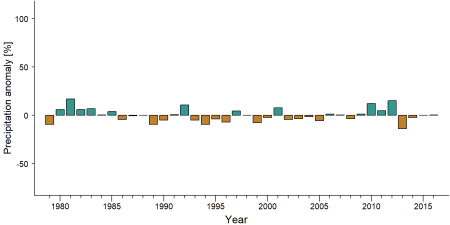
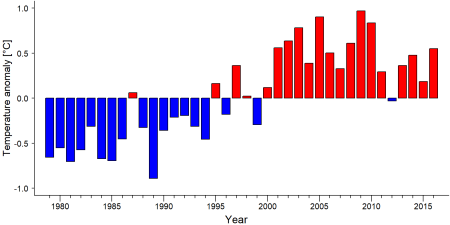
As part of a study on the exposure of African great ape sites to climate change impacts, Kiribou et al. (2024) extracted climate data and data on projected extreme climate impact events for the site. Climatological characteristics were derived from observation-based climate data provided by the Inter-Sectoral Impact Model Intercomparison Project (ISIMIP, www.isimip.org). Parameters were calculated as the average across each 30-year period. For 1981-2010, the EWEMBI dataset from ISIMIP2a was used. For the two future periods (2021-2050 and 2071-2099) ISIMIP2b climate data based on four CMIP5 global climate models were used. For future projections, two Representative Concentration Pathways (RCP) were used. RCP 2.6 is a scenario with strong mitigation measures in which global temperatures would likely rise below 2C. RCP 6.0 is a scenario with medium emissions in which global temperatures would likely rise up to 3C by 2100. For the number of days with heavy precipitation events, the 98th percentile of all precipitation days (>1mm/d) was calculated for the 1979-2013 reference period as a threshold for a heavy precipitation event. Then, for each year, the number of days above that threshold was derived. The figures on temperature and precipitation anomaly show the deviation from the mean temperature and mean precipitation for the 1979-2013 reference period.
The estimated exposure to future extreme climate impact events (crop failure, drought, river flood, wildfire, tropical cyclone, and heatwave) is based on a published dataset by Lange et al. 2020 derived from ISIMIP2b data. The same global climate models and RCPs as described above were used. Within each 30-year period, the number of years with an extreme event and the average proportion of the site affected were calculated (Kiribou et al. 2024).
Table 8. Estimated past and projected climatological characteristics in Maiko National Park
| Value | 1981-2010 | 2021-2050, RCP 2.6 | 2021-2050, RCP 6.0 | 2071-2099, RCP 2.6 | 2071-2099, RCP 6.0 |
|---|---|---|---|---|---|
| Mean temperature [C] | 23.7 | 24.8 | 24.6 | 25 | 26.1 |
| Annual precipitation [mm] | 1972 | 1949 | 1952 | 1895 | 2084 |
| Max no. consecutive dry days (per year) | 3.8 | 10.3 | 10.2 | 13.1 | 10.9 |
| No. days with heavy precipitation (per year) | 7.1 | 8.5 | 9.4 | 8.3 | 11.4 |
Table 9. Projected exposure of apes to extreme climate impact events in Maiko National Park
| Type | No. of years with event (2021-2050, RCP 2.6) | % of site exposed (2021-2050, RCP 2.6) | No. of years with event (2021-2050, RCP 6.0) | % of site exposed (2021-2050, RCP 6.0) | No. of years with event (2070-2099, RCP 2.6) | % of site exposed (2070-2099, RCP 2.6) | No. of years with event (2070-2099, RCP 6.0) | % of site exposed (2070-2099, RCP 6.0) |
|---|---|---|---|---|---|---|---|---|
| Crop failure | 13 | 0.01 | 11.5 | 0.01 | 11 | 0.01 | 26.5 | 0.01 |
| Drought | 0 | 0 | 0 | 0 | 0 | 0 | 0 | 0 |
| Heatwave | 3.5 | 42.08 | 2.5 | 48.12 | 3.5 | 35.42 | 11.5 | 53.66 |
| River flood | 4.25 | 0.31 | 5.75 | 0.63 | 3.75 | 0.45 | 9.5 | 0.79 |
| Tropical cyclone | 0 | 0 | 0 | 0 | 0 | 0 | 0 | 0 |
| Wildfire | 30 | 0.32 | 30 | 0.27 | 29 | 0.38 | 29 | 0.26 |
-
Precipitation anomaly in Maiko National Park -
Temperature anomaly in Maiko National Park


External links
References
BirdLife International. (2020). Important Bird Areas factsheet: Maiko National Park. Online: http://datazone.birdlife.org/site/factsheet/maiko-national-park-iba-congo-the-democratic-republic-of-the/text link
Consolee, K. T., Luan, X., & Cong, L. (2024). Anthropogenic Pressures on Gorillas: A Case of Grauer’s Gorillas in Maiko National Park, the Democratic Republic of Congo. Diversity, 16(4), 236. doi:10.3390/d16040236
Fritts, R. (2019, July 16). Agriculture, mining, hunting push critically endangered gorillas to the brink. Online: https://news.mongabay.com/2019/07/agriculture-mining-hunting-push-critically-endangered-gorillas-to-the-brink/
Kyungu Kasolene, K., Malema, C., & Mayanga, P. (2024). La diversité faunique face aux activités anthropiques entre 2020 et 2023, un enjeu pour la conservation du Parc national de Maiko. Annales de l’Université de Goma, XIV(2), 510–522.
Maldonado, O., Aveling, C., Cox, D., Nixon, S., Nishuli, R., Merlo, D., Pintea, L., & Williamson, E. A. (2012). Grauer’s gorillas and chimpanzees in Eastern Democratic Republic of Congo (Kahuzi-Biega, Maiko, Tayna and Itombwe Landscape): Conservation Action Plan 2012–2022. Gland, Switzerland: IUCN/SSC Primate Specialist Group, Ministry of Environment, Nature Conservation & Tourism, Institut Congolais pour la Conservation de la Nature & the Jane Goodall Institute. 66 pp. link
Plumptre, A. J., Nixon, S., Critchlow, R., Vieilledent, G., Nishuli, R., Kirkby, A., …, & Kujirakwinja, D. (2015). Status of Grauer's Gorilla and Chimpanzees in Eastern Democratic Republic of Congo: Historical and Current Distribution and Abundance. Wildlife Conservation Society. doi:10.19121/2015.report.dmx3094100000
Plumptre, A. J., Nixon, S., Kujirakwinja, D. K., Vieilledent, G., Critchlow, R., Williamson, E. A., …, & Hall, J. S. (2016). Catastrophic Decline of World's Largest Primate: 80% Loss of Grauer's Gorilla (Gorilla beringei graueri) Population Justifies Critically Endangered Status. PLOS ONE, 11(10), e0162697. doi:10.1371/journal.pone.0162697
Kiribou, R., Tehoda, P., Chukwu, O., Bempah, G., Kühl, H. S., Ferreira, J., …, & Heinicke, S. (2024). Exposure of African ape sites to climate change impacts. PLOS Climate, 3(2), e0000345. doi:10.1371/journal.pclm.0000345
Page created by: APES Atlas Team Date: 2020-12-03
Page updated by: JEAN CLAUDE KYUNGU Date: 2025-08-15