
Dindefelo: Difference between revisions
No edit summary |
No edit summary Tag: Manual revert |
||
| (5 intermediate revisions by the same user not shown) | |||
| Line 17: | Line 17: | ||
= Site characteristics = | = Site characteristics = | ||
Dindefelo (officially called Réserve Naturelle Communautaire de Dindéfélo or Dindefelo Community Nature Reserve) is located in the Kedougou department in southeastern Senegal, along the border with Guinea. Since 2009, the ([Jane Goodall Institute Spain in Senegal https://www.janegoodallsenegal.org/conservation-chimpanzee)] has conducted research and conservation activities, and a chimpanzee biomonitoring program in the area. The Community Nature Reserve was created by the Rural Council of Dindefelo in 2010 with the support of the JGI Spain in Senegal (Pacheco et al. 2012). The reserve is managed by the Mayor of Dindefelo and representatives of the local communities, with the declared goal of fostering a sustainable use of natural resources and the protection of flora and fauna, particularly chimpanzees. The JGI Spain in Senegal has provided technical assistance to the reserve since its creation. In 2014, the JGI Spain established a permanent biological station (the Dindefelo Biological Station) to conduct research, and implement conservation and education activities. The habitat is a Sudano-Guinean savanna woodland mosaic composed of open (woodland, grassland, shrubland and bamboo) and closed (evergreen gallery forest and dense forest) vegetation types (Pacheco et al. 2012, Dotras et al. 2024). There are also some agricultural areas and degraded gallery forests (Pacheco et al. 2012). The climate is extremely seasonal, with a dry season lasting seven months. There are six villages and hamlets within and eight surrounding the reserve, where different ethnic groups are present. The majority of people belong to the Peulh and Malinke and the remaining to the Bassari, Bedik, Djallounke and Coniagui. The highest waterfall in Senegal is located in the reserve, which attracts thousands of national and international tourists every year (Camon et al. 2020). Five non-human primate species are present in the reserve: western chimpanzee (''Pan troglodytes verus''), green monkey (''Chlorocebus sabaeus''), patas monkey (''Erythrocebus patas''), lesser bushbaby (''Galago senegalensis'') and Guinea baboon (''Papio papio'') (Dotras et al. 2024). In addition, there have been rare sightings of King colobus (''Colobus polykomos'': Dotras et al. 2022) and Campbell’s monkey (''Cercopithecus campbelli'': Mirghani et al. 2024). | Dindefelo (officially called Réserve Naturelle Communautaire de Dindéfélo or Dindefelo Community Nature Reserve) is located in the Kedougou department in southeastern Senegal, along the border with Guinea. Since 2009, the ([Jane Goodall Institute Spain in Senegal https://www.janegoodallsenegal.org/conservation-chimpanzee)] has conducted research and conservation activities, and a chimpanzee biomonitoring program in the area. The Community Nature Reserve was created by the Rural Council of Dindefelo in 2010 with the support of the JGI Spain in Senegal ([[#R00485|Pacheco et al. 2012]]). The reserve is managed by the Mayor of Dindefelo and representatives of the local communities, with the declared goal of fostering a sustainable use of natural resources and the protection of flora and fauna, particularly chimpanzees. The JGI Spain in Senegal has provided technical assistance to the reserve since its creation. In 2014, the JGI Spain established a permanent biological station (the Dindefelo Biological Station) to conduct research, and implement conservation and education activities. The habitat is a Sudano-Guinean savanna woodland mosaic composed of open (woodland, grassland, shrubland and bamboo) and closed (evergreen gallery forest and dense forest) vegetation types ([[#R00485|Pacheco et al. 2012]], [[#R00471|Dotras et al. 2024]]). There are also some agricultural areas and degraded gallery forests ([[#R00485|Pacheco et al. 2012]]). The climate is extremely seasonal, with a dry season lasting seven months. There are six villages and hamlets within and eight surrounding the reserve, where different ethnic groups are present. The majority of people belong to the Peulh and Malinke and the remaining to the Bassari, Bedik, Djallounke and Coniagui. The highest waterfall in Senegal is located in the reserve, which attracts thousands of national and international tourists every year ([[#R00467|Camon et al. 2020]]). Five non-human primate species are present in the reserve: western chimpanzee (''Pan troglodytes verus''), green monkey (''Chlorocebus sabaeus''), patas monkey (''Erythrocebus patas''), lesser bushbaby (''Galago senegalensis'') and Guinea baboon (''Papio papio'') ([[#R00471|Dotras et al. 2024]]). In addition, there have been rare sightings of King colobus (''Colobus polykomos'': [[#R00470|Dotras et al. 2022]]) and Campbell’s monkey (''Cercopithecus campbelli'': [[#R00484|Mirghani et al. 2024]]). | ||
'''Table 1. Basic site information for Dindefelo''' | '''Table 1. Basic site information for Dindefelo''' | ||
| Line 44: | Line 44: | ||
= Ape status = | = Ape status = | ||
A survey of southeastern Senegal established the presence of chimpanzees in what is now the reserve (Pruetz et al. 2002). Since the onset of research and conservation activities implemented by the Jane Goodall Institute Spain in Senegal (https://www.janegoodallsenegal.org/research) chimpanzees are monitored regularly. As part of the Pan African Programme: The Cultured Chimpanzee (PanAf (http://panafrican.eva.mpg.de/)), a systematic survey was implemented and chimpanzee density has been estimated at 0.13 indiv/km² (Wessling et al. 2020). An estimate of the population size has not been published, but a minimum of 53 individual chimpanzees living in two different communities have been identified by direct observation and footage from camera traps since 2017 (Dotras et al. 2024). | A survey of southeastern Senegal established the presence of chimpanzees in what is now the reserve ([[#R00486|Pruetz et al. 2002]]). Since the onset of research and conservation activities implemented by the Jane Goodall Institute Spain in Senegal (https://www.janegoodallsenegal.org/research) chimpanzees are monitored regularly. As part of the Pan African Programme: The Cultured Chimpanzee (PanAf (http://panafrican.eva.mpg.de/)), a systematic survey was implemented and chimpanzee density has been estimated at 0.13 indiv/km² ([[#R00494|Wessling et al. 2020]]). An estimate of the population size has not been published, but a minimum of 53 individual chimpanzees living in two different communities have been identified by direct observation and footage from camera traps since 2017 ([[#R00471|Dotras et al. 2024]]). | ||
'''Table 2. Ape population estimates reported for Dindefelo''' | '''Table 2. Ape population estimates reported for Dindefelo''' | ||
| Line 70: | Line 70: | ||
|Line transects | |Line transects | ||
| | | | ||
|Wessling et al. 2020 | |[[#R00494|Wessling et al. 2020]] | ||
|Total survey effort: 73.8 km | |Total survey effort: 73.8 km | ||
| | | | ||
| Line 83: | Line 83: | ||
|Reconnaissance walk | |Reconnaissance walk | ||
| | | | ||
|Pruetz et al. 2002 | |[[#R00486|Pruetz et al. 2002]] | ||
| | | | ||
| | | | ||
| Line 92: | Line 92: | ||
= Threats = | = Threats = | ||
The main threats to chimpanzees include the clearing of vegetation for agriculture, uncontrolled bushfires and pollution of water sources (Pacheco et al. 2012, Arias et al. 2017, Dotras et al. 2024). Local people extract the following resources, which include several plant species used by the chimpanzees for food and for nesting: wood (e.g. ''Cordyla pinnata''), charcoal (e.g. ''Piliostigma thonningii''), food (e.g. ''Saba senegalensis'' fruit), and medicine (e.g. ''Pterocarpus erinaceus'' bark) (Enthoven et al. 2017, Ramon et al. 2017; Macina et al. 2022; Renelies-Hamilton et al. 2023; JGI Spain in Senegal unpublished data). The people also collect dead branches to use as firewood. Due to lack of other options, watercourses are used for bathing and washing clothes and dishes. This causes the pollution of watercourses, as plastic littering and old clothes are thrown away (posing a risk of ingestion by wildlife: Pacheco et al. 2012, Arias et al. 2017) and soap along with human waste remain in the water. Overtapping of palm trees has also been reported (Pacheco et al. 2012).Further concerns are potential negative interactions between humans and chimpanzees due to competition for water sources during the dry season as well as crop feeding and consumption of honey from artificial beehives by the apes (Dotras et al. 2024). Small scale, artisanal gold mining was observed in 2015 in the buffer area of the reserve and in 2020 inside the reserve, but it is currently absent. No evidence of chimpanzee hunting has been found through all the years the JGI Spain in Senegal has been in the area. | The main threats to chimpanzees include the clearing of vegetation for agriculture, uncontrolled bushfires and pollution of water sources ([[#R00485|Pacheco et al. 2012]], [[#R00464|Arias et al. 2017]], [[#R00471|Dotras et al. 2024]]). Local people extract the following resources, which include several plant species used by the chimpanzees for food and for nesting: wood (e.g. ''Cordyla pinnata''), charcoal (e.g. ''Piliostigma thonningii''), food (e.g. ''Saba senegalensis'' fruit), and medicine (e.g. ''Pterocarpus erinaceus'' bark) ([[#R00472|Enthoven et al. 2017]], [[#R00487|Ramon et al. 2017]]; [[#R00478|Macina et al. 2022]]; [[#R00489|Renelies-Hamilton et al. 2023]]; JGI Spain in Senegal unpublished data). The people also collect dead branches to use as firewood. Due to lack of other options, watercourses are used for bathing and washing clothes and dishes. This causes the pollution of watercourses, as plastic littering and old clothes are thrown away (posing a risk of ingestion by wildlife: [[#R00485|Pacheco et al. 2012]], [[#R00464|Arias et al. 2017]]) and soap along with human waste remain in the water. Overtapping of palm trees has also been reported ([[#R00485|Pacheco et al. 2012]]).Further concerns are potential negative interactions between humans and chimpanzees due to competition for water sources during the dry season as well as crop feeding and consumption of honey from artificial beehives by the apes ([[#R00471|Dotras et al. 2024]]). Small scale, artisanal gold mining was observed in 2015 in the buffer area of the reserve and in 2020 inside the reserve, but it is currently absent. No evidence of chimpanzee hunting has been found through all the years the JGI Spain in Senegal has been in the area. | ||
'''Table 3. Threats to apes reported for Dindefelo''' | '''Table 3. Threats to apes reported for Dindefelo''' | ||
| Line 105: | Line 105: | ||
|1.1 Residential areas | |1.1 Residential areas | ||
|High (more than 70% of population affected) | |High (more than 70% of population affected) | ||
|Villages and hamlets (Pacheco et al. 2012, Dotras et al. 2024). New houses are being built across the limit of the reserve in Dindefelo village. | |Villages and hamlets ([[#R00485|Pacheco et al. 2012]], [[#R00471|Dotras et al. 2024]]). New houses are being built across the limit of the reserve in Dindefelo village. | ||
|2009-Ongoing (2024) | |2009-Ongoing (2024) | ||
|- | |- | ||
| Line 111: | Line 111: | ||
|1.3 Tourism & recreation areas | |1.3 Tourism & recreation areas | ||
|Medium (30-70% of population affected) | |Medium (30-70% of population affected) | ||
|Localized area around visitor centre and pathways leading to the waterfall (Camon et al. 2020, Dotras et al. 2024). | |Localized area around visitor centre and pathways leading to the waterfall ([[#R00467|Camon et al. 2020]], [[#R00471|Dotras et al. 2024]]). | ||
|2009-Ongoing (2024) | |2009-Ongoing (2024) | ||
|- | |- | ||
| Line 129: | Line 129: | ||
|2.1 Annual & perennial non-timber crops | |2.1 Annual & perennial non-timber crops | ||
|High (more than 70% of population affected) | |High (more than 70% of population affected) | ||
|Agricultural activities (Pacheco et al. 2012, Dotras et al. 2024). | |Agricultural activities ([[#R00485|Pacheco et al. 2012]], [[#R00471|Dotras et al. 2024]]). | ||
|2009-Ongoing (2024) | |2009-Ongoing (2024) | ||
|- | |- | ||
| Line 135: | Line 135: | ||
|2.3 Livestock farming & ranching | |2.3 Livestock farming & ranching | ||
|High (more than 70% of population affected) | |High (more than 70% of population affected) | ||
|Livestock grazing (Pacheco et al. 2012). | |Livestock grazing ([[#R00485|Pacheco et al. 2012]]). | ||
|2009-Ongoing (2024) | |2009-Ongoing (2024) | ||
|- | |- | ||
| Line 159: | Line 159: | ||
|5.1 Hunting & collecting terrestrial animals | |5.1 Hunting & collecting terrestrial animals | ||
|Medium (30-70% of population affected) | |Medium (30-70% of population affected) | ||
|Hunting of wildlife (Pacheco et al. 2012, Dotras et al. 2024). | |Hunting of wildlife ([[#R00485|Pacheco et al. 2012]], [[#R00471|Dotras et al. 2024]]). | ||
|2012-Ongoing (2024) | |2012-Ongoing (2024) | ||
|- | |- | ||
| Line 165: | Line 165: | ||
|5.1.5 Persecution/human wildlife conflict | |5.1.5 Persecution/human wildlife conflict | ||
|Medium (30-70% of population affected) | |Medium (30-70% of population affected) | ||
|Chimpanzee crop feeding on mango (''Mangifera indica'') and baobab (''Adansonia digitata'') guarded by humans occurs in the reserve. In 2023, a male chimpanzee was harassed with dogs and stones while feeding on fruits in a mango orchard (Dotras et al. 2024). Other potential sources of negative interactions are water sources in the dry season and artificial beehives. | |Chimpanzee crop feeding on mango (''Mangifera indica'') and baobab (''Adansonia digitata'') guarded by humans occurs in the reserve. In 2023, a male chimpanzee was harassed with dogs and stones while feeding on fruits in a mango orchard ([[#R00471|Dotras et al. 2024]]). Other potential sources of negative interactions are water sources in the dry season and artificial beehives. | ||
|2021-Ongoing (2024) | |2021-Ongoing (2024) | ||
|- | |- | ||
| Line 171: | Line 171: | ||
|5.2 Gathering terrestrial plants | |5.2 Gathering terrestrial plants | ||
|Medium (30-70% of population affected) | |Medium (30-70% of population affected) | ||
|Gathering fruits (Ramon et al. 2017, Dotras et al. 2024) and plant products for medicine and to feed livestock (the latter during the dry season). | |Gathering fruits ([[#R00487|Ramon et al. 2017]], [[#R00471|Dotras et al. 2024]]) and plant products for medicine and to feed livestock (the latter during the dry season). | ||
|2017-Ongoing (2024) | |2017-Ongoing (2024) | ||
|- | |- | ||
| Line 177: | Line 177: | ||
|5.3 Logging & wood harvesting | |5.3 Logging & wood harvesting | ||
|Medium (30-70% of population affected) | |Medium (30-70% of population affected) | ||
|Cutting of trees for building and firewood (Pacheco et al. 2012, Arias et al. 2017). | |Cutting of trees for building and firewood ([[#R00485|Pacheco et al. 2012]], [[#R00464|Arias et al. 2017]]). | ||
|2009-Ongoing (2024) | |2009-Ongoing (2024) | ||
|- | |- | ||
| Line 183: | Line 183: | ||
|6.1 Recreational activities | |6.1 Recreational activities | ||
|High (more than 70% of population affected) | |High (more than 70% of population affected) | ||
|Thousands of tourists visit the waterfall every year, with the possibility of converging with the chimpanzees (Camon et al. 2020). Human waste, leftovers and littering in the gallery forest of the waterfall are common sights. Large groups arrive without control. Regulations should be enforced. The situation will likely get worse after the new paved road from Kedougou to Dindefelo is completed, as well as the Segou-Lougue road. | |Thousands of tourists visit the waterfall every year, with the possibility of converging with the chimpanzees ([[#R00467|Camon et al. 2020]]). Human waste, leftovers and littering in the gallery forest of the waterfall are common sights. Large groups arrive without control. Regulations should be enforced. The situation will likely get worse after the new paved road from Kedougou to Dindefelo is completed, as well as the Segou-Lougue road. | ||
|2009-Ongoing (2024) | |2009-Ongoing (2024) | ||
|- | |- | ||
| Line 189: | Line 189: | ||
|7.1 Fire & fire suppression | |7.1 Fire & fire suppression | ||
|High (more than 70% of population affected) | |High (more than 70% of population affected) | ||
|Fire used to clear areas for agriculture (Pacheco et al. 2012) | |Fire used to clear areas for agriculture ([[#R00485|Pacheco et al. 2012]]) | ||
|2009-Ongoing (2024) | |2009-Ongoing (2024) | ||
|- | |- | ||
| Line 207: | Line 207: | ||
|9.1 Domestic & urban waste water | |9.1 Domestic & urban waste water | ||
|High (more than 70% of population affected) | |High (more than 70% of population affected) | ||
|Pollution of watercourses from washing and human waste (Pacheco et al. 2012) | |Pollution of watercourses from washing and human waste ([[#R00485|Pacheco et al. 2012]]) | ||
|2009-Ongoing (2024) | |2009-Ongoing (2024) | ||
|- | |- | ||
| Line 213: | Line 213: | ||
|9.4 Garbage & solid waste | |9.4 Garbage & solid waste | ||
|Medium (30-70% of population affected) | |Medium (30-70% of population affected) | ||
|Disposal of plastics and clothes (Pacheco et al. 2012) | |Disposal of plastics and clothes ([[#R00485|Pacheco et al. 2012]]) | ||
|2009-Ongoing (2024) | |2009-Ongoing (2024) | ||
|} | |} | ||
| Line 221: | Line 221: | ||
= Conservation activities = | = Conservation activities = | ||
Since 2009, the Jane Goodall Institute Spain in Senegal (https://www.janegoodallsenegal.org/biological-station) conducts conservation activities at Dindefelo by promoting reforestation, fire control, food security and resilience to climate change projects, by monitoring chimpanzees and other wildlife, by providing training and employment, and by carrying out environmental education and sensitization actions. In 2010, a Community Nature Reserve was established by the Rural Council in Dindefelo (Pacheco et al. 2012). With the support of the Jane Goodall Institute Spain in Senegal and the USAID/ Wula Nafaa program, a management plan was drawn in 2011 to regulate the management of the area from 2012-2016. This plan included the delimitation of three types of zones: high, medium and low-level protection for chimpanzees (Pacheco et al. 2012). Such zonation was updated for the 2021-2026 DCNR management plan in 2021, working along local authorities and the community. To foster a more sustainable use of natural resources, the JGI Spain in Senegal established and manages tree nurseries of species used for reforestation, creation of buffer zones and food security projects. Another conservation project was carried out to build so-called ‘live fences’, meaning fences around agricultural plots made from living plants, reducing pressure on forests (Pacheco et al. 2012). In addition, to alleviate competition for water sources between chimpanzees and humans, the JGI Spain in Senegal constructed or repaired water wells in several villages, a school and washing facilities. The JGI Spain in Senegal has also trained local people as eco guards and forest monitors of the reserve, equipped them and financed staff salaries for 15 months (2020-2021). In 2013, the JGI Spain in Senegal helped the reserve to regulate ecotourism based on chimpanzee tracking, creating safety and security protocols. This activity was stopped at the onset of the Covid 19 pandemic. When it was proposed by the authorities to resume it in 2021, the JGI Spain in Senegal advised against it. At their insistence, a stricter safety and hygiene protocol was proposed but JGIS staff is no longer involved in this activity. The JGI Spain in Senegal is currently implementing a project to build community resilience to climate change (Building Community Resilience, hereafter BCR project) in 21 villages of four communes. With the support of Global Affairs Canada, this project includes: 1) the creation of cooperatives (Groupement d'intérêt économique in French, GIE), mostly composed of women, and their training in the management of such cooperatives, 2) providing training and equipment for the production of bio charcoal, 3) the mechanical processing of a local, drought-resistant cereal called fonio millet (''Digitaria exilis'') for consumption or sale, and 4) the creation of eight tree nurseries for the production and planting of wild and domestic trees commonly exploited by people. Past activities implemented by the JGI Spain in Senegal that were discontinued include a community managed tree plantation for ''Saba senegalensis'' (a fruit sought after by people, especially in the dry season, and sold to national markets) established in 2012 (Pacheco et al. 2012). The plant nurseries were managed by local committees and thus sustainable harvesting of this fruit was promoted. In addition, a municipal washing facility was established in one of the villages to provide washing opportunities within the village, while reducing water pollution and preventing interactions between chimpanzees and humans at water points (Pacheco et al. 2012). The washing facility was used for a rather limited amount of time and then abandoned for cultural and practical reasons. Currently, the JGI Spain in Senegal implements rigorous monitoring and evaluation protocols to carry out its conservation and sustainable development projects centered in the community and to ensure their continuity over time. | Since 2009, the Jane Goodall Institute Spain in Senegal (https://www.janegoodallsenegal.org/biological-station) conducts conservation activities at Dindefelo by promoting reforestation, fire control, food security and resilience to climate change projects, by monitoring chimpanzees and other wildlife, by providing training and employment, and by carrying out environmental education and sensitization actions. In 2010, a Community Nature Reserve was established by the Rural Council in Dindefelo ([[#R00485|Pacheco et al. 2012]]). With the support of the Jane Goodall Institute Spain in Senegal and the USAID/ Wula Nafaa program, a management plan was drawn in 2011 to regulate the management of the area from 2012-2016. This plan included the delimitation of three types of zones: high, medium and low-level protection for chimpanzees ([[#R00485|Pacheco et al. 2012]]). Such zonation was updated for the 2021-2026 DCNR management plan in 2021, working along local authorities and the community. To foster a more sustainable use of natural resources, the JGI Spain in Senegal established and manages tree nurseries of species used for reforestation, creation of buffer zones and food security projects. Another conservation project was carried out to build so-called ‘live fences’, meaning fences around agricultural plots made from living plants, reducing pressure on forests ([[#R00485|Pacheco et al. 2012]]). In addition, to alleviate competition for water sources between chimpanzees and humans, the JGI Spain in Senegal constructed or repaired water wells in several villages, a school and washing facilities. The JGI Spain in Senegal has also trained local people as eco guards and forest monitors of the reserve, equipped them and financed staff salaries for 15 months (2020-2021). In 2013, the JGI Spain in Senegal helped the reserve to regulate ecotourism based on chimpanzee tracking, creating safety and security protocols. This activity was stopped at the onset of the Covid 19 pandemic. When it was proposed by the authorities to resume it in 2021, the JGI Spain in Senegal advised against it. At their insistence, a stricter safety and hygiene protocol was proposed but JGIS staff is no longer involved in this activity. The JGI Spain in Senegal is currently implementing a project to build community resilience to climate change (Building Community Resilience, hereafter BCR project) in 21 villages of four communes. With the support of Global Affairs Canada, this project includes: 1) the creation of cooperatives (Groupement d'intérêt économique in French, GIE), mostly composed of women, and their training in the management of such cooperatives, 2) providing training and equipment for the production of bio charcoal, 3) the mechanical processing of a local, drought-resistant cereal called fonio millet (''Digitaria exilis'') for consumption or sale, and 4) the creation of eight tree nurseries for the production and planting of wild and domestic trees commonly exploited by people. Past activities implemented by the JGI Spain in Senegal that were discontinued include a community managed tree plantation for ''Saba senegalensis'' (a fruit sought after by people, especially in the dry season, and sold to national markets) established in 2012 ([[#R00485|Pacheco et al. 2012]]). The plant nurseries were managed by local committees and thus sustainable harvesting of this fruit was promoted. In addition, a municipal washing facility was established in one of the villages to provide washing opportunities within the village, while reducing water pollution and preventing interactions between chimpanzees and humans at water points ([[#R00485|Pacheco et al. 2012]]). The washing facility was used for a rather limited amount of time and then abandoned for cultural and practical reasons. Currently, the JGI Spain in Senegal implements rigorous monitoring and evaluation protocols to carry out its conservation and sustainable development projects centered in the community and to ensure their continuity over time. | ||
'''Table 4. Conservation activities reported for Dindefelo''' | '''Table 4. Conservation activities reported for Dindefelo''' | ||
| Line 233: | Line 233: | ||
|1 Development impact mitigation | |1 Development impact mitigation | ||
|1.4 Farm more intensively and effectively in selected areas and spare more natural land | |1.4 Farm more intensively and effectively in selected areas and spare more natural land | ||
|Established tree nurseries of crop species for food security, and ‘live fences’ (Pacheco et al. 2012), soil studies and training to improve crop productivity. BCR project (2021-2024): 1) Provision of fonio millet seeds to 455 women in nine villages, as well as training and equipment for the processing, production and dehulling of fonio millet by 15 official women cooperatives (975 people); 2) Sensitization, training and equipment for the production, use and sale of biocharcoal made with straw, by 11 cooperatives (766 people); 3) Construction of eight tree-nurseries with a well each; and 4) Construction of 3,200 energy-saving adobe stoves. | |Established tree nurseries of crop species for food security, and ‘live fences’ ([[#R00485|Pacheco et al. 2012]]), soil studies and training to improve crop productivity. BCR project (2021-2024): 1) Provision of fonio millet seeds to 455 women in nine villages, as well as training and equipment for the processing, production and dehulling of fonio millet by 15 official women cooperatives (975 people); 2) Sensitization, training and equipment for the production, use and sale of biocharcoal made with straw, by 11 cooperatives (766 people); 3) Construction of eight tree-nurseries with a well each; and 4) Construction of 3,200 energy-saving adobe stoves. | ||
| | | | ||
|2012-Ongoing (2024) | |2012-Ongoing (2024) | ||
| Line 257: | Line 257: | ||
|3 Species health | |3 Species health | ||
|3.14 Reduce garbage/human food waste to avoid ape injuries and disease transmission | |3.14 Reduce garbage/human food waste to avoid ape injuries and disease transmission | ||
|Establish municipal washing facility to avoid garbage being left close to watercourses (Pacheco et al. 2012); the Yaakar Africa association created and financed a garbage collection and management plan using domestic and public containers. | |Establish municipal washing facility to avoid garbage being left close to watercourses ([[#R00485|Pacheco et al. 2012]]); the Yaakar Africa association created and financed a garbage collection and management plan using domestic and public containers. | ||
| | | | ||
|2012-Ongoing (2023) | |2012-Ongoing (2023) | ||
| Line 287: | Line 287: | ||
|4 Education & awareness | |4 Education & awareness | ||
|4.2 Involve local community in ape research and conservation management | |4.2 Involve local community in ape research and conservation management | ||
|Community Nature Reserve created by local communities (Pacheco et al. 2012). | |Community Nature Reserve created by local communities ([[#R00485|Pacheco et al. 2012]]). | ||
| | | | ||
|2010-Ongoing (2024) | |2010-Ongoing (2024) | ||
| Line 305: | Line 305: | ||
|5 Protection & restoration | |5 Protection & restoration | ||
|5.3 Establish areas for conservation which are not protected by national or international legislation (e.g., private sector standards & codes) | |5.3 Establish areas for conservation which are not protected by national or international legislation (e.g., private sector standards & codes) | ||
|Establishment of the Dindefelo Community Nature Reserve (Pacheco et al. 2012), with Management Plan updated in 2021. | |Establishment of the Dindefelo Community Nature Reserve ([[#R00485|Pacheco et al. 2012]]), with Management Plan updated in 2021. | ||
| | | | ||
|2010, 2021 | |2010, 2021 | ||
| Line 311: | Line 311: | ||
|5 Protection & restoration | |5 Protection & restoration | ||
|5.4 Create natural habitat patches (including corridors) | |5.4 Create natural habitat patches (including corridors) | ||
|Establishment of zones strictly protected for chimpanzees (Pacheco et al. 2012). Firebreaks made in risk areas used by the chimpanzees. Workshops on the prevention and control of bush-fires were carried out for 12 local committees, which were equipped to fight fires (2021). | |Establishment of zones strictly protected for chimpanzees ([[#R00485|Pacheco et al. 2012]]). Firebreaks made in risk areas used by the chimpanzees. Workshops on the prevention and control of bush-fires were carried out for 12 local committees, which were equipped to fight fires (2021). | ||
| | | | ||
|2012-Ongoing (2024) | |2012-Ongoing (2024) | ||
| Line 404: | Line 404: | ||
|3 Engaged community | |3 Engaged community | ||
|3.2 Local taboos in favor of conservation | |3.2 Local taboos in favor of conservation | ||
|Dotras et al. 2024 | |[[#R00471|Dotras et al. 2024]] | ||
|Ongoing (2024) | |Ongoing (2024) | ||
|- | |- | ||
| Line 437: | Line 437: | ||
= Research activities = | = Research activities = | ||
Studies conducted in Dindefelo have considered overlapping resource use by humans and chimpanzees and potential negative interactions between the two species (Ramon et al. 2017, Arias et al. 2017, Dotras et al. 2024). Other research currently going on in Dindefelo focuses on chimpanzee tool and proto-tool use (Galán-Plana et al. 2022; Sánchez-Megías et al. 2023, 2024), chimpanzee nesting behaviour (Enthoven et al. 2017; Macina et al. 2022), chimpanzee dietary diversity (Renelies-Hamilton et al. 2023) chimpanzee body size variability (Cardoso et al. 2022), presence of other primates in the reserve (Dotras et al. 2022; Mirghani et al. 2024) and of large and medium mammal species in the reserve (Mirghani et al. 2023a, JIG Spain unpublished data). One study investigated the gut microbiomes of wild chimpanzees including those of Dindefelo (Renelies-Hamilton et al. 2019). Other studies have reported the presence of nematodes (Laidoudi et al. 2020) in Dindefelo chimpanzees, adenovirus and parasitic infections in human and non-human primates in Africa including Dindefelo chimpanzees (Medkour et al. 2020a, 2020b, 2021), and multidrug-resistant bacteria from wild chimpanzees including those of Dindefelo (Baron et al. 2021; Abdallah et al. 2022). In addition, a molecular characterization of intestinal and blood parasites was conducted for Dindefelo chimpanzees (Köster et al. 2021). Recently, the presence of ''Treponema pallidum'' was reported for Dindefelo chimpanzees (Sereme et al. 2024). Dindefelo is also part of the Pan African Programme: The Cultured Chimpanzee (PanAf (http://panafrican.eva.mpg. de/)). Soil studies and training to improve crop productivity have also been carried out with the University Miguel Hernández, Spain. | Studies conducted in Dindefelo have considered overlapping resource use by humans and chimpanzees and potential negative interactions between the two species ([[#R00487|Ramon et al. 2017]], [[#R00464|Arias et al. 2017]], [[#R00471|Dotras et al. 2024]]). Other research currently going on in Dindefelo focuses on chimpanzee tool and proto-tool use ([[#R00473|Galán-Plana et al. 2022]]; [[#R00491|Sánchez-Megías et al. 2023]], 2024), chimpanzee nesting behaviour ([[#R00472|Enthoven et al. 2017]]; [[#R00478|Macina et al. 2022]]), chimpanzee dietary diversity ([[#R00489|Renelies-Hamilton et al. 2023]]) chimpanzee body size variability ([[#R00468|Cardoso et al. 2022]]), presence of other primates in the reserve ([[#R00470|Dotras et al. 2022]]; [[#R00484|Mirghani et al. 2024]]) and of large and medium mammal species in the reserve ([[#R00482|Mirghani et al. 2023a]], JIG Spain unpublished data). One study investigated the gut microbiomes of wild chimpanzees including those of Dindefelo ([[#R00488|Renelies-Hamilton et al. 2019]]). Other studies have reported the presence of nematodes ([[#R00477|Laidoudi et al. 2020]]) in Dindefelo chimpanzees, adenovirus and parasitic infections in human and non-human primates in Africa including Dindefelo chimpanzees ([[#R00479|Medkour et al. 2020a]], 2020b, 2021), and multidrug-resistant bacteria from wild chimpanzees including those of Dindefelo ([[#R00465|Baron et al. 2021]]; [[#R00463|Abdallah et al. 2022]]). In addition, a molecular characterization of intestinal and blood parasites was conducted for Dindefelo chimpanzees ([[#R00475|Köster et al. 2021]]). Recently, the presence of ''Treponema pallidum'' was reported for Dindefelo chimpanzees ([[#R00493|Sereme et al. 2024]]). Dindefelo is also part of the Pan African Programme: The Cultured Chimpanzee (PanAf (http://panafrican.eva.mpg. de/)). Soil studies and training to improve crop productivity have also been carried out with the University Miguel Hernández, Spain. | ||
[[File: SEN_Dindefelo_chimp_termite_fishing_Dindefelo_Team.png | 500px | thumb| none |Female fishing for termites and young in Dindefelo, Senegal © JGI Spain in Senegal]] | [[File: SEN_Dindefelo_chimp_termite_fishing_Dindefelo_Team.png | 500px | thumb| none |Female fishing for termites and young in Dindefelo, Senegal © JGI Spain in Senegal]] | ||
| Line 461: | Line 461: | ||
| | | | ||
| | | | ||
|Kühl et al. 2019 | |[[#R00476|Kühl et al. 2019]] | ||
| | | | ||
| | | | ||
| Line 471: | Line 471: | ||
| | | | ||
| | | | ||
|Kühl et al. 2019; Sánchez-Megías et al. 2022, 2023, 2024 | |[[#R00476|Kühl et al. 2019]]; [[#R00490|Sánchez-Megías et al. 2022]], 2023, 2024 | ||
| | | | ||
| | | | ||
| Line 481: | Line 481: | ||
| | | | ||
| | | | ||
|Kühl et al. 2019 | |[[#R00476|Kühl et al. 2019]] | ||
| | | | ||
| | | | ||
| Line 491: | Line 491: | ||
| | | | ||
| | | | ||
|Kühl et al. 2019 | |[[#R00476|Kühl et al. 2019]] | ||
| | | | ||
| | | | ||
| Line 501: | Line 501: | ||
| | | | ||
| | | | ||
|Kühl et al. 2019, Marcos Nistal et al. 2022 | |[[#R00476|Kühl et al. 2019]], Marcos Nistal et al. 2022 | ||
| | | | ||
| | | | ||
| Line 511: | Line 511: | ||
| | | | ||
| | | | ||
|Kühl et al. 2019 | |[[#R00476|Kühl et al. 2019]] | ||
| | | | ||
| | | | ||
| Line 521: | Line 521: | ||
| | | | ||
| | | | ||
|Kühl et al. 2019; Boesch et al. 2020 | |[[#R00476|Kühl et al. 2019]]; [[#R00466|Boesch et al. 2020]] | ||
| | | | ||
| | | | ||
| Line 531: | Line 531: | ||
| | | | ||
| | | | ||
|Galán-Plana et al. 2022 | |[[#R00473|Galán-Plana et al. 2022]] | ||
| | | | ||
| | | | ||
| Line 541: | Line 541: | ||
= Exposure to climate change impacts = | = Exposure to climate change impacts = | ||
As part of a study on the exposure of African great ape sites to climate change impacts, Kiribou et al. | As part of a study on the exposure of African great ape sites to climate change impacts, [[#R02182|Kiribou et al. (2024)]] extracted climate data and data on projected extreme climate impact events for the site. Climatological characteristics were derived from observation-based climate data provided by the Inter-Sectoral Impact Model Intercomparison Project (ISIMIP, www.isimip.org). Parameters were calculated as the average across each 30-year period. For 1981-2010, the EWEMBI dataset from ISIMIP2a was used. For the two future periods (2021-2050 and 2071-2099) ISIMIP2b climate data based on four CMIP5 global climate models were used. For future projections, two Representative Concentration Pathways (RCP) were used. RCP 2.6 is a scenario with strong mitigation measures in which global temperatures would likely rise below 2C. RCP 6.0 is a scenario with medium emissions in which global temperatures would likely rise up to 3C by 2100. For the number of days with heavy precipitation events, the 98th percentile of all precipitation days (>1mm/d) was calculated for the 1979-2013 reference period as a threshold for a heavy precipitation event. Then, for each year, the number of days above that threshold was derived. The figures on temperature and precipitation anomaly show the deviation from the mean temperature and mean precipitation for the 1979-2013 reference period. | ||
The estimated exposure to future extreme climate impact events (crop failure, drought, river flood, wildfire, tropical cyclone, and heatwave) is based on a published dataset by Lange et al. 2020 derived from ISIMIP2b data. The same global climate models and RCPs as described above were used. Within each 30-year period, the number of years with an extreme event and the average proportion of the site affected were calculated ( | The estimated exposure to future extreme climate impact events (crop failure, drought, river flood, wildfire, tropical cyclone, and heatwave) is based on a published dataset by Lange et al. 2020 derived from ISIMIP2b data. The same global climate models and RCPs as described above were used. Within each 30-year period, the number of years with an extreme event and the average proportion of the site affected were calculated ([[#R02182|Kiribou et al. 2024]]). | ||
'''Table 8. Estimated past and projected climatological characteristics in Dindefelo''' | '''Table 8. Estimated past and projected climatological characteristics in Dindefelo''' | ||
| Line 666: | Line 666: | ||
= References = | = References = | ||
<span id="R00463"></span>Abdallah, R., Kuete Yimagou, E., Hadjadj, L., Mediannikov, O., Ibrahim, A., Davoust, B., …, & Baron, S. A. (2022). Population Diversity of Antibiotic Resistant Enterobacterales in Samples From Wildlife Origin in Senegal: Identification of a Multidrug Resistance Transposon Carrying blaCTX–M–15 in Escherichia coli. ''Frontiers in Microbiology'', 13, 838392. [https://doi.org/10.3389/fmicb.2022.838392 doi:10.3389/fmicb.2022.838392] | |||
<span id="R00464"></span>Arias, M., Pacheco, L., Temple, D., Lippens, V., Lopez-Bejar, M., & Manteca, X. (2017). Local Perceptions on Conservation of Wild Chimpanzees (Pan troglodytes verus) in the Réserve Naturelle Communautaire de Dindéfélo, Southeast of Senegal. Preprint. https://doi.org/10.20944/preprints201712.0198.v1. | |||
<span id="R00465"></span>Baron, S. A., Mediannikov, O., Abdallah, R., Kuete Yimagou, E., Medkour, H., Dubourg, G., …, & Raoult, D. (2021). Multidrug-Resistant Klebsiella pneumoniae Clones from Wild Chimpanzees and Termites in Senegal. ''Antimicrobial Agents and Chemotherapy'', 65(9). [https://doi.org/10.1128/aac.02557-20 doi:10.1128/aac.02557-20] | |||
<span id="R00466"></span>Boesch, C., Kalan, A. K., Mundry, R., Arandjelovic, M., Pika, S., Dieguez, P., …, & Kühl, H. S. (2020). Chimpanzee ethnography reveals unexpected cultural diversity. ''Nature Human Behaviour'', 4(9), 910-916. [https://doi.org/10.1038/s41562-020-0890-1 doi:10.1038/s41562-020-0890-1] | |||
<span id="R00467"></span>Camon, L., et al. (2020). Tourist and local people use of a savanna chimpanzee (Pan troglodytes verus) habitat in Dindefelo, Senegal. Folia Primatologica, 91, 531. https://doi.org/10.1159/000506768 | |||
<span id="R00468"></span>Cardoso, S. (2022). Abstracts of the conference of the European Federation for Primatology (EFP), 1-3 June 2022, Royal Burgers’ Zoo, Arnhem, The Netherlands. ''Revue de primatologie'', 13. [https://doi.org/10.4000/primatologie.13512 doi:10.4000/primatologie.13512] | |||
<span id="R00469"></span>DCNR. (2011). Plan de gestion de la Réserve Naturelle Communautaire de Dindéfélo 2012–2016. Dindéfélo, Senegal. | |||
<span id="R00470"></span>Dotras, L. (2022). Abstracts of the 8th Iberian Primatological Conference, 5-8 October 2022, University of Barcelona, Spain. ''Revue de primatologie'', 13. [https://doi.org/10.4000/primatologie.14505 doi:10.4000/primatologie.14505] | |||
<span id="R00471"></span>Dotras, L., Barciela, A., Llana, M., Galbany, J., & Hernandez-Aguilar, R. A. (2024). Savanna chimpanzee (Pan troglodytes) crop feeding at Dindefelo, Senegal: challenges and implications for conservation. ''Primates'', 65(4), 209-215. [https://doi.org/10.1007/s10329-024-01125-9 doi:10.1007/s10329-024-01125-9] | |||
<span id="R00472"></span>Enthoven, D., et al. (2017). Nesting patterns of chimpanzees (Pan troglodytes verus) in a savanna habitat, Dindefelo, Senegal. Folia Primatologica, 88, 114. https://doi.org/10.1159/000479094 | |||
<span id="R00473"></span>Galán-Plana, C. F. (2022). Abstracts of the 8th Iberian Primatological Conference, 5-8 October 2022, University of Barcelona, Spain. ''Revue de primatologie'', 13. [https://doi.org/10.4000/primatologie.14505 doi:10.4000/primatologie.14505] | |||
<span id="R00474"></span>JGI Spain. (2019). Dindéfélo Biological Station: JGI’s headquarters in Senegal. https://www.janegoodallsenegal.org/biological-station | |||
<span id="R00475"></span>Köster, P. C., Renelies-Hamilton, J., Dotras, L., Llana, M., Vinagre-Izquierdo, C., Prakas, P., …, & Carmena, D. (2021). Molecular Detection and Characterization of Intestinal and Blood Parasites in Wild Chimpanzees (Pan troglodytes verus) in Senegal. ''Animals'', 11(11), 3291. [https://doi.org/10.3390/ani11113291 doi:10.3390/ani11113291] | |||
<span id="R00476"></span>Kühl, H. S., Boesch, C., Kulik, L., Haas, F., Arandjelovic, M., Dieguez, P., …, & Kalan, A. K. (2019). Human impact erodes chimpanzee behavioral diversity. ''Science'', 363(6434), 1453-1455. [https://doi.org/10.1126/science.aau4532 doi:10.1126/science.aau4532] | |||
<span id="R00477"></span>Laidoudi, Y., Medkour, H., Latrofa, M. S., Davoust, B., Diatta, G., Sokhna, C., …, & Mediannikov, O. (2020). Zoonotic Abbreviata caucasica in Wild Chimpanzees (Pan troglodytes verus) from Senegal. ''Pathogens'', 9(7), 517. [https://doi.org/10.3390/pathogens9070517 doi:10.3390/pathogens9070517] | |||
<span id="R00478"></span>Macina, S. (2022). Abstracts of the 8th Iberian Primatological Conference, 5-8 October 2022, University of Barcelona, Spain. ''Revue de primatologie'', 13. [https://doi.org/10.4000/primatologie.14505 doi:10.4000/primatologie.14505] | |||
<span id="R00479"></span>Medkour, H., et al. (2020a). Adenovirus infections in African human and wild non-human primates: Great diversity and cross-species transmission. Viruses, 12, 657. https://doi.org/10.3390/v12060657 | |||
<span id="R00480"></span>Medkour, H., et al. (2020b). Parasitic infections in African human and non-human primates. Pathogens, 9, 561. https://doi.org/10.3390/pathogens9070561 | |||
<span id="R00481"></span>Medkour, H., et al. (2021). Bacterial infections in humans and nonhuman primates from Africa: Expanding the knowledge. The Yale Journal of Biology and Medicine, 94, 227–248. https://www.ncbi.nlm.nih.gov/pmc/articles/PMC8223552/pdf/yjbm_94_2_227.pdf [https://web.archive.org/web/20240502202253/https://www.ncbi.nlm.nih.gov/pmc/articles/PMC8223552/pdf/yjbm_94_2_227.pdf link] | |||
<span id="R00482"></span>Mirghani, N., et al. (2023a). New range record for the African brush-tailed porcupine, Atherurus africanus, in southeastern Senegal and northern Guinea. African Journal of Ecology, 61, 490–495. https://doi.org/10.1111/aje.13125 | |||
<span id="R00483"></span>Mirghani, N., et al. (2023b). New range record for the Campbell’s monkey (Cercopithecus campbelli) in West Africa. Revue de Primatologie, 14, Abstract 24. https://journals.openedition.org/primatologie/17568 [https://doi.org/10.4081/tz.2024.162 doi:10.4081/tz.2024.162] | |||
<span id="R00484"></span>Mirghani, N., Dotras, L., Llana, M., Barciela, A., Renelies-Hamilton, J., Hernandez-Aguilar, R. A., & Galbany, J. (2024). New range record for Campbell’s monkeys (Cercopithecus campbelli) in West Africa. ''Tropical Zoology'', 37(3-4), 34-41. [https://doi.org/10.4081/tz.2024.162 doi:10.4081/tz.2024.162] | |||
<span id="R00485"></span>Pacheco, L., Fraixedas, S., Fernández-Llamazares, Á., Estela, N., Mominee, R., & Guallar, F. (2012). Perspectives on Sustainable Resource Conservation in Community Nature Reserves: A Case Study from Senegal. ''Sustainability'', 4(11), 3158-3179. [https://doi.org/10.3390/su4113158 doi:10.3390/su4113158] | |||
<span id="R00486"></span>Pruetz, J. D., Marchant, L. F., Arno, J., & McGrew, W. C. (2002). Survey of Savanna Chimpanzees (Pan troglodytes verus) in Southeastern Sénégal. ''American Journal of Primatology'', 58(1), 35-43. [https://doi.org/10.1002/ajp.10035 doi:10.1002/ajp.10035] | |||
<span id="R00487"></span>Ramon, M. (2017). The fruit of discord? Saba senegalensis use by chimpanzees (Pan troglodytes verus) and local people in the Dindefelo Community Nature Reserve (RNCD), Southeastern Senegal. ''Folia Primatologica'', 88(2), 167–168. [https://doi.org/10.1159/000479094 doi:10.1159/000479094] | |||
<span id="R00488"></span>Renelies-Hamilton, J., Noguera-Julian, M., Parera, M., Paredes, R., Pacheco, L., Dacal, E., …, & Carmena, D. (2019). Exploring interactions between Blastocystis sp., Strongyloides spp. and the gut microbiomes of wild chimpanzees in Senegal. ''Infection, Genetics and Evolution'', 74, 104010. [https://doi.org/10.1016/j.meegid.2019.104010 doi:10.1016/j.meegid.2019.104010] | |||
<span id="R00489"></span>Renelies-Hamilton, J., et al. (2023). Diet of savanna chimpanzees (Pan troglodytes verus) in Dindefelo, Senegal. Revue de Primatologie, Abstract 35. https://journals.openedition.org/primatologie/17568 | |||
<span id="R00490"></span>Sánchez-Megías, A. (2022). Abstracts of the 8th Iberian Primatological Conference, 5-8 October 2022, University of Barcelona, Spain. ''Revue de primatologie'', 13. [https://doi.org/10.4000/primatologie.14505 doi:10.4000/primatologie.14505] | |||
<span id="R00491"></span>Sánchez-Megías, A., et al. (2023). Army ant (Dorylus sp.) foraging strategies of a savanna chimpanzee (Pan troglodytes verus) community at Dindefelo, Senegal. Revue de Primatologie, Abstract 40. https://journals.openedition.org/primatologie/17568 | |||
<span id="R00492"></span>Sánchez-Megías, A., Galán-Plana, C. F., Mirghani, N., Dotras, L., Galbany, J., Llana, M., …, & Hernandez-Aguilar, R. A. (2024). Wild chimpanzees remember and revisit concealed, underground army ant nest locations throughout multiple years. ''Communications Biology'', 7(1), 1546. [https://doi.org/10.1038/s42003-024-07206-1 doi:10.1038/s42003-024-07206-1] | |||
<span id="R00493"></span>Sereme, Y., Zarza, S. M., Medkour, H., Mezouar, S., Dotras, L., Barciela, A., …, & Mediannikov, O. (2024). Treponematosis in critically endangered Western chimpanzees (Pan troglodytes verus) in Senegal. ''One Health'', 18, 100694. [https://doi.org/10.1016/j.onehlt.2024.100694 doi:10.1016/j.onehlt.2024.100694] | |||
<span id="R00494"></span>Wessling, E. G., Dieguez, P., Llana, M., Pacheco, L., Pruetz, J. D., & Kühl, H. S. (2020). Chimpanzee (Pan troglodytes verus) Density and Environmental Gradients at Their Biogeographical Range Edge. ''International Journal of Primatology'', 41(6), 822-848. [https://doi.org/10.1007/s10764-020-00182-3 doi:10.1007/s10764-020-00182-3] | |||
<span id="R02182"></span>Kiribou, R., Tehoda, P., Chukwu, O., Bempah, G., Kühl, H. S., Ferreira, J., …, & Heinicke, S. (2024). Exposure of African ape sites to climate change impacts. ''PLOS Climate'', 3(2), e0000345. [https://doi.org/10.1371/journal.pclm.0000345 doi:10.1371/journal.pclm.0000345] | |||
Latest revision as of 17:52, 15 October 2026
West Africa > Senegal > Dindefelo
Français | Português | Español | Bahasa Indonesia | Melayu
Summary
- Western chimpanzees (Pan troglodytes verus) are present in Dindefelo.
- The population size is unknown.
- The chimpanzee population trend is unknown.
- This site has a total size of 140 km².
- Key threats to chimpanzees is habitat degradation.
- Conservation interventions by the Jane Goodall Institute Spain in Senegal focus on promoting the development of the local human communities and sustainable utilisation of natural resources while reducing negative interactions between humans and chimpanzees in the Kedougou region, mainly in the Commune of Dindefelo, but also in other communes.
- Dindefelo is a Community Nature Reserve managed by the local authorities. It was created in 2010 with the support of JGI Spain in Senegal to foster sustainable development of the local community while protecting flora and fauna.

Site characteristics
Dindefelo (officially called Réserve Naturelle Communautaire de Dindéfélo or Dindefelo Community Nature Reserve) is located in the Kedougou department in southeastern Senegal, along the border with Guinea. Since 2009, the ([Jane Goodall Institute Spain in Senegal https://www.janegoodallsenegal.org/conservation-chimpanzee)] has conducted research and conservation activities, and a chimpanzee biomonitoring program in the area. The Community Nature Reserve was created by the Rural Council of Dindefelo in 2010 with the support of the JGI Spain in Senegal (Pacheco et al. 2012). The reserve is managed by the Mayor of Dindefelo and representatives of the local communities, with the declared goal of fostering a sustainable use of natural resources and the protection of flora and fauna, particularly chimpanzees. The JGI Spain in Senegal has provided technical assistance to the reserve since its creation. In 2014, the JGI Spain established a permanent biological station (the Dindefelo Biological Station) to conduct research, and implement conservation and education activities. The habitat is a Sudano-Guinean savanna woodland mosaic composed of open (woodland, grassland, shrubland and bamboo) and closed (evergreen gallery forest and dense forest) vegetation types (Pacheco et al. 2012, Dotras et al. 2024). There are also some agricultural areas and degraded gallery forests (Pacheco et al. 2012). The climate is extremely seasonal, with a dry season lasting seven months. There are six villages and hamlets within and eight surrounding the reserve, where different ethnic groups are present. The majority of people belong to the Peulh and Malinke and the remaining to the Bassari, Bedik, Djallounke and Coniagui. The highest waterfall in Senegal is located in the reserve, which attracts thousands of national and international tourists every year (Camon et al. 2020). Five non-human primate species are present in the reserve: western chimpanzee (Pan troglodytes verus), green monkey (Chlorocebus sabaeus), patas monkey (Erythrocebus patas), lesser bushbaby (Galago senegalensis) and Guinea baboon (Papio papio) (Dotras et al. 2024). In addition, there have been rare sightings of King colobus (Colobus polykomos: Dotras et al. 2022) and Campbell’s monkey (Cercopithecus campbelli: Mirghani et al. 2024).
Table 1. Basic site information for Dindefelo
| Species | Pan troglodytes verus |
| Area | 140 km² |
| Coordinates | Lat: 12.377328 , Lon: -12.326048 |
| Type of site | Non-protected area (Community Forest) |
| Habitat types | Savanna, Shrubland, Subtropical/tropical dry forest, Grassland, Agricultural land, Wetlands (lakes, rivers, streams, bogs, marshes) |
| Type of governance |
Types of sites Governance types Habitat types
Ape status
A survey of southeastern Senegal established the presence of chimpanzees in what is now the reserve (Pruetz et al. 2002). Since the onset of research and conservation activities implemented by the Jane Goodall Institute Spain in Senegal (https://www.janegoodallsenegal.org/research) chimpanzees are monitored regularly. As part of the Pan African Programme: The Cultured Chimpanzee (PanAf (http://panafrican.eva.mpg.de/)), a systematic survey was implemented and chimpanzee density has been estimated at 0.13 indiv/km² (Wessling et al. 2020). An estimate of the population size has not been published, but a minimum of 53 individual chimpanzees living in two different communities have been identified by direct observation and footage from camera traps since 2017 (Dotras et al. 2024).
Table 2. Ape population estimates reported for Dindefelo
| Species | Year | Occurrence | Encounter or vistation rate (nests/km; ind/day) | Density estimate [ind./ km²] (95% CI) | Abundance estimate (95% CI) | Survey area | Sampling method | Analytical framework | Source | Comments | A.P.E.S. database ID |
|---|---|---|---|---|---|---|---|---|---|---|---|
| Pan troglodytes verus | 2017 | 0.13 | Dindefelo | Line transects | Wessling et al. 2020 | Total survey effort: 73.8 km | |||||
| Pan troglodytes verus | 2000 | Present | Dindefelo | Reconnaissance walk | Pruetz et al. 2002 |
Sampling methods Analytical frameworks
Threats
The main threats to chimpanzees include the clearing of vegetation for agriculture, uncontrolled bushfires and pollution of water sources (Pacheco et al. 2012, Arias et al. 2017, Dotras et al. 2024). Local people extract the following resources, which include several plant species used by the chimpanzees for food and for nesting: wood (e.g. Cordyla pinnata), charcoal (e.g. Piliostigma thonningii), food (e.g. Saba senegalensis fruit), and medicine (e.g. Pterocarpus erinaceus bark) (Enthoven et al. 2017, Ramon et al. 2017; Macina et al. 2022; Renelies-Hamilton et al. 2023; JGI Spain in Senegal unpublished data). The people also collect dead branches to use as firewood. Due to lack of other options, watercourses are used for bathing and washing clothes and dishes. This causes the pollution of watercourses, as plastic littering and old clothes are thrown away (posing a risk of ingestion by wildlife: Pacheco et al. 2012, Arias et al. 2017) and soap along with human waste remain in the water. Overtapping of palm trees has also been reported (Pacheco et al. 2012).Further concerns are potential negative interactions between humans and chimpanzees due to competition for water sources during the dry season as well as crop feeding and consumption of honey from artificial beehives by the apes (Dotras et al. 2024). Small scale, artisanal gold mining was observed in 2015 in the buffer area of the reserve and in 2020 inside the reserve, but it is currently absent. No evidence of chimpanzee hunting has been found through all the years the JGI Spain in Senegal has been in the area.
Table 3. Threats to apes reported for Dindefelo
| Category | Specific threats | Threat level | Description | Year of threat |
|---|---|---|---|---|
| 1 Residential & commercial development | 1.1 Residential areas | High (more than 70% of population affected) | Villages and hamlets (Pacheco et al. 2012, Dotras et al. 2024). New houses are being built across the limit of the reserve in Dindefelo village. | 2009-Ongoing (2024) |
| 1 Residential & commercial development | 1.3 Tourism & recreation areas | Medium (30-70% of population affected) | Localized area around visitor centre and pathways leading to the waterfall (Camon et al. 2020, Dotras et al. 2024). | 2009-Ongoing (2024) |
| 10 Geological events | 10.3 Avalanches/landslides | Low (up to 30% of population affected) | Geological studies have been carried out by the University of Huelva (Spain) and the Cheikh Anta Diop University of Dakar in order to create a “geopark”. There have been sporadic rock falls in the waterfall area, where tourists go, and land-slides in burnt slopes. | Ongoing (2023) |
| 11 Climate change & severe weather | 11.1 Habitat shifting & alteration | Present (unknown severity) | Suspected, but data not available | Ongoing (2024) |
| 2 Agriculture & aquaculture | 2.1 Annual & perennial non-timber crops | High (more than 70% of population affected) | Agricultural activities (Pacheco et al. 2012, Dotras et al. 2024). | 2009-Ongoing (2024) |
| 2 Agriculture & aquaculture | 2.3 Livestock farming & ranching | High (more than 70% of population affected) | Livestock grazing (Pacheco et al. 2012). | 2009-Ongoing (2024) |
| 3 Energy production & mining | 3.2 Mining & quarrying | High (more than 70% of population affected) | Prospection for artisanal gold mining signs encountered in 2015 and 2020, but not since 2021. | 2015, 2020-2021 |
| 4 Transportation & service corridors | 4.1 Roads & railroads | Medium (30-70% of population affected) | New informal road created between Segou and Affia villages goes through critical chimpanzee habitat. In 2023, the improvement (widening and asphalting) of the Dindefelo-Kedougou road and the Segou-Lougue (Guinea) through Badiari road began. | 2023-Ongoing (2024) |
| 4 Transportation & service corridors | 4.2 Utility & service lines | High (more than 70% of population affected) | In 2021-2022, a high-tension power line was built by the Organisation pour la Mise en Valeur du Fleuve Gambie (OMVG) across the reserve, with deforestation along the line. | 2021-2022 |
| 5 Biological resource use | 5.1 Hunting & collecting terrestrial animals | Medium (30-70% of population affected) | Hunting of wildlife (Pacheco et al. 2012, Dotras et al. 2024). | 2012-Ongoing (2024) |
| 5 Biological resource use | 5.1.5 Persecution/human wildlife conflict | Medium (30-70% of population affected) | Chimpanzee crop feeding on mango (Mangifera indica) and baobab (Adansonia digitata) guarded by humans occurs in the reserve. In 2023, a male chimpanzee was harassed with dogs and stones while feeding on fruits in a mango orchard (Dotras et al. 2024). Other potential sources of negative interactions are water sources in the dry season and artificial beehives. | 2021-Ongoing (2024) |
| 5 Biological resource use | 5.2 Gathering terrestrial plants | Medium (30-70% of population affected) | Gathering fruits (Ramon et al. 2017, Dotras et al. 2024) and plant products for medicine and to feed livestock (the latter during the dry season). | 2017-Ongoing (2024) |
| 5 Biological resource use | 5.3 Logging & wood harvesting | Medium (30-70% of population affected) | Cutting of trees for building and firewood (Pacheco et al. 2012, Arias et al. 2017). | 2009-Ongoing (2024) |
| 6 Human intrusions & disturbance | 6.1 Recreational activities | High (more than 70% of population affected) | Thousands of tourists visit the waterfall every year, with the possibility of converging with the chimpanzees (Camon et al. 2020). Human waste, leftovers and littering in the gallery forest of the waterfall are common sights. Large groups arrive without control. Regulations should be enforced. The situation will likely get worse after the new paved road from Kedougou to Dindefelo is completed, as well as the Segou-Lougue road. | 2009-Ongoing (2024) |
| 7 Natural system modifications | 7.1 Fire & fire suppression | High (more than 70% of population affected) | Fire used to clear areas for agriculture (Pacheco et al. 2012) | 2009-Ongoing (2024) |
| 7 Natural system modifications | 7.2 Dams & water management/use | High (more than 70% of population affected) | The OMVG Energy Project also includes the construction of a dam (Sambangalou) on the Gambia river, on the eastern border of the reserve, which will flood about 920ha of the reserve. | Ongoing (2023) |
| 8 Invasive & other problematic species, genes & diseases | 8.4 Pathogens | Medium (30-70% of population affected) | Presence of dogs. Nature observation trekking in chimpanzee habitat pose safety and security risks, including zoonoses, for tourists and animals if the established protocols are not firmly applied. | 2009-Ongoing (2024) |
| 9 Pollution | 9.1 Domestic & urban waste water | High (more than 70% of population affected) | Pollution of watercourses from washing and human waste (Pacheco et al. 2012) | 2009-Ongoing (2024) |
| 9 Pollution | 9.4 Garbage & solid waste | Medium (30-70% of population affected) | Disposal of plastics and clothes (Pacheco et al. 2012) | 2009-Ongoing (2024) |
Conservation activities
Since 2009, the Jane Goodall Institute Spain in Senegal (https://www.janegoodallsenegal.org/biological-station) conducts conservation activities at Dindefelo by promoting reforestation, fire control, food security and resilience to climate change projects, by monitoring chimpanzees and other wildlife, by providing training and employment, and by carrying out environmental education and sensitization actions. In 2010, a Community Nature Reserve was established by the Rural Council in Dindefelo (Pacheco et al. 2012). With the support of the Jane Goodall Institute Spain in Senegal and the USAID/ Wula Nafaa program, a management plan was drawn in 2011 to regulate the management of the area from 2012-2016. This plan included the delimitation of three types of zones: high, medium and low-level protection for chimpanzees (Pacheco et al. 2012). Such zonation was updated for the 2021-2026 DCNR management plan in 2021, working along local authorities and the community. To foster a more sustainable use of natural resources, the JGI Spain in Senegal established and manages tree nurseries of species used for reforestation, creation of buffer zones and food security projects. Another conservation project was carried out to build so-called ‘live fences’, meaning fences around agricultural plots made from living plants, reducing pressure on forests (Pacheco et al. 2012). In addition, to alleviate competition for water sources between chimpanzees and humans, the JGI Spain in Senegal constructed or repaired water wells in several villages, a school and washing facilities. The JGI Spain in Senegal has also trained local people as eco guards and forest monitors of the reserve, equipped them and financed staff salaries for 15 months (2020-2021). In 2013, the JGI Spain in Senegal helped the reserve to regulate ecotourism based on chimpanzee tracking, creating safety and security protocols. This activity was stopped at the onset of the Covid 19 pandemic. When it was proposed by the authorities to resume it in 2021, the JGI Spain in Senegal advised against it. At their insistence, a stricter safety and hygiene protocol was proposed but JGIS staff is no longer involved in this activity. The JGI Spain in Senegal is currently implementing a project to build community resilience to climate change (Building Community Resilience, hereafter BCR project) in 21 villages of four communes. With the support of Global Affairs Canada, this project includes: 1) the creation of cooperatives (Groupement d'intérêt économique in French, GIE), mostly composed of women, and their training in the management of such cooperatives, 2) providing training and equipment for the production of bio charcoal, 3) the mechanical processing of a local, drought-resistant cereal called fonio millet (Digitaria exilis) for consumption or sale, and 4) the creation of eight tree nurseries for the production and planting of wild and domestic trees commonly exploited by people. Past activities implemented by the JGI Spain in Senegal that were discontinued include a community managed tree plantation for Saba senegalensis (a fruit sought after by people, especially in the dry season, and sold to national markets) established in 2012 (Pacheco et al. 2012). The plant nurseries were managed by local committees and thus sustainable harvesting of this fruit was promoted. In addition, a municipal washing facility was established in one of the villages to provide washing opportunities within the village, while reducing water pollution and preventing interactions between chimpanzees and humans at water points (Pacheco et al. 2012). The washing facility was used for a rather limited amount of time and then abandoned for cultural and practical reasons. Currently, the JGI Spain in Senegal implements rigorous monitoring and evaluation protocols to carry out its conservation and sustainable development projects centered in the community and to ensure their continuity over time.
Table 4. Conservation activities reported for Dindefelo
| Category | Specific activity | Description | Implementing organization(s) | Year of activity |
|---|---|---|---|---|
| 1 Development impact mitigation | 1.4 Farm more intensively and effectively in selected areas and spare more natural land | Established tree nurseries of crop species for food security, and ‘live fences’ (Pacheco et al. 2012), soil studies and training to improve crop productivity. BCR project (2021-2024): 1) Provision of fonio millet seeds to 455 women in nine villages, as well as training and equipment for the processing, production and dehulling of fonio millet by 15 official women cooperatives (975 people); 2) Sensitization, training and equipment for the production, use and sale of biocharcoal made with straw, by 11 cooperatives (766 people); 3) Construction of eight tree-nurseries with a well each; and 4) Construction of 3,200 energy-saving adobe stoves. | 2012-Ongoing (2024) | |
| 2 Counter-wildlife crime | 2.7 Provide better equipment (e.g., guns) to anti-poaching ranger patrols | Equipment and funding of ecoguards. | Jane Goodall Insititute | 2020-2021 |
| 2 Counter-wildlife crime | 2.8 Provide training to anti-poaching ranger patrols | Training of ecoguards, manager and other reserve staff. | Jane Goodall Insititute | 2020-2021 |
| 3 Species health | 3.13 Implement a health programme for local communities | Covid-19 prevention campaign, with sensitization and distribution of chlorine and soap to 12 villages, as well as facemasks and hand-washing stations in Dindefelo. | 2020 | |
| 3 Species health | 3.14 Reduce garbage/human food waste to avoid ape injuries and disease transmission | Establish municipal washing facility to avoid garbage being left close to watercourses (Pacheco et al. 2012); the Yaakar Africa association created and financed a garbage collection and management plan using domestic and public containers. | 2012-Ongoing (2023) | |
| 3 Species health | 3.14 Reduce garbage/human food waste to avoid ape injuries and disease transmission | Sensitization campaigns and collection of batteries and clean-up events by youth groups. | 2016-2019 | |
| 4 Education & awareness | 4.1 Educate local communities about apes and sustainable use | The Roots & Shoots program carried out with local students includes activities of biodiversity and conservation education, and prevention of human-wildlife negative interactions in several villages. | Jane Goodall Institute | 2012-Ongoing (2024) |
| 4 Education & awareness | 4.1 Educate local communities about apes and sustainable use | Annual camps for about 100 children from different villages within and around the reserve took place from 2016 to 2019. | 2016-2019 | |
| 4 Education & awareness | 4.1 Educate local communities about apes and sustainable use | Interviews on human-chimpanzee interactions have been conducted in several villages (2022). Sensitization workshops in various villages with local authorities and different members of the community to foster a sustainable human-chimpanzee coexistence (2023-2024). | 2022-Ongoing (2024) | |
| 4 Education & awareness | 4.2 Involve local community in ape research and conservation management | Community Nature Reserve created by local communities (Pacheco et al. 2012). | 2010-Ongoing (2024) | |
| 4 Education & awareness | 4.2 Involve local community in ape research and conservation management | Conservation workshops involving authorities and main stakeholders in the community (2017, 2019 and 2020). | 2017, 2019, 2020 | |
| 4 Education & awareness | 4.5 Implement multimedia campaigns using theatre, film, print media, discussions | Environmental cinema sessions in four villages. Sensitization on the sustainable management of natural resources and on chimpanzee conservation in 12 villages, with distribution of equipment to fight bush-fires. | 2017-Ongoing (2024) | |
| 5 Protection & restoration | 5.3 Establish areas for conservation which are not protected by national or international legislation (e.g., private sector standards & codes) | Establishment of the Dindefelo Community Nature Reserve (Pacheco et al. 2012), with Management Plan updated in 2021. | 2010, 2021 | |
| 5 Protection & restoration | 5.4 Create natural habitat patches (including corridors) | Establishment of zones strictly protected for chimpanzees (Pacheco et al. 2012). Firebreaks made in risk areas used by the chimpanzees. Workshops on the prevention and control of bush-fires were carried out for 12 local committees, which were equipped to fight fires (2021). | 2012-Ongoing (2024) | |
| 5 Protection & restoration | 5.6 Habitat restoration | Tree nurseries, planting indigenous tree species in areas used by chimpanzees, reforest buffer zones. | 2016-Ongoing (2024) | |
| 7 Economic & other incentives | 7.1 Provide monetary benefits to local communities for sustainably managing their forest and its wildlife (e.g., REDD, alternative income, employment) | Permanent job positions created for research and agroforestry assistants, guardians and other staff. Temporary positions created for local workers involved in agroforestry activities and firebreak construction. Additionally, support of the local economy by purchasing services and materials, including thousands of biodegradable tree protectors. | Jane Goodall Institute | 2013-Ongoing (2024) |
| 7 Economic & other incentives | 7.2 Provide non-monetary benefits to local communities for sustainably managing their forest and its wildlife (e.g., better education, infrastructure development) | Activities have included the construction of water wells, training for farmers, especially groups of women, tourist guides, and owners of camp sites. | Jane Goodall Institute | 2013-Ongoing (2024) |
| 8 Permanent presence | 8.1 Run research project and ensure permanent human presence at site | Biological station established by the JGI Spain. | Jane Goodall Institute | 2014-Ongoing (2024) |
| 8 Permanent presence | 8.2 Run tourist projects and ensure permanent human presence at site | Ecotourism project with chimpanzee tracking. | 2013-2021 | |
| 8 Permanent presence | 8.2 Run tourist projects and ensure permanent human presence at site | Ecotourism project without chimpanzee tracking, supported by University of Huelva, a partner of JGI Spain. | 2021-Ongoing (2024) | |
| 8 Permanent presence | 8.3 Permanent presence of staff/manager | Staff permanently present at biological station. | Jane Goodall Institute | 2014-Ongoing (2024) |
| 1 Development impact mitigation | Other | Sharing ecological data to environmental consulting firms without expertise in great apes, trying to avoid and mitigate the impacts of infrastructure development on key areas for chimpanzees. | Jane Goodall Institute | Ongoing (2024) |
| 4 Education & awareness | Other | Technical advice to local authorities and consultants on OMVG high-tension power line on compensation measures and sensitization of affected local human populations to mitigate potential negative interactions with chimpanzees. | Jane Goodall Institute | Ongoing (2024) |
Challenges
Table 5. Challenges reported for Dindefelo
| Challenges | Specific challenges | Source | Year(s) |
|---|---|---|---|
| 4 Institutional support | 4.1 Lack of law enforcement | Dotras Navarron pers. comm. 2025 | Ongoing (2025) |
Enablers
Table 6. Enablers reported for Dindefelo
| Enablers | Specific enablers | Source | Year(s) |
|---|---|---|---|
| 3 Engaged community | 3.2 Local taboos in favor of conservation | Dotras et al. 2024 | Ongoing (2024) |
| 1 Site management | |||
| 2 Resources and capacity | |||
| 4 Institutional support | |||
| 5 Ecological context | |||
| 6 Safety and stability |
Research activities
Studies conducted in Dindefelo have considered overlapping resource use by humans and chimpanzees and potential negative interactions between the two species (Ramon et al. 2017, Arias et al. 2017, Dotras et al. 2024). Other research currently going on in Dindefelo focuses on chimpanzee tool and proto-tool use (Galán-Plana et al. 2022; Sánchez-Megías et al. 2023, 2024), chimpanzee nesting behaviour (Enthoven et al. 2017; Macina et al. 2022), chimpanzee dietary diversity (Renelies-Hamilton et al. 2023) chimpanzee body size variability (Cardoso et al. 2022), presence of other primates in the reserve (Dotras et al. 2022; Mirghani et al. 2024) and of large and medium mammal species in the reserve (Mirghani et al. 2023a, JIG Spain unpublished data). One study investigated the gut microbiomes of wild chimpanzees including those of Dindefelo (Renelies-Hamilton et al. 2019). Other studies have reported the presence of nematodes (Laidoudi et al. 2020) in Dindefelo chimpanzees, adenovirus and parasitic infections in human and non-human primates in Africa including Dindefelo chimpanzees (Medkour et al. 2020a, 2020b, 2021), and multidrug-resistant bacteria from wild chimpanzees including those of Dindefelo (Baron et al. 2021; Abdallah et al. 2022). In addition, a molecular characterization of intestinal and blood parasites was conducted for Dindefelo chimpanzees (Köster et al. 2021). Recently, the presence of Treponema pallidum was reported for Dindefelo chimpanzees (Sereme et al. 2024). Dindefelo is also part of the Pan African Programme: The Cultured Chimpanzee (PanAf (http://panafrican.eva.mpg. de/)). Soil studies and training to improve crop productivity have also been carried out with the University Miguel Hernández, Spain.

Documented behaviours
Table 7. Behaviours documented for Dindefelo
| Category | Behavior | Observation type | Prevalence | Observation dates | Source | Habituation | Species | Comment |
|---|---|---|---|---|---|---|---|---|
| Algae fishing | Kühl et al. 2019 | |||||||
| Ant dipping | Kühl et al. 2019; Sánchez-Megías et al. 2022, 2023, 2024 | |||||||
| Ant eating | Kühl et al. 2019 | |||||||
| Ant eating without tools | Kühl et al. 2019 | |||||||
| Cave use | Kühl et al. 2019, Marcos Nistal et al. 2022 | |||||||
| Termite eating | Kühl et al. 2019 | |||||||
| Termite fishing | Kühl et al. 2019; Boesch et al. 2020 | |||||||
| Baobab pounding | Galán-Plana et al. 2022 |
Exposure to climate change impacts
As part of a study on the exposure of African great ape sites to climate change impacts, Kiribou et al. (2024) extracted climate data and data on projected extreme climate impact events for the site. Climatological characteristics were derived from observation-based climate data provided by the Inter-Sectoral Impact Model Intercomparison Project (ISIMIP, www.isimip.org). Parameters were calculated as the average across each 30-year period. For 1981-2010, the EWEMBI dataset from ISIMIP2a was used. For the two future periods (2021-2050 and 2071-2099) ISIMIP2b climate data based on four CMIP5 global climate models were used. For future projections, two Representative Concentration Pathways (RCP) were used. RCP 2.6 is a scenario with strong mitigation measures in which global temperatures would likely rise below 2C. RCP 6.0 is a scenario with medium emissions in which global temperatures would likely rise up to 3C by 2100. For the number of days with heavy precipitation events, the 98th percentile of all precipitation days (>1mm/d) was calculated for the 1979-2013 reference period as a threshold for a heavy precipitation event. Then, for each year, the number of days above that threshold was derived. The figures on temperature and precipitation anomaly show the deviation from the mean temperature and mean precipitation for the 1979-2013 reference period.
The estimated exposure to future extreme climate impact events (crop failure, drought, river flood, wildfire, tropical cyclone, and heatwave) is based on a published dataset by Lange et al. 2020 derived from ISIMIP2b data. The same global climate models and RCPs as described above were used. Within each 30-year period, the number of years with an extreme event and the average proportion of the site affected were calculated (Kiribou et al. 2024).
Table 8. Estimated past and projected climatological characteristics in Dindefelo
| Value | 1981-2010 | 2021-2050, RCP 2.6 | 2021-2050, RCP 6.0 | 2071-2099, RCP 2.6 | 2071-2099, RCP 6.0 |
|---|---|---|---|---|---|
| Mean temperature [C] | 27.1 | 28.3 | 28.2 | 28.6 | 30 |
| Annual precipitation [mm] | 1369 | 1344 | 1278 | 1336 | 1209 |
| Max no. consecutive dry days (per year) | 100.1 | 100.8 | 108.3 | 106.8 | 107.8 |
| No. days with heavy precipitation (per year) | 3.2 | 4.5 | 3.7 | 4.7 | 3.4 |
Table 9. Projected exposure of apes to extreme climate impact events in Dindefelo
| Type | No. of years with event (2021-2050, RCP 2.6) | % of site exposed (2021-2050, RCP 2.6) | No. of years with event (2021-2050, RCP 6.0) | % of site exposed (2021-2050, RCP 6.0) | No. of years with event (2070-2099, RCP 2.6) | % of site exposed (2070-2099, RCP 2.6) | No. of years with event (2070-2099, RCP 6.0) | % of site exposed (2070-2099, RCP 6.0) |
|---|---|---|---|---|---|---|---|---|
| Crop failure | 7.5 | 1.75 | 6 | 1.75 | 8 | 1.75 | 10.5 | 1.75 |
| Drought | 0.5 | 25 | 0.25 | 25 | 0.5 | 25 | 1 | 50 |
| Heatwave | 1 | 50 | 1.5 | 100 | 0.5 | 50 | 1 | 50 |
| River flood | 0.75 | 0.09 | 0 | 0 | 0 | 0 | 0 | 0 |
| Tropical cyclone | 0 | 0 | 0 | 0 | 0.5 | 0.33 | 0 | 0 |
| Wildfire | 30 | 1.58 | 30 | 1.78 | 29 | 1.65 | 29 | 1.94 |
-
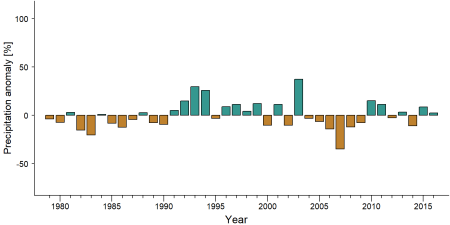
Precipitation anomaly in Dindefelo -
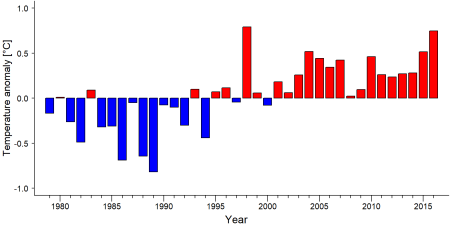
Temperature anomaly in Dindefelo


External links
References
Abdallah, R., Kuete Yimagou, E., Hadjadj, L., Mediannikov, O., Ibrahim, A., Davoust, B., …, & Baron, S. A. (2022). Population Diversity of Antibiotic Resistant Enterobacterales in Samples From Wildlife Origin in Senegal: Identification of a Multidrug Resistance Transposon Carrying blaCTX–M–15 in Escherichia coli. Frontiers in Microbiology, 13, 838392. doi:10.3389/fmicb.2022.838392
Arias, M., Pacheco, L., Temple, D., Lippens, V., Lopez-Bejar, M., & Manteca, X. (2017). Local Perceptions on Conservation of Wild Chimpanzees (Pan troglodytes verus) in the Réserve Naturelle Communautaire de Dindéfélo, Southeast of Senegal. Preprint. https://doi.org/10.20944/preprints201712.0198.v1.
Baron, S. A., Mediannikov, O., Abdallah, R., Kuete Yimagou, E., Medkour, H., Dubourg, G., …, & Raoult, D. (2021). Multidrug-Resistant Klebsiella pneumoniae Clones from Wild Chimpanzees and Termites in Senegal. Antimicrobial Agents and Chemotherapy, 65(9). doi:10.1128/aac.02557-20
Boesch, C., Kalan, A. K., Mundry, R., Arandjelovic, M., Pika, S., Dieguez, P., …, & Kühl, H. S. (2020). Chimpanzee ethnography reveals unexpected cultural diversity. Nature Human Behaviour, 4(9), 910-916. doi:10.1038/s41562-020-0890-1
Camon, L., et al. (2020). Tourist and local people use of a savanna chimpanzee (Pan troglodytes verus) habitat in Dindefelo, Senegal. Folia Primatologica, 91, 531. https://doi.org/10.1159/000506768
Cardoso, S. (2022). Abstracts of the conference of the European Federation for Primatology (EFP), 1-3 June 2022, Royal Burgers’ Zoo, Arnhem, The Netherlands. Revue de primatologie, 13. doi:10.4000/primatologie.13512
DCNR. (2011). Plan de gestion de la Réserve Naturelle Communautaire de Dindéfélo 2012–2016. Dindéfélo, Senegal.
Dotras, L. (2022). Abstracts of the 8th Iberian Primatological Conference, 5-8 October 2022, University of Barcelona, Spain. Revue de primatologie, 13. doi:10.4000/primatologie.14505
Dotras, L., Barciela, A., Llana, M., Galbany, J., & Hernandez-Aguilar, R. A. (2024). Savanna chimpanzee (Pan troglodytes) crop feeding at Dindefelo, Senegal: challenges and implications for conservation. Primates, 65(4), 209-215. doi:10.1007/s10329-024-01125-9
Enthoven, D., et al. (2017). Nesting patterns of chimpanzees (Pan troglodytes verus) in a savanna habitat, Dindefelo, Senegal. Folia Primatologica, 88, 114. https://doi.org/10.1159/000479094
Galán-Plana, C. F. (2022). Abstracts of the 8th Iberian Primatological Conference, 5-8 October 2022, University of Barcelona, Spain. Revue de primatologie, 13. doi:10.4000/primatologie.14505
JGI Spain. (2019). Dindéfélo Biological Station: JGI’s headquarters in Senegal. https://www.janegoodallsenegal.org/biological-station
Köster, P. C., Renelies-Hamilton, J., Dotras, L., Llana, M., Vinagre-Izquierdo, C., Prakas, P., …, & Carmena, D. (2021). Molecular Detection and Characterization of Intestinal and Blood Parasites in Wild Chimpanzees (Pan troglodytes verus) in Senegal. Animals, 11(11), 3291. doi:10.3390/ani11113291
Kühl, H. S., Boesch, C., Kulik, L., Haas, F., Arandjelovic, M., Dieguez, P., …, & Kalan, A. K. (2019). Human impact erodes chimpanzee behavioral diversity. Science, 363(6434), 1453-1455. doi:10.1126/science.aau4532
Laidoudi, Y., Medkour, H., Latrofa, M. S., Davoust, B., Diatta, G., Sokhna, C., …, & Mediannikov, O. (2020). Zoonotic Abbreviata caucasica in Wild Chimpanzees (Pan troglodytes verus) from Senegal. Pathogens, 9(7), 517. doi:10.3390/pathogens9070517
Macina, S. (2022). Abstracts of the 8th Iberian Primatological Conference, 5-8 October 2022, University of Barcelona, Spain. Revue de primatologie, 13. doi:10.4000/primatologie.14505
Medkour, H., et al. (2020a). Adenovirus infections in African human and wild non-human primates: Great diversity and cross-species transmission. Viruses, 12, 657. https://doi.org/10.3390/v12060657
Medkour, H., et al. (2020b). Parasitic infections in African human and non-human primates. Pathogens, 9, 561. https://doi.org/10.3390/pathogens9070561
Medkour, H., et al. (2021). Bacterial infections in humans and nonhuman primates from Africa: Expanding the knowledge. The Yale Journal of Biology and Medicine, 94, 227–248. https://www.ncbi.nlm.nih.gov/pmc/articles/PMC8223552/pdf/yjbm_94_2_227.pdf link
Mirghani, N., et al. (2023a). New range record for the African brush-tailed porcupine, Atherurus africanus, in southeastern Senegal and northern Guinea. African Journal of Ecology, 61, 490–495. https://doi.org/10.1111/aje.13125
Mirghani, N., et al. (2023b). New range record for the Campbell’s monkey (Cercopithecus campbelli) in West Africa. Revue de Primatologie, 14, Abstract 24. https://journals.openedition.org/primatologie/17568 doi:10.4081/tz.2024.162
Mirghani, N., Dotras, L., Llana, M., Barciela, A., Renelies-Hamilton, J., Hernandez-Aguilar, R. A., & Galbany, J. (2024). New range record for Campbell’s monkeys (Cercopithecus campbelli) in West Africa. Tropical Zoology, 37(3-4), 34-41. doi:10.4081/tz.2024.162
Pacheco, L., Fraixedas, S., Fernández-Llamazares, Á., Estela, N., Mominee, R., & Guallar, F. (2012). Perspectives on Sustainable Resource Conservation in Community Nature Reserves: A Case Study from Senegal. Sustainability, 4(11), 3158-3179. doi:10.3390/su4113158
Pruetz, J. D., Marchant, L. F., Arno, J., & McGrew, W. C. (2002). Survey of Savanna Chimpanzees (Pan troglodytes verus) in Southeastern Sénégal. American Journal of Primatology, 58(1), 35-43. doi:10.1002/ajp.10035
Ramon, M. (2017). The fruit of discord? Saba senegalensis use by chimpanzees (Pan troglodytes verus) and local people in the Dindefelo Community Nature Reserve (RNCD), Southeastern Senegal. Folia Primatologica, 88(2), 167–168. doi:10.1159/000479094
Renelies-Hamilton, J., Noguera-Julian, M., Parera, M., Paredes, R., Pacheco, L., Dacal, E., …, & Carmena, D. (2019). Exploring interactions between Blastocystis sp., Strongyloides spp. and the gut microbiomes of wild chimpanzees in Senegal. Infection, Genetics and Evolution, 74, 104010. doi:10.1016/j.meegid.2019.104010
Renelies-Hamilton, J., et al. (2023). Diet of savanna chimpanzees (Pan troglodytes verus) in Dindefelo, Senegal. Revue de Primatologie, Abstract 35. https://journals.openedition.org/primatologie/17568
Sánchez-Megías, A. (2022). Abstracts of the 8th Iberian Primatological Conference, 5-8 October 2022, University of Barcelona, Spain. Revue de primatologie, 13. doi:10.4000/primatologie.14505
Sánchez-Megías, A., et al. (2023). Army ant (Dorylus sp.) foraging strategies of a savanna chimpanzee (Pan troglodytes verus) community at Dindefelo, Senegal. Revue de Primatologie, Abstract 40. https://journals.openedition.org/primatologie/17568
Sánchez-Megías, A., Galán-Plana, C. F., Mirghani, N., Dotras, L., Galbany, J., Llana, M., …, & Hernandez-Aguilar, R. A. (2024). Wild chimpanzees remember and revisit concealed, underground army ant nest locations throughout multiple years. Communications Biology, 7(1), 1546. doi:10.1038/s42003-024-07206-1
Sereme, Y., Zarza, S. M., Medkour, H., Mezouar, S., Dotras, L., Barciela, A., …, & Mediannikov, O. (2024). Treponematosis in critically endangered Western chimpanzees (Pan troglodytes verus) in Senegal. One Health, 18, 100694. doi:10.1016/j.onehlt.2024.100694
Wessling, E. G., Dieguez, P., Llana, M., Pacheco, L., Pruetz, J. D., & Kühl, H. S. (2020). Chimpanzee (Pan troglodytes verus) Density and Environmental Gradients at Their Biogeographical Range Edge. International Journal of Primatology, 41(6), 822-848. doi:10.1007/s10764-020-00182-3
Kiribou, R., Tehoda, P., Chukwu, O., Bempah, G., Kühl, H. S., Ferreira, J., …, & Heinicke, S. (2024). Exposure of African ape sites to climate change impacts. PLOS Climate, 3(2), e0000345. doi:10.1371/journal.pclm.0000345
Page created by: Jane Goodall Institute Spain in Senegal Date: 2023-12-02
Page updated by: Jane Goodall Institute Spain in Senegal Date: 2024-12-30