
Dassioko Sud Classified Forest: Difference between revisions
No edit summary |
No edit summary |
||
| Line 119: | Line 119: | ||
!Implementing organization(s) | !Implementing organization(s) | ||
!Year of activity | !Year of activity | ||
|- | |||
|2 Counter-wildlife crime | |||
|2.3 Conduct regular anti-poaching patrols | |||
|SODEFOR, the forest manager, conducts surveillance patrols. However, these patrols are not regular (Soiret pers. comm. 2022). | |||
|SODEFOR | |||
|2012-2016, Ongoing (2022) | |||
|- | |- | ||
|5 Protection & restoration | |5 Protection & restoration | ||
| Line 125: | Line 131: | ||
| | | | ||
|1923-Ongoing (2022) | |1923-Ongoing (2022) | ||
|} | |} | ||
Revision as of 10:27, 23 December 2025
West Africa > Côte d'Ivoire > Dassioko Sud Classified Forest
Français | Português | Español | Bahasa Indonesia | Melayu
Summary
- West African chimpanzees (Pan troglodytes verus) are present in Dassioko Sud Classified Forest.
- Population size is unknown.
- The population trend is unknown.
- This site has a total surface area of 80 km².
- The main threats to chimpanzees are farming and hunting.
- The main conservation activities are patrolling.
-
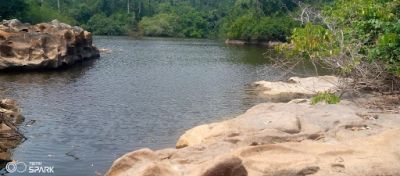
Dassioko forest, south © Serge Soiret -
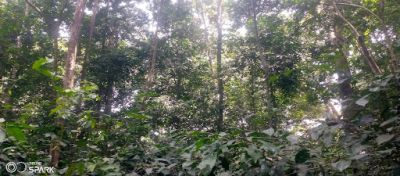
Dassioko forest © Serge Soiret


Site characteristics
The Dassioko Sud classified forest, a relic of the Dassioko classified forest on Côte d'Ivoire's coastal forest coast, lies between 5°00'06' and 5°07'23'N latitude and 5°49'48' and 5°56'57' W longitude (Yao et al. 2016). The site is characterized by several vegetation types present including terrestrial forest, swamp forest on hydromorphic soils, and coastal thickets. This diversity of habitats is inhabited by a wide range of fauna. Recent studies in the site have revealed the presence of 19 species of large mammals in six families (Elephantidae, Hippopotamidae, Bovidae, Suidae, Cercopithecidae and Pongidae). The communities surrounding this forest are involved in several activities carried out in the vicinity of the forest. However, agriculture is the dominant form of human activity and involves coffee, cocoa, rubber, oil palm, coconut and citrus for cash crops. Food crops are dominated by cassava and rice (Kouao et al. 2020).
Table 1. Basic site information for Dassioko Sud Classified Forest
| Species | Pan troglodytes verus |
| Area | 80 km² |
| Coordinates | Lat: 5.066629 , Lon: -5.850178 |
| Type of site | Protected area (Classified Forest) |
| Habitat types | Subtropical/tropical moist lowland forest, Subtropical/tropical swamp forest |
| Type of governance | Governance by government |
Types of sites Governance types Habitat types

Ape status
Table 2. Ape population estimates reported for Dassioko Sud Classified Forest
| Species | Year | Occurrence | Encounter or vistation rate (nests/km; ind/day) | Density estimate [ind./ km²] (95% CI) | Abundance estimate (95% CI) | Survey area | Sampling method | Analytical framework | Source | Comments | A.P.E.S. database ID |
|---|---|---|---|---|---|---|---|---|---|---|---|
| Pan troglodytes verus | 2015-2016 | Present | Dassioko Sud Classified Forest | Line transects | Distance sampling | Yao et al. 2018 | Presence of chimpanzees documented during a survey of duikers in the site. |
Sampling methods Analytical frameworks
Threats
Table 3. Threats to apes reported for Dassioko Sud Classified Forest
| Category | Specific threats | Threat level | Description | Year of threat |
|---|---|---|---|---|
| 2 Agriculture & aquaculture | 2.1 Annual & perennial non-timber crops | High (more than 70% of population affected) | Agricultural activity inside the forest; conversion of part of the forest to plantations, mostly cocoa (Bitty et al. 2015). The northern part of the forest has been totally converted to cocoa, rubber and oil palm plantations. Only the southern part still contains a few fragments of intact forest. | 2015-Ongoing (2022) |
| 5 Biological resource use | 5.1 Hunting & collecting terrestrial animals | Present (unknown severity) | Evidence of hunting and other anthropogenic activities within the forest (Gonedelé et al. 2017). | 2017-Ongoing (2022) |
Conservation activities
Table 4. Conservation activities reported for Dassioko Sud Classified Forest
| Category | Specific activity | Description | Implementing organization(s) | Year of activity |
|---|---|---|---|---|
| 2 Counter-wildlife crime | 2.3 Conduct regular anti-poaching patrols | SODEFOR, the forest manager, conducts surveillance patrols. However, these patrols are not regular (Soiret pers. comm. 2022). | SODEFOR | 2012-2016, Ongoing (2022) |
| 5 Protection & restoration | 5.2 Legally protect ape habitat | The classified forest was established in 1923. | 1923-Ongoing (2022) |
Challenges
The challenges include lack of funding for regular monitoring activities and the limited number of agents from SODEFOR, the organization in charge of managing the classified forest.
Table 5. Challenges reported for Dassioko Sud Classified Forest
| Challenges | Specific challenges | Source | Year(s) |
|---|---|---|---|
| 2 Resources and capacity | 2.3 General lack of funding | Bitty et al. 2015 | Ongoing (2015) |
| 2 Resources and capacity | 2.2 Lack of staff | Bitty et al. 2015 | Ongoing (2015) |
Enablers
Research activities
Documented behaviours
Exposure to climate change impacts
As part of a study on the exposure of African great ape sites to climate change impacts, Kiribou et al. subm. extracted climate data and data on projected extreme climate impact events for the site. Climatological characteristics were derived from observation-based climate data provided by the Inter-Sectoral Impact Model Intercomparison Project (ISIMIP, www.isimip.org). Parameters were calculated as the average across each 30-year period. For 1981-2010, the EWEMBI dataset from ISIMIP2a was used. For the two future periods (2021-2050 and 2071-2099) ISIMIP2b climate data based on four CMIP5 global climate models were used. For future projections, two Representative Concentration Pathways (RCP) were used. RCP 2.6 is a scenario with strong mitigation measures in which global temperatures would likely rise below 2C. RCP 6.0 is a scenario with medium emissions in which global temperatures would likely rise up to 3C by 2100. For the number of days with heavy precipitation events, the 98th percentile of all precipitation days (>1mm/d) was calculated for the 1979-2013 reference period as a threshold for a heavy precipitation event. Then, for each year, the number of days above that threshold was derived. The figures on temperature and precipitation anomaly show the deviation from the mean temperature and mean precipitation for the 1979-2013 reference period.
The estimated exposure to future extreme climate impact events (crop failure, drought, river flood, wildfire, tropical cyclone, and heatwave) is based on a published dataset by Lange et al. 2020 derived from ISIMIP2b data. The same global climate models and RCPs as described above were used. Within each 30-year period, the number of years with an extreme event and the average proportion of the site affected were calculated (see Kiribou et al. subm. for details).
Table 8. Estimated past and projected climatological characteristics in Dassioko Sud Classified Forest
| Value | 1981-2010 | 2021-2050, RCP 2.6 | 2021-2050, RCP 6.0 | 2071-2099, RCP 2.6 | 2071-2099, RCP 6.0 |
|---|---|---|---|---|---|
| Mean temperature [C] | 26.5 | 27.5 | 27.3 | 27.6 | 28.6 |
| Annual precipitation [mm] | 1381 | 1324 | 1405 | 1339 | 1367 |
| Max no. consecutive dry days (per year) | 26.5 | 28.5 | 28 | 27.8 | 31.4 |
| No. days with heavy precipitation (per year) | 6.9 | 6.9 | 6.5 | 5.7 | 7.9 |
Table 9. Projected exposure of apes to extreme climate impact events in Dassioko Sud Classified Forest
| Type | No. of years with event (2021-2050, RCP 2.6) | % of site exposed (2021-2050, RCP 2.6) | No. of years with event (2021-2050, RCP 6.0) | % of site exposed (2021-2050, RCP 6.0) | No. of years with event (2070-2099, RCP 2.6) | % of site exposed (2070-2099, RCP 2.6) | No. of years with event (2070-2099, RCP 6.0) | % of site exposed (2070-2099, RCP 6.0) |
|---|---|---|---|---|---|---|---|---|
| Crop failure | 3 | 3.68 | 1.5 | 2.06 | 0.5 | 1.17 | 2 | 3.77 |
| Drought | 1.5 | 75 | 0.75 | 75 | 1 | 100 | 0.75 | 50 |
| Heatwave | 17 | 100 | 17.5 | 100 | 21 | 100 | 17 | 100 |
| River flood | 0 | 0 | 0 | 0 | 0.5 | 0.42 | 0.5 | 0.43 |
| Tropical cyclone | 0 | 0 | 0.5 | 1.29 | 0 | 0 | 0 | 0 |
| Wildfire | 30 | 0.41 | 30 | 0.45 | 29 | 0.41 | 29 | 0.42 |
External links
References
Bitty, A. E., Gonedelé, S. B., Koffi Bene, J. C., Kouassi, P. and McGraw, W. S. 2015. Cocoa farming and primate extirpation inside Cote d’Ivoire’s protected areas. Tropical Conservation Science Vol.8 (1): 95-113.
Gonedele Bi, S., Kone´, I., Be´ne´, J. C. K., Bitty, E. A., Kouassi, B. A., & Gaubert, P. (2016). Bushmeat hunting around a remnant coastal rainforest in Côte d’Ivoire. Oryx, 51, 418–427. doi:10.1017/S0030605315001453
Kouao, M. L., Bene, J. C. K., Soulemane, O., Djaha, A. K., Yao, A., & Kone, I. (2020). Nature and management of human-elephant conflicts around the Dassioko classified forest on the Ivorian coastline. Journal of Animal & Plant Sciences, 44, 7745-7757 https://doi.org/10.35759/JAnmPlSci.v44-3.6
Yao, K. A., & Kassé, K. B. Gonedelé Bi, S. & Yaokokoré-Béibro, KH (2016). Diversité des Mammifères de la forêt classée de Dassioko Sud, Fresco (Sud-Ouest de la Côte d’Ivoire): un état des lieux. Afrique Sciences, 12(4), 16 http://www.afriquescience.info
Yao, K. A., Bitty, E. A., Kassé, K. B., Kouakou, Y. C., Yaokokoré-Beibro, K. H., Gonedelé Bi, S., & McGraw, W. S. (2018). Distribution and relative abundance of forest duikers in Dassioko Sud Forest Reserve (coastal Côte d’Ivoire). Wildlife Research, 44(8), 660–668. https://doi.org/10.1071/WR17068
Page created by: Serge Soiret Date: 2023-03-24