
Volcanoes National Park: Difference between revisions
No edit summary |
No edit summary |
||
| Line 907: | Line 907: | ||
<div><ul><li style="display: inline-block; vertical-align: top;"> [[File:PrecipAnomaly_Volcanoes NP.png| 450px | thumb| none | Precipitation anomaly inVolcanoes National Park]] </li><li style="display: inline-block; vertical-align: top;"> [[File:TempAnomaly_Volcanoes NP.png | 450px | thumb| none | Temperature anomaly inVolcanoes National Park]] </li></ul></div> | |||
= External links = | = External links = | ||
Revision as of 02:55, 6 November 2025
East Africa > Rwanda > Volcanoes National Park
Français | Português | Español | Bahasa Indonesia | Melayu
Summary
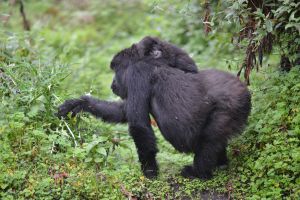
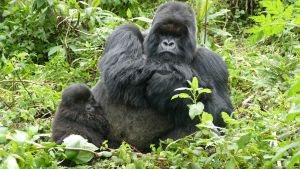
- Mountain Gorillas (Gorilla beringei beringei) are present in Volcanoes National Park.
- The gorilla population in the Virunga Massif, which includes Volcanoes National Park, has been estimated at 669 (CI: 623–759).
- The gorilla population trend is increasing.
- The site has a total size of 160 km².
- Key threats to gorillas are habitat encroachment, illegal hunting and logging.
- Conservation activities have focused on ecotourism and research activities.
- The Karisoke Research Center was established in the park by American primatologist Dian Fossey.
-
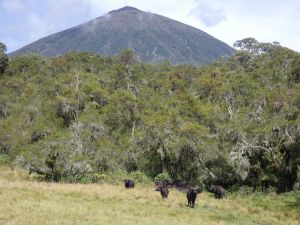
© Dian Fossey Gorilla Fund -
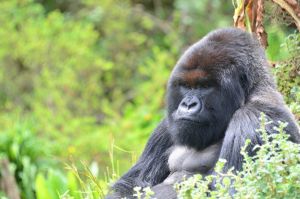
Silverback Gicurasi © Dian Fossey Gorilla Fund -
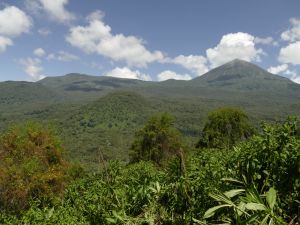
© Dian Fossey Gorilla Fund.


Site characteristics
Table 1. Basic site information for Volcanoes National Park
| Species | Gorilla beringei beringei |
| Area | 160 km² |
| Coordinates | Lat: -1.399010 , Lon: 29.588259 |
| Type of site | Protected area (National Park) |
| Habitat types | Subtropical/tropical moist montane forest, Wetlands (lakes, rivers, streams, bogs, marshes), Rocky areas (inland cliffs, mountain peaks) |
| Type of governance | Governance by government |
Types of sites Governance types Habitat types
-
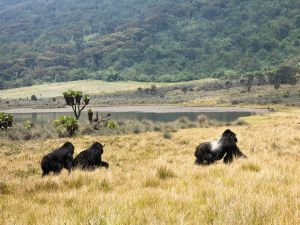
© Dian Fossey Gorilla Fund -
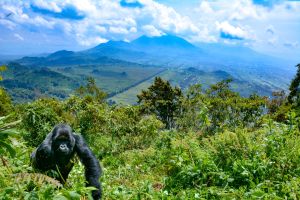
© Dian Fossey Gorilla Fund 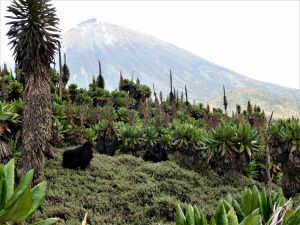
© Dian Fossey Gorilla Fund -
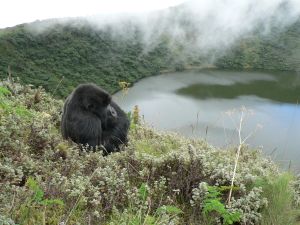
Silverback on Bisoke Top © Dian Fossey Gorilla Fund


Ape status
Table 2. Ape population estimates reported for Volcanoes National Park
| Species | Year | Occurrence | Encounter or vistation rate (nests/km; ind/day) | Density estimate [ind./ km²] (95% CI) | Abundance estimate (95% CI) | Survey area | Sampling method | Analytical framework | Source | Comments | A.P.E.S. database ID |
|---|---|---|---|---|---|---|---|---|---|---|---|
| Gorilla beringei beringei | 2015-16 | 669 (623-759) | Virunga massif (450 km²) | Genetic (dung/hair) | Spatially explicit capture-recapture, Reconnaissance walk | Granjon et al. 2020 | Combination of recces and mark-recapture; estimate for the entire population including gorillas in DRC and Uganda | ||||
| Gorilla beringei beringei | 2010 | 480 | Virunga massif (450 km²) | Genetic (dung/hair) | Count method | Gray et al. 2013 | Recces; estimate for the entire population including gorillas in DRC and Uganda | ||||
| Gorilla beringei beringei | 2003 | 380 | Virunga massif (450 km²) | Genetic (dung/hair) | Count method | Gray et al. 2003 | Recces; estimate for the entire population including gorillas in DRC and Uganda | ||||
| Gorilla beringei beringei | 1981 | 254 | Virunga massif (450 km²) | Line transects | Count method | Aveling and Harcourt 1984 | Estimate for the entire population including gorillas in DRC and Uganda | ||||
| Gorilla beringei beringei | 2000 | 359-395 | Virunga massif (450 km²) | Other (type here) | Count method | Kalpers et al. 2003 | Used regular ranger patrols to count nests of unhabituated groups and known number of gorillas from habituated groups; estimate for the entire population including gorillas in DRC and Uganda | ||||
| Gorilla beringei beringei | 1976-78 | 268 | Virunga massif (450 km²) | Other (type here) | Count method | Weber and Vedder 1983 | Used recces to count direct sightings, count nests and used demographic information from monitored groups; estimate for the entire population including gorillas in DRC and Uganda | ||||
| Gorilla beringei beringei | 1989 | 324 | Virunga massif (450 km²) | Reconnaissance walk | Count method | Sholley 1991 | Counted night nests; estimate for the entire population including gorillas in DRC and Uganda | ||||
| Gorilla beringei beringei | 1986 | 293 | Virunga massif (450 km²) | Reconnaissance walk | Count method | Vedder and Aveling 1986 | Estimate for the entire population including gorillas in DRC and Uganda | ||||
| Gorilla beringei beringei | 1971-73 | 274 | Virunga massif (450 km²) | Reconnaissance walk | Count method | Harcourt and Groom 1972, Groom 1973 | Used recces and nest counts; estimate for the entire population including gorillas in DRC and Uganda | ||||
| Gorilla beringei beringei | 1959-60 | 400-500 | Virunga massif (450 km²) | Reconnaissance walk | Schaller 1963 | Estimate for the entire population including gorillas in DRC and Uganda |
Sampling methods Analytical frameworks
-
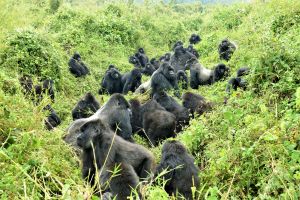
© Dian Fossey Gorilla Fund -
© Dian Fossey Gorilla Fund 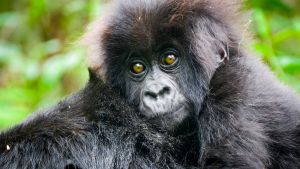
© Dian Fossey Gorilla Fund -
© Dian Fossey Gorilla Fund


Threats
Table 3. Threats to apes reported for Volcanoes National Park
| Category | Specific threats | Threat level | Description | Year of threat |
|---|---|---|---|---|
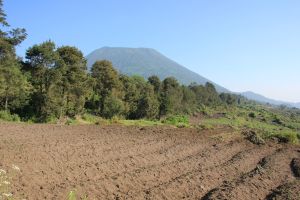
| 1 Residential & commercial development | 1.1 Residential areas | Medium (30-70% of population affected) | Since the early 1990s, the human population has steadily and steeply increased around the Virunga volcanoes (Plumptre & Williamson, 2001) reaching >1000 people / sqkm in 2010 with a large proportion being poor and depending on forest resources (Bush, 2010) | 1900-Ongoing (2025) |
| 2 Agriculture & aquaculture | 2.1.1 Shifting agriculture | High (more than 70% of population affected) | In the 1950s and 1960s, ~50% of the park was destroyed for agricultural fields/farming (e.g. pyrethrum, potatoes) (Weber, 1987, 1989). On a smaller scale, forest was cut for agriculture until 1981 (Maekawa et al., 2013). | 1950-1969 |
| 5 Biological resource use | 5.3 Logging & wood harvesting | High (more than 70% of population affected) | In the 1950s and 1960s, ~50% of the park was destroyed for agricultural fields/farming (Weber, 1987). | 1950-1973 |
| 2 Agriculture & aquaculture | 2.3 Livestock farming & ranching | Medium (30-70% of population affected) | From the 1950s until the mid-1970s, herds of hundreds of cattle grazed inside the park (Harcourt, 1986; Schaller, 1963). | 1950-1975 |
| 5 Biological resource use | 5.1.4 Capture for the live animal trade | High (more than 70% of population affected) | In the past, gorillas were captured for live animal trade (Plumptre & Williamson, 2001; Stewart & Sicotte, 2001; Robbins et al., 2011) | 1960-1969 |
| 10 Geological events | 10.3 Avalanches/landslides | Present (unknown severity) | Landslides occur inside the park during heavy rainy periods and can destroy small forest patches (personal observations). | 1960-Ongoing (2025) |
| 2 Agriculture & aquaculture | 2.1.2 Small-holder farming | Present (unknown severity) | The lack of land available for small-holder farming around the park poses increasing pressure on forest resources (Musahara and Huggins, 2004; https://www.volcanoesnationalpark.org/news/assessing-impacts-from-community-conservation-interventions/). | 1960-Ongoing (2025) |
| 5 Biological resource use | 5.2 Gathering terrestrial plants | Low (up to 30% of population affected) | People enter the park to collect medicinal plants and cut bamboo for construction (Bush, 2010). | 1960-Ongoing (2025) |
| 6 Human intrusions & disturbance | 6.3 Other human disturbances | Low (up to 30% of population affected) | Other illegal activities have been observed inside the park, e.g. water collection and beekeeping (unpublished Ranger-Based Monitoring data; Bush, 2010; https://www.volcanoesnationalpark.org/news/assessing-impacts-from-community-conservation-interventions/). | 1960-Ongoing (2025) |
| 8 Invasive & other problematic species, genes & diseases | 8.1 Invasive non-native/alien species | Present (unknown severity) | Invasive and exotic plant and animal species (e.g. tree tomatoes, feral dogs) have been recorded inside VNP (unpublished Ranger-Based Monitoring data; Irakoze, 2024; Uzabaho et al., 2023). | 1960-Ongoing (2025) |
| 5 Biological resource use | 5.1.1 Subsistence bushmeat hunting | High (more than 70% of population affected) | Gorillas were intentionally hunted for trophy trade (e.g. heads, skulls), and mainly sold to foreigners (Harcourt, 1986; Steward et al., 2001) | 1970-1980 |
| 1 Residential & commercial development | 1.3 Tourism & recreation areas | Low (up to 30% of population affected) | Ecotourism was implemented in the 1980s (Vedder, 1989) and has since been growing but it ceased temporarily in 1990s during insecurity in the region and in 2020 during the COVID-19 pandemic. Today, there are frequent tourist activities in most forest areas. | 1980-Ongoing (2024) |
| 5 Biological resource use | 5.3.1 Subsistence logging | Low (up to 30% of population affected) | Today, people still enter the park to cut bamboo stems or trees but on a small scale for construction or firewood (Bush, 2010). | 1980-Ongoing (2025) |
| 2 Agriculture & aquaculture | 2.2 Wood & pulp plantations | Present (unknown severity) | Various non-native tree species are cultivated by small-holders adjacent to the park (e.g. Eucalyptus, Acacia, Cyprus, non-native bamboo species) (e.g. McGuinness, 2014). | 1980-Ongoing (2025) |
| 1 Residential & commercial development | 1.2 Commercial & industrial areas | Present (unknown severity) | Military bases near and inside the park for security reasons (Kalpers et al., 2003; Maekawa et al., 2013) starting from 1990s. In addition, telecommunication infrastructure was built on the top of Karisimbi in 1985 (https://allafrica.com/stories/200509300210.html). | 1985-Ongoing (2025) |
| 8 Invasive & other problematic species, genes & diseases | 8.4 Pathogens | High (more than 70% of population affected) | Reports of respiratory viruses, gastrointestinal parasites, herpes viruses, and measles inside the VNP and rabies, Ebola, and Marburg virus outbreaks in close proximity to the park (e.g. Mazet et al., 2020; Hassell et al., 2017; Smiley Evans et al., 2017; Spelman et al., 2013; Petrzlkova et al., 2021, 2022) | 1988-Ongoing (2025) |
| 7 Natural system modifications | 7.1 Fire & fire suppression | Low (up to 30% of population affected) | In 1989 and 2009, fire broke out along the slope of Mount Muhabura twice caused by human activities and burned a large area from low to high elevation (Hoek et al., 2023; McNeilage, 1995) | 1989-Ongoing (2025) |
| 6 Human intrusions & disturbance | 6.2 War, civil unrest & military exercises | Low (up to 30% of population affected) | Armed groups were present inside the park (Kalpers et al., 2003). | 1990-2003 |
| 9 Pollution | 9.4 Garbage & solid waste | Present (unknown severity) | Waste inside the Volcanoes National Park is a growing problem (e.g. plastic bottles are left inside the park) (https://www.awf.org/blog/cleaning-volcanoes-national-park-removing-remnants-past). | 1990-Ongoing (2024) |
| 9 Pollution | 9.3 Agricultural & forestry effluents | Present (unknown severity) | Chemical fertilizers and pesticides are used in agricultural fields where gorillas range nearby the park boundaries when exiting the park (Kwizera et al., 2024). | 1990-Ongoing (2025) |
| 6 Human intrusions & disturbance | 6.2 War, civil unrest & military exercises | High (more than 70% of population affected) | In 1990 and early 2000s, intermitted disruptions in daily protection of the forest due to war in the region and the presence of armed groups and refugees in the forest (Stewart et al., 2001). However, pre-/post-surveys indicated that the gorilla population did not reduce but further increased (Vedder and Aveling 1986; Kalpers et al. 2003). | 1994-2003 |
| 5 Biological resource use | 5.1.5 Persecution/human wildlife conflict | Low (up to 30% of population affected) | Gorillas occasionally range outside the park in adjacent agricultural fields and feed on trees (e.g. Eucalyptus, Acacia), herbs, and bamboo stands; however, research indicates that local communities rate the level of conflict low because a compensation system is in place (McGuinnes, 2014). | 2001-Ongoing (2025) |
| 11 Climate change & severe weather | 11.1 Habitat shifting & alteration | Present (unknown severity) | One of the gorillas key habitats, the bamboo forest, is disappearing inside the VNP and regeneration through shoots is declining (van der Hoek et al., 2020). | 2010-Ongoing (2025) |
| 9 Pollution | 9.5 Air-borne pollutants | Present (unknown severity) | Danger from ambient air pollution is increasing across Africa (DeWitt et al., 2019; Fisher et al., 2021). | 2010-Ongoing (2025) |
| 11 Climate change & severe weather | 11.3 Temperature extremes | Present (unknown severity) | Anecdotes of gorillas dying from hypothermia during cold/rainy days (Eckardt et al., 2019) | 2011-Ongoing (2025) |
| 5 Biological resource use | 5.1.2 Unintentional effects (species is not the target) | High (more than 70% of population affected) | Unintentional effect on gorillas as snares are set targeting other animals in the forest (with forest sectors being affected differently) (unpublished Ranger-Based Monitoring data; Robbins et al., 2011) | Ongoing (2025) |
-
© Dian Fossey Gorilla Fund -
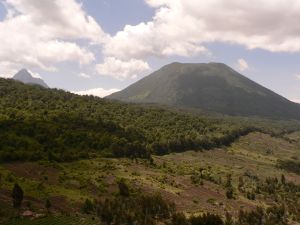
© Dian Fossey Gorilla Fund


Conservation activities
Table 4. Conservation activities reported for Volcanoes National Park
| Category | Specific activity | Description | Implementing organization(s) | Year of activity |
|---|---|---|---|---|
| 5 Protection & restoration | 5.2 Legally protect ape habitat | The Albertine National Park which included today's Volcanoes National Park was founded in April 1925 (Kalpers et al. 2003). | European Conservation Movement | 1925-Ongoing (2025) |
| 2 Counter-wildlife crime | 2.13 Provide sustainable alternative livelihoods; establish fish- or domestic meat farms | Various organizations and stakeholders have supported local communities around the Volcanoes National Park with livelihoods, such as the tourism sector (employment as guide, porter), through cooperatives (e.g. beekeeping, handcrafts, mushroom farms), distribution of domestic animals (e.g. goats, sheep, cows) (e.g. https://rdb.rw/rdb-hands-over-729-cows-to-vulnerable-families-living-around-volcanoes-national-park/; https://gorillafund.org/helping-communities/new-community-program-helps-villages-and-protects-forests/; https://earthjournalism.net/stories/from-poachers-to-conservationists-how-a-cultural-village-saved-volcano-national-park-in; https://www.forgorillas.org/what-we-do). | Rwanda Development Board (former: Office Rwandais du Tourisme et des Parcs Nationaux), Dian Fossey Gorilla Fund, International Gorilla Conservation Programme, Sacola, Hospitality-based businesses (e.g. Eco-Lodges), Conservation Heritage-Turambe | 1960-Ongoing (2025) |
| 3 Species health | 3.10 Treat sick/injured apes | Pre-1985, the health of habituated gorillas was monitored by field teams and sick/injured apes were treated (no permanent vet on site) (https://www.gorilladoctors.org/about-us/history-past-gorilla-doctors/). | Rwanda Development Board (former: Office Rwandais du Tourisme et des Parcs Nationaux), Gorilla Doctors, Dian Fossey Gorilla Fund, Greater Virunga Transboundary Collaboration, International Gorilla Conservation Programme | 1967-1984 |
| 2 Counter-wildlife crime | 2.14 Employ hunters in the conservation sector to reduce their impact | There are reports that former hunters were employed in conservation efforts (e.g. https://earthjournalism.net/stories/from-poachers-to-conservationists-how-a-cultural-village-saved-volcano-national-park-in; Fossey, 1983). | Rwanda Development Board (former: Office Rwandais du Tourisme et des Parcs Nationaux), Dian Fossey Gorilla Fund, | 1967-2000 |
| 2 Counter-wildlife crime | 2.6 Regularly de-activate/remove ground snares | Anti-poaching patrols and other field teams (e.g. gorilla or golden monkey protection and monitoring teams that daily work inside the VNP) destroy snare when encountered (Harcourt, 1986; Stewart & Sicotte, 2001). | Rwanda Development Board (former: Office Rwandais du Tourisme et des Parcs Nationaux, Dian Fossey Gorilla Fund | 1967-Ongoing (2025) |
| 3 Species health | 3.12 Detect & report dead apes and clinically determine their cause of death to avoid disease transmission | Field teams report encounters of dead gorillas. If possible, dead gorillas are removed from the forest for necropsy by Gorilla Doctors to determine the cause of death and for sample collection (e.g. see: https://www.gorilladoctors.org/tag/necropsy/) | Rwanda Development Board (former: Office Rwandais du Tourisme et des Parcs Nationaux), Gorilla Doctors, Dian Fossey Gorilla Fund | 1967-Ongoing (2025) |
| 6 Species management | 6.2 Guard habituated ape groups to ensure their safety/well-being | All habituated groups are monitored and protected daily by teams of rangers who spend at least 4 hours (depending on group location and other factors) with the group 365 days a year (https://gorillafund.org/what-we-do/daily-protection/; https://visitrwanda.com/interests/gorilla-tracking/). There have been only a few gaps when protection and monitoring ceased due to insecurity in the 1990s. | Rwanda Development Board (former: Office Rwandais du Tourisme et des Parcs Nationaux), Dian Fossey Gorilla Fund | 1967-Ongoing (2025) |
| 8 Permanent presence | 8.1 Run research project and ensure permanent human presence at site | The Dian Fossey Gorilla Fund has conducted research in the gorilla population on the Rwandan side of the Virunga massif since 1967 and is today's longest-running gorilla research station with a permanent presence (www.gorillafund.org). These are collaborative efforts with national, regional, and international partners. Over the years, other organizations have implemented research in the park (e.g. https://www.gorilladoctors.org/). | Dian Fossey Gorilla Fund, Rwanda Development Board (former: Office Rwandais du Tourisme et des Parcs Nationaux), Gorilla Doctors, International Gorilla Conservation Programmme | 1967-Ongoing (2025) |
| 8 Permanent presence | 8.3 Permanent presence of staff/manager | There has been an increasing permanent presence of field staff, managers, veterinarians, and researchers on-site starting in 1967 (www.gorillafund.org; https://visitrwanda.com/interests/gorilla-tracking/; https://www.gorilladoctors.org/) | Rwanda Development Board (former: Office Rwandais du Tourisme et des Parcs Nationaux), Dian Fossey Gorilla Fund, Gorilla Doctors | 1967-Ongoing (2025) |
| 4 Education & awareness | 4.3 Install billboards to raise ape conservation awareness | Many conservation partners have installed billboards to raise ape conservation awareness (personal observations) | Rwanda Development Board (former: Office Rwandais du Tourisme et des Parcs Nationaux), Dian Fossey Gorilla Fund, Conservation Heritage-Turambe, International Gorilla Conservation Programme, Gorilla Doctors, Gorilla Organization, and many others | 1970-Ongoing (2025) |
| 8 Permanent presence | 8.2 Run tourist projects and ensure permanent human presence at site | Regular gorilla tourism was implemented in Rwanda in 1970s (Stewart & Sicotte, 2001;https://visitrwanda.com/destinations/volcanoes-national-park/). All habituated groups are monitored and protected daily by teams of rangers. | Rwanda Development Board (former: Rwandan Office for Tourism and National Parks - ORTPN) | 1970-Ongoing (2025) |
| 1 Development impact mitigation | 1.3 Prohibit (livestock) farmers from entering protected areas | Until mid-1970s, cattle herds were illegally grazing inside the Volcanoes National Park. Conservation actions (deployment of anti-poaching teams) have nearly ceased this activity after many years of conflict with the farmers (Harcourt, 1986). | Karisoke Research Center, Rwanda Development Board (former: Office Rwandais du Tourisme et des Parcs Nationaux) | 1975 |
| 2 Counter-wildlife crime | 2.3 Conduct regular anti-poaching patrols | Regular patrols were initiated with funds received by the Digit Fund at the end of 1970s (Harcourt, 1986; Stewart & Sicotte, 2001). Today, regular anti-poaching patrols are conducted across forest sectors and in areas where snares were sighted by other field teams. | Rwanda Development Board (former: Office Rwandais du Tourisme et des Parcs Nationaux, Dian Fossey Gorilla Fund | 1975-Ongoing (2025) |
| 2 Counter-wildlife crime | 2.8 Provide training to anti-poaching ranger patrols | Anti-poaching teams regularly participate in training programs (e.g. methods/tools for environmental/biodiversity monitoring, paramilitary training) (e.g. http://igcp.org/updates/volcanoes-national-park-consolidates-smart/) | Rwanda Development Board (former: Office Rwandais du Tourisme et des Parcs Nationaux), Dian Fossey Gorilla Fund, International Gorilla Conservation Programme | 1978-Ongoing (2025) |
| 6 Species management | 6.9 Rehabilitate injured/orphaned apes | In a few cases in the past, orphaned gorillas were retrieved from their natal groups/forest with the attempt to rehabilitate and reintroduce them - without success so far (see Coco and Pucker in Fossey, 1983). Confiscated mountain gorillas from DRC were brought to facilities (interim facility in Rwanda/Kinigi, DRC/Senkwekwe) for rehabilitation. | Institut Congolais pour la Conservation de la Nature, Rwanda Development Board, Gorilla Doctors, Dian Fossey Gorilla Fund | 1978-Ongoing (2025) |
| 2 Counter-wildlife crime | 2.7 Provide better equipment (e.g., guns) to anti-poaching ranger patrols | Anti-poaching patrol teams include at least one armed guard. Since 2015, teams started to be equipped with CyberTracker (later SMART) software installed on Android devices for recording data. | Rwanda Development Board (former: Office Rwandais du Tourisme et des Parcs Nationaux), Dian Fossey Gorilla Fund, International Gorilla Conservation Programme | 1980-Ongoing (2025) |
| 4 Education & awareness | 4.1 Educate local communities about apes and sustainable use | Education programs promoting biodiversity and gorilla conservation targeting local communities including school children around the park have been implemented by multiple stakeholders (e.g.: https://gorillafund.org/category/education-programs/; https://www.forgorillas.org/; .https://igcp.org/about-us/). | Rwanda Development Board (former: Office Rwandais du Tourisme et des Parcs Nationaux), Dian Fossey Gorilla Fund, Conservation Heritage-Turambe, International Gorilla Conservation Programme, Muhisimbi Voice of Youth in Conservation, Children in the Wilderness, Gorilla Organization, and many others | 1980-Ongoing (2025) |
| 3 Species health | 3.11 Implement continuous health monitoring/permanent vet on site | Field teams daily monitor the health of habituated gorillas (e.g. see: https://www.gorilladoctors.org/saving-lives/gorilla-health-monitoring-and-interventions/; Morrison et al., 2021)
. |
Rwanda Development Board (former: Office Rwandais du Tourisme et des Parcs Nationaux), Gorilla Doctors, Dian Fossey Gorilla Fund | 1985-Ongoing (2025) |
| 3 Species health | 3.9 Preventative vaccination of habituated or wild apes | During a measle outbreak 1988, 65 habituated gorillas were vaccinated (Spelman et al., 2013). | Rwanda Development Board (former: Office Rwandais du Tourisme et des Parcs Nationaux), Gorilla Doctors | 1988 |
| 3 Species health | 3.2 Keep safety distance to habituated apes | Rules and regulations for gorilla visits exist, such as keeping a distance to gorillas of at least 7m (see: https://www.gorilladoctors.org/it-takes-a-village-to-keep-gorillas-healthy/). This distance was temporarily increased to 10m during the COVID-19 pandemic (March 2020 to 2022). | Rwanda Development Board (former: Office Rwandais du Tourisme et des Parcs Nationaux), Gorilla Doctors, Dian Fossey Gorilla Fund, Greater Virunga Transboundary Collaboration, International Gorilla Conservation Programme | 1990-Ongoing (2025) |
| 3 Species health | 3.3 Limit time that researchers/tourists are allowed to spend with habituated apes | Since 1990s strict regulation for gorilla visits exists and include a limit of a 1-hour stay for tourists (see: https://visitrwandabookings.rdb.rw/rdbportal/mountain-gorilla-tracking) and a 4-hour visit for trackers/researchers. During the COVID-19 pandemic, trackers/researchers only conducted a group check (presence/absence of gorillas, births/deaths, health) and remained at a distance of 100-200m from the group. | Rwanda Development Board (former: Office Rwandais du Tourisme et des Parcs Nationaux), Gorilla Doctors, Dian Fossey Gorilla Fund, Greater Virunga Transboundary Collaboration, International Gorilla Conservation Programme | 1990-Ongoing (2025) |
| 2 Counter-wildlife crime | 2.11 Implement monitoring surveillance strategies (e.g., SMART) or use monitoring data to improve effectiveness of patrols | In the past, anti-poaching patrols and gorilla monitoring teams filled out daily monitoring sheets with pencil and paper. In 1999, GPS devices were introduced to monitor spatial patterns of wildlife in the park. MIST software was implemented in early 2000. In 2015, Dian Fossey Gorilla Fund implemented CyberTracker for daily protection and monitoring a gorilla subpopulation in the park. Since 2023, SMART was introduced as a new ranger-based monitoring tool and is now used by all gorilla ranger teams (see: https://igcp.org/updates/volcanoes-national-park-consolidates-smart/). | Rwanda Development Board (former: Office Rwandais du Tourisme et des Parcs Nationaux), Dian Fossey Gorilla Fund, International Gorilla Conservation Programme | 1999-Ongoing (2025) |
| 3 Species health | 3.14 Reduce garbage/human food waste to avoid ape injuries and disease transmission | Rwanda Development Board in collaboration with partners regularly conducts patrols aiming to remove trash inside the park (e.g. https://www.awf.org/blog/cleaning-volcanoes-national-park-removing-remnants-past). | Rwanda Development Board (former: Office Rwandais du Tourisme et des Parcs Nationaux), International Gorilla Conservation Programme | 1999-Ongoing (2025) |
| 1 Development impact mitigation | 1.11 Avoid building roads in key habitat or migration routes | Personal communication: In the beginning of the 2000s, there was a proposal to build a road through the forest to connect DRC and Rwanda. But conservationists such as International Gorilla Conservation Programme stopped planning. | International Gorilla Conservation Programme | 2000-Ongoing (2025) |
| 3 Species health | 3.13 Implement a health programme for local communities | Since early 2000s, various WASH, deworming initiatives, and a park staff (and their families) health monitoring program have been implemented in local communities around the Volcanoes National Park (e.g. https://www.mdf.nl/assignments/water-for-virunga-w4v-rwanda; https://www.go2africa.com/positive-impact/dian-fossey-gorilla-fund). Some of these initiatives have been temporary. Gorilla Doctors started treating/monitoring staff and their families in 2004 (https://www.gorilladoctors.org/saving-lives/one-health-medicine/employee-health-program/). | Rwanda Development Board (former: Office Rwandais du Tourisme et des Parcs Nationaux), Gorilla Doctors, Dian Fossey Gorilla Fund | 2000-Ongoing (2025) |
| 3 Species health | 3.8 Wear gloves when handling primate food, tool items, etc. | When collecting biological samples from wildlife, gloves have to be worn since the 2000s (personal observation). | Rwanda Development Board (former: Office Rwandais du Tourisme et des Parcs Nationaux), Gorilla Doctors, Dian Fossey Gorilla Fund, Greater Virunga Transboundary Collaboration, International Gorilla Conservation Programme | 2000-Ongoing (2025) |
| 4 Education & awareness | 4.2 Involve local community in ape research and conservation management | Since early 2000s local communities represented by local governments (also called local/village leaders) and cooperatives are regularly consulted to address conservation challenges (e.g. wildlife conflicts and illegal use of forest resources, usages of revenue-sharing benefits) (e.g. Kalulu et al., 2016; https://gorillafund.org/helping-communities/new-community-program-helps-villages-and-protects-forests/). | Rwanda Development Board (former: Office Rwandais du Tourisme et des Parcs Nationaux), International Gorilla Conservation Programme | 2000-Ongoing (2025) |
| 1 Development impact mitigation | 1.5 Install mechanical barriers or use natural hedges to deter apes | The construction of a stone wall and trenches (https://igcp.org/updates/human-wildlife-conflict-measures-restore-hope-for-better-harvest-for-park-edge-communities-in-rwanda-and-drc/) along the park boundaries started in 2003 (finalized in 2015) to avoid wildlife exiting the park (https://www.newtimes.co.rw/article/8224/news/tourism/buffalo-wall-in-virunga-mountains-reduces-human-wildlife-conflict). However, this action has not proven to be effective in preventing apes from exiting the park | Rwanda Development Board, International Gorilla Conservation Programme, Great Virunga Transboundary Collaboration | 2003-Ongoing (2025) |
| 5 Protection & restoration | 5.5 Demarcate and enforce boundaries of protected areas | A stone-wall using volcanic stones has been built along the border of the Volcanoes National Park and later enforced by a trench to mitigate human-wildlife conflict. | Rwanda Development Board (former: Office Rwandais du Tourisme et des Parcs Nationaux) | 2003-Ongoing (2025) |
| 4 Education & awareness | 4.5 Implement multimedia campaigns using theatre, film, print media, discussions | Various initiatives were implemented around the Volcanoes National Park, such as conservation movies (https://gorillafund.org/uncategorized/community-conservation-through-movies/), conservation plays, and radio programs. Since 2005, the gorilla-naming party "Kwita Izina" has taken place annually and has grown into the largest multimedia campaign focusing on gorilla conservation with international reach (e.g. https://visitrwanda.com/kwita-izina/). Another annual event includes the conservation debate contest in secondary schools (https://gorillafund.org/conservation/conservation-debate-2023/). | Rwanda Development Board (former: Office Rwandais du Tourisme et des Parcs Nationaux), Dian Fossey Gorilla Fund, Conservation Heritage-Turambe, Gorilla Doctors, and many others | 2005-Ongoing (2025) |
| 3 Species health | 3.6 Ensure that researchers/tourists are up-to-date with vaccinations and healthy | Monitoring of vaccination history and vaccinating researchers and other park staff only occurs sporadically when disease outbreaks occur. For example, park staff got vaccinated during the Ebola outbreak in DRC in 2019 and the COVID-19 outbreak in 2020. A vaccination rule does exist for tourists. | Rwanda Development Board (former: Office Rwandais du Tourisme et des Parcs Nationaux), Gorilla Doctors, Dian Fossey Gorilla Fund, Greater Virunga Transboundary Collaboration, International Gorilla Conservation Programme | 2019-2020 |
| 5 Protection & restoration | 5.6 Habitat restoration | The Rwanda government started planning and piloting the restoration of formerly destroyed park areas in the 1950s-60s (see: https://www.environment.gov.rw/1-1/muvumba-multipurpose-water-resources-development) | Rwanda Development Board (former: Office Rwandais du Tourisme et des Parcs Nationaux), African Wildlife Fund | 2019-Ongoing (2025) |
| 3 Species health | 3.1 Wear face-masks to avoid transmission of viral and bacterial diseases to primates | Wearing a facial mask is mandatory during gorilla visits. This rule was implemented when COVID-19 pandemic broke out and has been maintained (Gilardi et al., 2021). | Rwanda Development Board (former: Office Rwandais du Tourisme et des Parcs Nationaux), Gorilla Doctors, Dian Fossey Gorilla Fund, Greater Virunga Transboundary Collaboration, International Gorilla Conservation Programme | 2020-Ongoing (2025) |
| 3 Species health | 3.4 Implement quarantine for people arriving at, and leaving the site | Park staff cannot visit gorillas after international flights for 2 weeks (e.g. see: https://www.gorilladoctors.org/week-one/) and after within-Africa flights for 1 week. This quarantine rule does not apply to tourists. | Rwanda Development Board (former: Office Rwandais du Tourisme et des Parcs Nationaux), Gorilla Doctors, Dian Fossey Gorilla Fund, Greater Virunga Transboundary Collaboration, International Gorilla Conservation Programme | Ongoing (2025) |
| 5 Protection & restoration | 5.8 Restrict number of people that are allowed access to site | All activities inside the Volcanoes National Park are linked to restricted numbers of people including tourists per day and group (see McGuinness, 2014). | Rwanda Development Board (former: Office Rwandais du Tourisme et des Parcs Nationaux) | Ongoing (2025) |
-
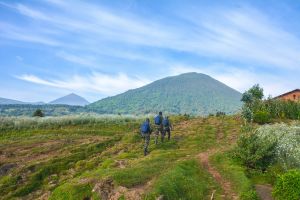
© Dian Fossey Gorilla Fund -
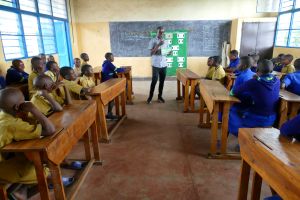
Conservation Courses Delivery © Dian Fossey Gorilla Fund 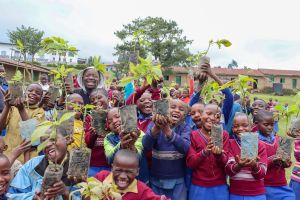
© Dian Fossey Gorilla Fund -
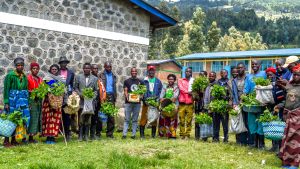
Community Engagement Program © Dian Fossey Gorilla Fund


Challenges
Table 5. Challenges reported for Volcanoes National Park
| Challenges | Specific challenges | Source | Year(s) |
|---|---|---|---|
| 1 Site management | 1.4 Conflict on land tenure | Despite the national park status, between 1950s and early 1970s (1958-1973), >50% of the Volcanoes National Park was destroyed for the cultivation of cash crops (e.g. pyrethrum) and human settlement (Weber, 1987, 1989). | 1950s-1970s |
| 2 Resources and capacity | 2.1 Lack of capacity/training | Local capacity building initiatives have been growing over the past 20 years (e.g. https://gorillafund.org/what-we-do/training-conservationists/) but there is a continuing need across all fields in conservation especially those involving advanced technologies. | Pre-2004-Ongoing (2025) |
| 6 Safety and stability | 6.1 Political/economic instability | Since 2011, regional political conflicts have been affecting collaborative conservation actions, such as the feasibility of conducting a Virunga-wide gorilla census. | 2011-Ongoing (2025) |
| 6 Safety and stability | 6.3 Civil unrest/war | Between 1990-2003; caused most conservation activities to temporarily cease (see Stewart & Sicotte, 2001) | 1990-2003 |
| Other (specify) | COVID-19 pandemic brought multiple challenges (lack of income from tourism, unemployment, increased poverty around the park, research ceased, etc.) (see: Gilardi et al. 2021) | 2020-2022 | |
| 1 Site management | 1.2 Need for improved coordination | After insecurity in the 1990s, a lack of coordination existed temporarily. | 1990-2000 |
| 2 Resources and capacity | 2.5 Lack of equipment/transportation | Even if supply of equipment and the provision of transportation has been improving over the years, it remains a challenge due to increasing needs (personal observation).. | 1967-Ongoing (2025) |
| 2 Resources and capacity | 2.7 Lack of infrastructure | The increased conservation activities require constantly growing infrastructure (e.g. staff quarters, offices) (personal observation) | 1967-Ongoing (2025) |
| 3 Engaged community | 3.5 Anticipated disadvantages/costs created by conservation activities (e.g., restricted access/resource use) | The national park status has forced local people to rely on other resources, such as firewood, water, meat) (e.g. Bush et al., 2010) | 1925-Ongoing (2025) |
| 6 Safety and stability | 6.2 Insecurity | Between 1990-2003; caused most conservation activities to temporarily cease (see Stewart & Sicotte, 2001) | 1990-2003 |
| 2 Resources and capacity | 2.3 General lack of funding | Conservation initiatives can be delayed, reduced, or are not conducted due the lack of funding (e.g. Refisch and Jenson, 2016). | 1967-Ongoing (2025) |
Enablers
Table 6. Enablers reported for Volcanoes National Park
| Enablers | Specific enablers | Source | Year(s) |
|---|---|---|---|
| 1 Site management | 1.3 Adaptive management practices | e.g., anti-poaching patrols target areas with snare encounters (Robbins et al., 2011) | 1994-Ongoing (2025) |
| 2 Resources and capacity | 2.3 Continuous/long-term funding | Robbins et al., 2011 | 1980s-Ongoing (2025) |
| 2 Resources and capacity | 2.4 Adequate data to inform and evaluate conservation actions | Long-term monitoring and research on the gorilla population since 1967 and on the wider biodiversity since 2003 (e.g. www.gorillafund.org) | 1967-Ongoing (2025) |
| 2 Resources and capacity | 2.5 Sufficient capacity/expertise to advise, design, or implement actions | Strong expertise on ground combined with a wide and diverse network of partners (personal observation) | Early 2000s-Ongoing (2025) |
| 2 Resources and capacity | 2.6 External partnerships that add expertise or resources | Key conservation partners have strong networks with national, regional, and international partners with a wide range of expertise (personal observation). | Early 2000-Ongoing (2025) |
| 3 Engaged community | 3.4 Anticipated advantages/benefits of conservation activities | Tourism revenue-sharing in place: since 2005, 5% of income from tourist tickets has been returned to local communities for development. In May 2017, the revenue sharing increased to 10%. In addition, multiple community conservation programs have been implemented that positively affect the livelihood and education of local communities around the park. Also, several avenues exist for local people to gain employment through conservation initiatives. (see: Kalulu et al., 2016; Snyman et al., 2023). | 1967-Ongoing (2025) |
| 3 Engaged community | 3.5 Positive past experience/associations with conservation (e.g. postivie image of conservation) | Tourism revenue-sharing in place: since 2005, 5% of income from tourist tickets has been returned to local communities for development (e.g. infrastructure, cooperatives). This showed local communities the benefits of protecting the gorillas and their habitat (Snyman et al., 2023). Various community engagement programs helped to raise conservation awareness around the park, including the provision of access to the forest and visits to wildlife (e.g. https://gorillafund.org/uncategorized/understanding-community-engagement-key-conservation/). | Early 2000s-Ongoing (2025) |
| 3 Engaged community | 3.6 Local community engagement and support | Employment of local people as rangers, guides, porters, etc. Cooperatives maintain the stone wall around the park to protect local people from wildlife exiting the park. Tourism revenue-sharing in place: since 2005, 5% of income from tourist tickets has been returned to local communities for development. In May 2017, the revenue sharing increased to 10%. (see: Kalulu et al., 2016; Snyman et al., 2023). | 1970s-Ongoing (2025) |
| 4 Institutional support | 4.2 Strong government support | e.g. Maekawa et al., 2013; Sabuhoro, 2006 | 2003-Ongoing (2025) |
| 4 Institutional support | 4.3 Strong transboundary cooperation | https://greatervirunga.org/; Refisch & Jenson, 2016 | 2003-Ongoing (2025) |
| 6 Safety and stability | 6.1 Political and economic stability | e.g. Maekawa et al., 2013 | 2003-Ongoing (2025) |
| 6 Safety and stability | 6.2 Social and civil security | e.g. Maekawa et al., 2013 | 2003-Ongoing (2025) |
| 1 Site management | 1.1 Effective leadership | Rwandan government leadership strongly supports and promotes conservation (e.g. see https://rdb.rw/five-ways-rwanda-is-investing-in-ecotourism-and-conservation/; https://www.rema.gov.rw/our-work/biodiversity-conservation). | 1994-Ongoing (2025) |
| 1 Site management | 1.2 Effective coordination | Rwanda Development Board effectively coordinates conservation activities with key conservation partners to achieve conservation management plans. | 1994-Ongoing (2025) |
| 3 Engaged community | 3.1 Strong local environmental knowledge | Local environmental knowledge on gorilla population and their habitat has been built since 1960s due to permanent presence of research in the park (e.g. see www.gorillafund.org). | 1967-Ongoing (2025) |
Research activities
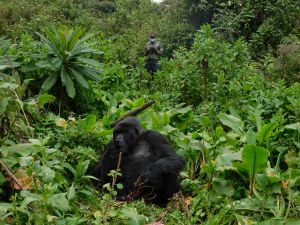
The world's longest-running gorilla research station was established by Dian Fossey in the Volcanoes National Park, Rwanda in 1967. Her work continued after her death through the Dian Fossey Gorilla Fund (DFGF), which is dedicated to the conservation, protection and research of gorillas and their habitats in Africa, and regional and international partners. Research that has been addressed by DFGF and national and international partners in/around the Volcanoes National Park focused on gorilla ecology, behavior, ranging patterns, development, physiology, population dynamics, measure of fitness, threats, evolution, and hard tissue. Gorilla Doctors was established in 1985 and studies gorilla health-related issues in and around the park. Despite still being conducted at lower numbers, research in social science involving local communities around the Volcanoes National Park has been increasing since early 2000s.
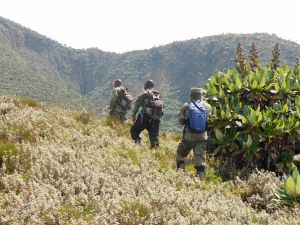
Since 2003, DFGF also monitors and studies the wider gorilla ecosystem, including key plant and animal species (bamboo phenology, gorilla food biomass, golden monkeys, birds, amphibians, small and large mammals, invertebrates, climate, habitat assessments) and their interactions (see: https://gorillafund.org/what-we-do/scientific-research/scientific-publications/). Endemic plant and animal species to the Albertine Rift Region found in the Volcanoes National Park (amphibians [Roelke and Smith, 2010]: Arthroleptis adolfifriederici, Leptopelis karissimbensis, Leptopelis kivuensis, Hyperolius castaneus, Amietia nuttii, Leptosiaphos graueri, Philothamnus ruandae, Atheris nitschei; small mammals [Tuyisingize et al., 2010]: Hylomyscus vulcanorum, Sylvisorex vulcanorum, Praomys degraaffi, Tachyoryctes ruandae). Golden monkeys (Cercopithecus mitis kandti) is endemic to the region and is only found in the Virunga Massif and the Gishwati forest (Tuysingize et al., 2022).
-
© Dian Fossey Gorilla Fund -
© Dian Fossey Gorilla Fund


Documented behaviours
Table 7. Behaviours documented for Volcanoes National Park
| Category | Behavior | Observation type | Prevalence | Observation dates | Source | Habituation | Species | Comment |
|---|---|---|---|---|---|---|---|---|
| mountain gorilla social, feeding, and ranging behavior has been intensively studied since 1967 | https://gorillafund.org/what-we-do/scientific-research/scientific-publications/ |
Exposure to climate change impacts
As part of a study on the exposure of African great ape sites to climate change impacts, Kiribou et al. subm. extracted climate data and data on projected extreme climate impact events for the site. Climatological characteristics were derived from observation-based climate data provided by the Inter-Sectoral Impact Model Intercomparison Project (ISIMIP, www.isimip.org). Parameters were calculated as the average across each 30-year period. For 1981-2010, the EWEMBI dataset from ISIMIP2a was used. For the two future periods (2021-2050 and 2071-2099) ISIMIP2b climate data based on four CMIP5 global climate models were used. For future projections, two Representative Concentration Pathways (RCP) were used. RCP 2.6 is a scenario with strong mitigation measures in which global temperatures would likely rise below 2C. RCP 6.0 is a scenario with medium emissions in which global temperatures would likely rise up to 3C by 2100. For the number of days with heavy precipitation events, the 98th percentile of all precipitation days (>1mm/d) was calculated for the 1979-2013 reference period as a threshold for a heavy precipitation event. Then, for each year, the number of days above that threshold was derived. The figures on temperature and precipitation anomaly show the deviation from the mean temperature and mean precipitation for the 1979-2013 reference period.
The estimated exposure to future extreme climate impact events (crop failure, drought, river flood, wildfire, tropical cyclone, and heatwave) is based on a published dataset by Lange et al. 2020 derived from ISIMIP2b data. The same global climate models and RCPs as described above were used. Within each 30-year period, the number of years with an extreme event and the average proportion of the site affected were calculated (see Kiribou et al. subm. for details).
Table 8. Estimated past and projected climatological characteristics in Volcanoes National Park
| Value | 1981-2010 | 2021-2050, RCP 2.6 | 2021-2050, RCP 6.0 | 2071-2099, RCP 2.6 | 2071-2099, RCP 6.0 |
|---|---|---|---|---|---|
| Mean temperature [C] | 16.6 | 17.8 | 17.5 | 17.9 | 19.1 |
| Annual precipitation [mm] | 1272 | 1288 | 1422 | 1293 | 1411 |
| Max no. consecutive dry days (per year) | 19.4 | 28.4 | 28.9 | 31.6 | 25.8 |
| No. days with heavy precipitation (per year) | 5.6 | 6.9 | 8.1 | 7.5 | 9.5 |
Table 9. Projected exposure of apes to extreme climate impact events in Volcanoes National Park
| Type | No. of years with event (2021-2050, RCP 2.6) | % of site exposed (2021-2050, RCP 2.6) | No. of years with event (2021-2050, RCP 6.0) | % of site exposed (2021-2050, RCP 6.0) | No. of years with event (2070-2099, RCP 2.6) | % of site exposed (2070-2099, RCP 2.6) | No. of years with event (2070-2099, RCP 6.0) | % of site exposed (2070-2099, RCP 6.0) |
|---|---|---|---|---|---|---|---|---|
| Crop failure | 5 | 0.28 | 4 | 0.72 | 5.5 | 0.38 | 6 | 0.18 |
| Drought | 0 | 0 | 0 | 0 | 0 | 0 | 0 | 0 |
| Heatwave | 0 | 0 | 0 | 0 | 0 | 0 | 0 | 0 |
| River flood | 1 | 1.98 | 3 | 2.77 | 1.5 | 1.74 | 3.5 | 2.88 |
| Tropical cyclone | 0 | 0 | 0 | 0 | 0 | 0 | 0 | 0 |
| Wildfire | 30 | 1.11 | 30 | 0.88 | 29 | 1.13 | 29 | 0.75 |
-
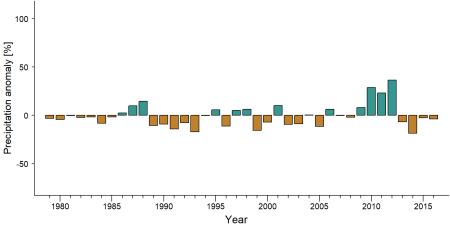
Precipitation anomaly inVolcanoes National Park -
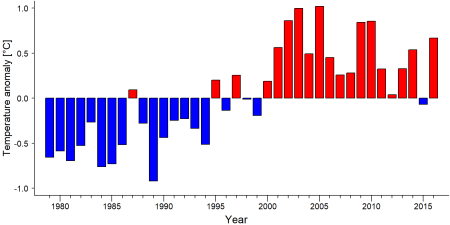
Temperature anomaly inVolcanoes National Park


External links
References
Aveling, C., & Harcourt, A. H. (1984). A census of the Virunga gorillas. Oryx, 23(4), 64–70.
Bush, G. K., Ikirezi, M., Daconto, G., Gray, M., & Fawcett, K. (2010). Assessing impacts from community conservation interventions around Parc National des Volcans, Rwanda.
DeWitt, H. L., Gasore, J., Rupakheti, M., Potter, K. E., Prinn, R. G., Ndikubwimana, J. D. D. Nkusi, J., & Safari, B. (2019). Seasonal and diurnal variability in O3, black carbon, and CO measured at the Rwanda Climate Observatory. Atmospheric Chemistry and Physics, 19, 2063–2078.
Doležlová, J., Pafčo, B., Modrý, D., & Pomajbíková, K. (2018). Parasite quantification. In D. Modrý, B. Pafčo, K. J. Petrželková, & H. Hasegawa (Eds.), Parasites of apes: An atlas of coproscopic diagnostics (pp. 34–38). Chimaira.
Eckardt, W., Stoinski, T. S., Rosenbaum, S., & Santymire, R. (2019). Social and ecological factors alter stress physiology of Virunga mountain gorillas (Gorilla beringei beringei). Ecology and Evolution, 9(9), 5248–5259. https://doi.org/10.1002/ece3.5115
Evans, T. S., Lowenstine, L. J., Gilardi, K. V., Barry, P. A., Ssebide, B. J., Kinani, J. F., Nizeyimana, F., Noheri, J. B., Cranfield, M. R., Mudakikwa, A., Goldstein, T., Mazet, J. A. K., & Johnson, C. K. (2017). Mountain gorilla lymphocryptovirus has Epstein-Barr virus-like epidemiology and pathology in infants. Scientific Reports, 7(1), 1–11. https://doi.org/10.1038/s41598-017-04877-1
Fisher, S., Bellinger, D. C., Cropper, M. L., Kumar, P., Binagwaho, A., Koudenoukpo, J. B., Park, Y., Taghian, G., & Landrigan, P. J. (2021). Air pollution and development in Africa: impacts on health, the economy, and human capital. The Lancet Planetary Health, 5(10), e681–e688. https://doi.org/10.1016/S2542-5196(21)00201-1
Fossey, D. (1983). Gorillas in the mist. Houghton Mifflin Company.
Granjon, A., Robbins, M. M., Arinaitwe, J., Cranfield, M. R., Eckardt, W., & Mburanumwe, I. (2020). Estimating abundance and growth rates in a wild mountain gorilla population. 1–11. https://doi.org/10.1111/acv.12559
Gray, M., McNeilage, A., Fawcett, K., Robbins, M. M., Ssebide, B., Mbula, D., & Uwingeli, P. (2009). Censusing the mountain gorillas in the Virunga Volcanoes: Complete sweep method versus monitoring. African Journal of Ecology, 48(3), 588–599. https://doi.org/10.1111/j.1365-2028.2009.01142.x
Gray, M., Roy, J., Vigilant, L., Fawcett, K., Basabose, A., Cranfield, M., Uwingeli, P., Mburanumwe, I., Kagoda, E., & Robbins, M. M. (2013). Genetic census reveals increased but uneven growth of a critically endangered mountain gorilla population. Biological Conservation, 158, 230–238. https://doi.org/10.1016/j.biocon.2012.09.018
Groom, A. F. G. (1973). Squeezing out the mountain gorilla. Oryx, 12, 207–215.
Harcourt, A. H., & Groom, A. F. G. (1972). Gorilla census. Oryx, 11, 355–363.
Hassell, J. M., Zimmerman, D., Cranfield, M. R., Gilardi, K., Mudakikwa, A., Ramer, J., Nyirakaragire, E., & Lowenstine, L. J. (2017). Morbidity and mortality in infant mountain gorillas (Gorilla beringei beringei): A 46-year retrospective review. American Journal of Primatology, 79(10), 1–13. https://doi.org/10.1002/ajp.22686
Irakoze, J. d’Amour. (2024). The distribution and abundance of non-native fruting trees and vine inside and outside the eastern part of the Volcanoes National Park. University of Rwanda, College of Science and Technology, School of Sciences, Departmnet of Biology.
Kalpers, J., Williamson, E. A., Robbins, M. M., McNeilage, A., Nzamurambaho, A., Lola, N., & Mugiri, G. (2003). Gorillas in the crossfire: Population dynamics of the Virunga mountain gorillas over the past three decades. Oryx, 37(3), 326–337. https://doi.org/10.1017/S0030605303000589
Kalulu, R., Tushabe, E., & Nsabimana, E. (2016). Local Community Attitude and Perceptions towards Tourism Conservation Policies in Rwanda Case of Volcanoes National Park. Advances in Economics and Business, 4(12), 631–640. https://doi.org/10.13189/aeb.2016.041201
Kwizera, E., Rumbeiha, W. K., Nishimwe, K., & Nziza, J. (2023). A survey to document toxic hazards in the zone surrounding volcanoes national park, a habitat for mountain gorillas, an endangered wildlife species in Rwanda. Frontiers in Veterinary Science, 10. https://doi.org/10.3389/fvets.2023.1320162
Maekawa, M., Lanjouw, A., Rutagarama, E., & Sharp, D. (2013). Mountain gorilla tourism generating wealth and peace in post-conflict Rwanda. Natural Resources Forum, 37(2), 127–137. https://doi.org/10.1111/1477-8947.12020
Mazet, J. A. K., Genovese, B. N., Harris, L. A., Cranfield, M., Noheri, J. B., Kinani, J. F., Zimmerman, D., Bahizi, M., Mudakikwa, A., Goldstein, T., & Gilardi, K. V. K. (2020). Human Respiratory Syncytial Virus Detected in Mountain Gorilla Respiratory Outbreaks. EcoHealth, 17(4), 449–460. https://doi.org/10.1007/s10393-020-01506-8
Mc Guinnes, S. (2014). The effects of human-wildlife conflict on conservation and development: a case study of Volcanoes National Park, northern Rwanda. University of Dublin, Trinity College, School of Natural Sciences.
McNeilage, A. (1995). Mountain gorillas in the Virunga volcanoes: ecology and carrying capacity. University of Bristol.
McNeilage, A. (2001). Diet and habitat use of two mountain gorilla groups in contrasting habitats in the Virungas. In M. M. Robbins, P. Sicotte, & K. J. Stewart (Eds.), Mountain gorillas Thirty years of research at Karisoke (pp. 265–292). Cambridge University Press.
Morrison, R. E., Mushimiyimana, Y., Stoinski, T. S., & Eckardt, W. (2021). Rapid transmission of respiratory infections within but not between mountain gorilla groups. Scientific Reports, 11(1), 1–12. https://doi.org/10.1038/s41598-021-98969-8
Muhasara, H., and Huggins, C. D. (2004). Land reform, land scarcity and post-conflict reconstruction: A case study of Rwanda. Eco-Conflicts, 3(3), 1-4.
Petrželková, K. J., Samaš, P., Romportl, D., Uwamahoro, C., Červená, B., Pafčo, B., Prokopová, T., Cameira, R., Granjon, A. C., Shapiro, A., Bahizi, M., Nziza, J., Noheri, J. B., Syaluha, E. K., Eckardt, W., Ndagijimana, F., Šlapeta, J., Modrý, D., Gilardi, K., … Cranfield, M. (2022). Ecological drivers of helminth infection patterns in the Virunga Massif mountain gorilla population. International Journal for Parasitology: Parasites and Wildlife, 17(November 2021), 174–184. https://doi.org/10.1016/j.ijppaw.2022.01.007
Petrželková, Klara J., Uwamahoro, C., Pafčo, B., Červená, B., Samaš, P., Mudakikwa, A., Muvunyi, R., Uwingeli, P., Gilardi, K., Nziza, J., Noheri, J. B., Eckardt, W., Ndagijimana, F., Ssebide, B., Okwirokello, R., Nizeyimana, F., Syaluha, E. K., Nzayisenga, G., Flores Girón, L., … Modrý, D. (2021). Heterogeneity in patterns of helminth infections across populations of mountain gorillas (Gorilla beringei beringei). Scientific Reports, 11(1), 1–14. https://doi.org/10.1038/s41598-021-89283-4
Plumptre, A. J., & Elizabeth Williamson. Conservation-oriented research in the Virunga region. In Robbins, M. M., Sicotte, P., & Stewart, K. M. (Eds.), Mountain gorillas: Three decades of research at Karisoke (pp. 123–150). Cambridge University Press. https://doi.org/10.1017/cbo9780511661631.006
Refisch, J. and Jenson, J. (2016). Transboundary collaboration in the Greater Virunga Landscape: From gorilla conservation to conflict-sensitive transboundary landscape management. In C. Bruch, C. Muffett, and S. Nichols (Eds). Governance, Natural Resources and Post-Conflict Peacebuilding, London, Routledge. https://doi.org/10.4324/9780203109793
Rizinjirabake, F., Mukamugema, J., Ndagijimana, J. N., Murawanashyaka, T., & Mizero, A. (2024). Ethnobotany Survey of Medicinal Plants in Home Gardens around Park, Volcanoes National. Rwanda Journal of Engineering Science, Technology and Environment, 6(1), 1–13.
Robbins, M. M., Gray, M., Fawcett, K. A., Nutter, F. B., Uwingeli, P., Mburanumwe, I., Kagoda, E., Basabose, A., Stoinski, T. S., Cranfield, M. R., Byamukama, J., Spelman, L. H., & Robbins, A. M. (2011). Extreme conservation leads to recovery of the virunga mountain gorillas. PLoS ONE, 6(6). https://doi.org/10.1371/journal.pone.0019788
Sabuhoro, E. (2006). Ecotourism as a potential conservation incentive for local communities around Rwanda’s Parc National des Volcans. University of Kent at Canterbury, Durrell Institute of Conservation and Ecology.
Schaller, G. (1963). The mountain gorilla - ecology and behavior. University of Chicago Press.
Sholley, C. (1989). Census of the mountain gorillas the Virungas of Central Africa.
Snyman, S. (Sue), Fitzgerald, K., Bakteeva, A., Ngoga, T., & Mugabukomeye, B. (2023). Benefit-sharing from protected area tourism: A 15-year review of the Rwanda tourism revenue sharing programme. Frontiers in Sustainable Tourism, 1. https://doi.org/10.3389/frsut.2022.1052052
Stewart, K. J., Sicotte, P., & Robbins, M. M. (2001). Mountain gorillas of the Virungas: a short history. In M. M. Robbins, P. Sicotte, & K. J. Stewart (Eds.), Mountain Gorillas: Three Decades of Research at Karisoke. Cambridge University Press.
Uzabaho, E. (2023). An occupancy analysis of the factors affecting the presence of carnivores at the national park-human community interface in Rwanda. African Journal of Ecology, 62(1), e13238.
Uzamukunda, S. (2015). Improving the existing farming systems towards a climate smart agriculture in Musanze district of Rwanda. Swedish University of Agricultural Science, Faculty of Landscape Architecture, Horticulture and Crop Production Science.
van der Hoek, Y., Bugingo, L. C., Tuyisingize, D., Eckardt, W., Bizuru, E., & Ngiramahoro, M. (2023). Observations on the effects of fire on East African Afroalpine vegetation. African Journal of Ecology, September 2022, 1–6. https://doi.org/10.1111/aje.13155
Vedder, A. L. (1989). In the hall of mountain king. ANimal Kingdom, 92, 30-43.
Vedder, A. L., & Aveling, C. (n.d.). Census of the Virunga population of Goirlla gorilla beringei.
Weber, A., & Vedder, A. (1983). Population dynamics of the Virunga Gorillas: 1959-1978. Biological Conservation, 26, 341–366.
Weber, A. W. (1987). Socioecologic factors in the conservation of Afromontane forest reserves. In Primate Conservation in the Tropical Rain Forest (pp. 205–229).
Weber, A. W. (1989). Conservation and development on the Zaire-Nile Divide: an analysis of value conflict and convergence in the management of afromontane forests in Rwanda. PhD thesis, University of Wisconsin, Madison.
Weber, B., & Vedder, A. L. (2001). Afterword:mountain gorillas at the turn of the century. In M.M. Robbins, P. Sicotte, & K. Stewart (Eds.), Mountain Gorillas: Three Decades of Research at Karisoke. Cambridge University Press.
Page created by: Dian Fossey Gorilla Fund Date: 2025-05-29 07:26:00