
Nkuba Conservation Area: Difference between revisions
No edit summary |
No edit summary |
||
| Line 144: | Line 144: | ||
!Implementing organization(s) | !Implementing organization(s) | ||
!Year of activity | !Year of activity | ||
|- | |- | ||
|1 Development impact mitigation | |1 Development impact mitigation | ||
| Line 160: | Line 154: | ||
|2.13 Provide sustainable alternative livelihoods; establish fish- or domestic meat farms | |2.13 Provide sustainable alternative livelihoods; establish fish- or domestic meat farms | ||
|Fish farms or chickens to provide eggs distributed by DFGF (DFGF 2020). | |Fish farms or chickens to provide eggs distributed by DFGF (DFGF 2020). | ||
| | | | ||
|Ongoing (2020) | |Ongoing (2020) | ||
| Line 180: | Line 168: | ||
| | | | ||
|Ongoing (2021) | |Ongoing (2021) | ||
|- | |||
|4 Education & awareness | |||
|4.1 Educate local communities about apes and sustainable use | |||
|Educational programming, includes radio shows and nature clubs in schools (DFGF 2020). | |||
| | |||
|Ongoing (2020) | |||
|- | |- | ||
|4 Education & awareness | |4 Education & awareness | ||
| Line 192: | Line 186: | ||
| | | | ||
|Ongoing (2021) | |Ongoing (2021) | ||
|- | |||
|5 Protection & restoration | |||
|5.6 Habitat restoration | |||
|Forest rehabilitation and protection activities were reported (Urbain pers. comm. 2025). | |||
| | |||
|Ongoing (2025) | |||
|- | |- | ||
|7 Economic & other incentives | |7 Economic & other incentives | ||
| Line 199: | Line 199: | ||
|Ongoing (2021) | |Ongoing (2021) | ||
|- | |- | ||
| | |8 Permanent presence | ||
| | |8.1 Run research project and ensure permanent human presence at site | ||
| | |In 2012, DFGF set up a research station at the site, serving the dual purpose of studying and protecting the Grauer’s gorillas. The Nkuba-Biruwe station allows the DFGFI gorilla trackers and researchers to study and protect the gorillas and their habitat. Since 2014, the tracking of three gorilla groups has been the main project activity. Data are collected about the way gorilla groups utilize their habitat, e.g., diet, group movements, seasonal variations (Binyinyi, Ngobobo & Caillaud 2015). | ||
| | | | ||
|Ongoing (2025) | |2012-Ongoing (2025) | ||
|} | |} | ||
Revision as of 10:31, 23 December 2025
Central Africa > Democratic Republic of the Congo > Nkuba Conservation Area
Français | Português | Español | Bahasa Indonesia | Melayu
Summary
- Eastern chimpanzees (Pan troglodytes schweinfurthii) & Grauer's gorillas (Gorilla beringei graueri) are present in Nkuba Conservation Area.
- It has been estimated that approximately 200 gorillas occur in the site.
- The great ape population trend is unknown.
- The site has a total size of 2,400 km².
- Poaching is a major threat at the site, fueled by civil conflict and illegal mining activities.
- Conservation activities, implemented by the Dian Fossey Gorilla Fund, have focused on sensitization and raising awareness, employing people from local communities, including ex-poachers, and improving local livelihoods.
Site characteristics
The Nkuba Conservation Area is situated in eastern Democratic Republic of the Congo (DRC), roughly halfway between Maiko National Park and Kahuzi-Biega National Park. The site is community-owned and managed by a collaboration between the Dian Fossey Gorilla Fund (DFGF) and local community stakeholders (DFGF 2020). The area is a biodiversity hotspot, providing habitat for at least eight threatened species of mammals, including eastern chimpanzees and Grauer's gorilla (DFGF 2020). The site also holds a wide diversity of birds, insects, plants and fungi. In April 2021, the DRC government officially recognized the community ownership of the three forest concessions that make up Nkuba Conservation Area (Starling 2021).
Table 1. Basic site information for Nkuba Conservation Area
| Species | Gorilla beringei graueri, Pan troglodytes schweinfurthii |
| Area | 2,400 km² |
| Coordinates | Lat: -1.3812 , Lon: 27.3970 |
| Type of site | Non-protected area (Conservation area) |
| Habitat types | Subtropical/tropical moist lowland forest |
| Type of governance | Private governance |
Types of sites Governance types Habitat types
Ape status
Researchers at the DFGF estimate that about 200 Grauer's gorillas live within Nkuba. Nkuba makes up about 10% of the gorilla’s total habitat in DRC (Starling 2021).
Table 2. Ape population estimates reported for Nkuba Conservation Area
| Species | Year | Occurrence | Encounter or vistation rate (nests/km; ind/day) | Density estimate [ind./ km²] (95% CI) | Abundance estimate (95% CI) | Survey area | Sampling method | Analytical framework | Source | Comments | A.P.E.S. database ID |
|---|---|---|---|---|---|---|---|---|---|---|---|
| Gorilla beringei graueri | Nkuba Conservation Area | ||||||||||
| Pan troglodytes schweinfurthii | Nkuba Conservation Area |
Sampling methods Analytical frameworks
Threats
Poaching is a major threat at the site and in the region (Starling 2021, Maldonado et al. 2012 ). Hunting activities are linked to the civil unrest in the region and armed rebel groups who control artisanal mines and often poach gorillas (Starling 2021). Violence has left the local population in acute poverty, forcing them to hunt for bushmeat or work for mining operations that harvest minerals used to make electronics sold in the Global North (Starling 2021).
Table 3. Threats to apes reported for Nkuba Conservation Area
| Category | Specific threats | Threat level | Description | Year of threat |
|---|---|---|---|---|
| 2 Agriculture & aquaculture | 2.1 Annual & perennial non-timber crops | Present (unknown severity) | Habitat loss from widespread deforestation, mainly due to agriculture (Starling 2021, Maldonado et al. 2012). | 2012-Ongoing (2021) |
| 6 Human intrusions & disturbance | 6.2 War, civil unrest & military exercises | High (more than 70% of population affected) | Civil unrest from armed rebel groups have fueled illegal mining operations and poaching (Starling 2021, Maldonado et al. 2012). | 2012-Ongoing (2021) |
| 3 Energy production & mining | 3.2 Mining & quarrying | High (more than 70% of population affected) | Environmentally damaging mining operations that harvest minerals used to make electronics (Starling 2021). | Ongoing (2021) |
| 5 Biological resource use | 5.1 Hunting & collecting terrestrial animals | High (more than 70% of population affected) | Rebel groups in the region, which is mineral rich, control artisanal mines and often poach gorillas for their high volumes of meat (Starling 2021). | Ongoing (2021) |
Conservation activities
Table 4. Conservation activities reported for Nkuba Conservation Area
| Category | Specific activity | Description | Implementing organization(s) | Year of activity |
|---|---|---|---|---|
| 1 Development impact mitigation | 1.4 Farm more intensively and effectively in selected areas and spare more natural land | DFGF provides training in agricultural techniques and crop diversification (DFGF 2020). | Ongoing (2020) | |
| 2 Counter-wildlife crime | 2.13 Provide sustainable alternative livelihoods; establish fish- or domestic meat farms | Fish farms or chickens to provide eggs distributed by DFGF (DFGF 2020). | Ongoing (2020) | |
| 2 Counter-wildlife crime | 2.14 Employ hunters in the conservation sector to reduce their impact | Ex-poachers are also employed as Fossey Fund staff (Starling 2021). | Ongoing (2021) | |
| 2 Counter-wildlife crime | 2.3 Conduct regular anti-poaching patrols | Unarmed rangers patrol the forests for signs of poachers (Starling 2021). | Ongoing (2021) | |
| 4 Education & awareness | 4.1 Educate local communities about apes and sustainable use | Educational programming, includes radio shows and nature clubs in schools (DFGF 2020). | Ongoing (2020) | |
| 4 Education & awareness | 4.2 Involve local community in ape research and conservation management | People from nearby communities are engaged and employed in all facets of DFGF's conservation activities—protection, science, community engagement. DFGF has employed 70 full-time staff members from the local community at Nkuba and hires about 250 part-time employees every month (Starling 2021). | Ongoing (2021) | |
| 5 Protection & restoration | 5.3 Establish areas for conservation which are not protected by national or international legislation (e.g., private sector standards & codes) | The Congolese government has officially recognized community ownership of the conservation area, thereby increasing the area of community-owned forests in the Walikale territory by more than 70% (Starling 2021). | Ongoing (2021) | |
| 5 Protection & restoration | 5.6 Habitat restoration | Forest rehabilitation and protection activities were reported (Urbain pers. comm. 2025). | Ongoing (2025) | |
| 7 Economic & other incentives | 7.2 Provide non-monetary benefits to local communities for sustainably managing their forest and its wildlife (e.g., better education, infrastructure development) | In exchange for protecting gorillas by not hunting them and alerting authorities of poaching activity, DFGF provides education, jobs and conservation training to locals. Since communities own the forests they have an incentive to protect them, motivated by the steady employment, health care, payment of school fees and improved living conditions (Starling 2021). | Dian Fossey Gorilla Fund | Ongoing (2021) |
| 8 Permanent presence | 8.1 Run research project and ensure permanent human presence at site | In 2012, DFGF set up a research station at the site, serving the dual purpose of studying and protecting the Grauer’s gorillas. The Nkuba-Biruwe station allows the DFGFI gorilla trackers and researchers to study and protect the gorillas and their habitat. Since 2014, the tracking of three gorilla groups has been the main project activity. Data are collected about the way gorilla groups utilize their habitat, e.g., diet, group movements, seasonal variations (Binyinyi, Ngobobo & Caillaud 2015). | 2012-Ongoing (2025) |
Challenges
DFGF staff at the site have to deal with armed groups and continued insecurity (DFGF 2015). In addition, the lack of law enforcement means there is no direct way to deal with poaching; to address this, DFGF tries to sensitize local communities and to get them to reduce hunting in areas where great apes need to be protected (DFGF 2015).
Table 5. Challenges reported for Nkuba Conservation Area
| Challenges | Specific challenges | Source | Year(s) |
|---|---|---|---|
| 4 Institutional support | 4.1 Lack of law enforcement | DFGF 2015 | |
| 6 Safety and stability | 6.3 Civil unrest/war | DFGF 2015 | |
| 2 Resources and capacity | 2.4 Lack of continuous/long-term funding | Urbain pers. comm. 2025 | Ongoing 2025 |
Enablers
Table 6. Enablers reported for Nkuba Conservation Area
| Enablers | Specific enablers | Source | Year(s) |
|---|---|---|---|
| 2 Resources and capacity | 2.1 Sufficient staff | Urbain pers. comm. 2025 | Ongoing (2025) |
| 2 Resources and capacity | 2.2 Sufficient funding | Urbain pers. comm. 2025 | Ongoing (2025) |
| 1 Site management | |||
| 3 Engaged community | |||
| 4 Institutional support | |||
| 5 Ecological context | |||
| 6 Safety and stability |
Research activities
A study by van der Valk et al. (2018) showed that Grauer’s gorilla populations have suffered decreased genetic diversity from habitat fragmentation, making Nkuba’s role as a wildlife corridor between Kahuzi-Biega and Maiko crucial. Furthermore, another study found that Nkuba’s gorillas were more genetically diverse than populations living at the edges of its habitat range, highlighting the importance of Nkuba for forest connectivity (Baas et al. 2018).
Documented behaviours
Table 7. Behaviours documented for Nkuba Conservation Area
| Category | Behavior | Observation type | Prevalence | Observation dates | Source | Habituation | Species | Comment |
|---|---|---|---|---|---|---|---|---|
| Not reported |
Exposure to climate change impacts
-
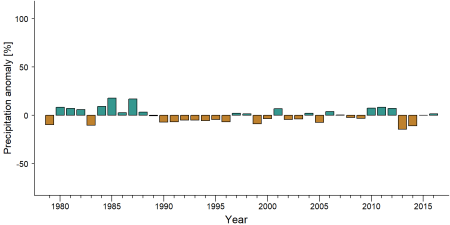
Precipitation anomaly in Nkuba Conservation Area -
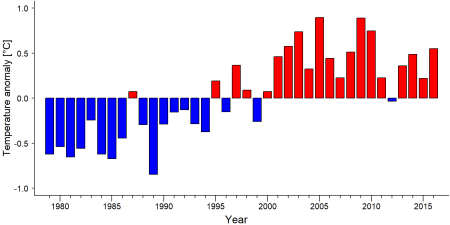
Temperature anomaly in Nkuba Conservation Area


External links
References
Maldonado, O., Aveling, C., Cox, D., Nixon, S., Nishuli, R., Merlo, D., Pintea, L. & Williamson, E.A. (2012). Grauer’s Gorillas and Chimpanzees in Eastern Democratic Republic of Congo (Kahuzi-Biega, Maiko, Tayna and Itombwe Landscape): Conservation Action Plan 2012–2022. Gland, Switzerland: IUCN/SSC Primate Specialist Group, Ministry of Environment, Nature Conservation & Tourism, Institut Congolais pour la Conservation de la Nature & the Jane Goodall Institute. 66pp.
Starling, M. (2021, July 6). In DRC, community ownership of forests helps guard the Grauer’s gorilla. Mongabay. https://news.mongabay.com/2021/07/in-drc-community-ownership-of-forests-helps-guard-the-grauers-gorilla/
Baas, P., van der Valk, T., Vigilant, L., Ngobobo, U., Binyinyi, E., Nishuli, R., ... & Guschanski, K. (2018). Population‐level assessment of genetic diversity and habitat fragmentation in critically endangered G rauer's gorillas. American journal of physical anthropology, 165(3), 565-575.
Van Der Valk, T., Sandoval-Castellanos, E., Caillaud, D., Ngobobo, U., Binyinyi, E., Stoinski, T., ... & Guschanski, K. (2018). Significant loss of mitochondrial diversity within the last century due to extinction of peripheral populations in eastern gorillas. Scientific reports, 8(1), 1-10.
Binyinyi, E., Ngobobo, u., & Caillaud, D. (2015). Tracking of Grauer’s Gorillas in North Kivu. Gorilla Journal, 50.
DFGF. (2015). Illegal trade in natural resources affects Congo wildlife. https://gorillafund.org/uncategorized/illegal-trade-in-natural-resources-affects-congo-wildlife/
DFGF. (2020). Earth Day in the DRC.https://gorillafund.org/congo/earth-day-in-the-drc/
Page created by: APES Atlas Team Date: 2021-11-05