
Mount Otzi Forest Reserve: Difference between revisions
No edit summary |
No edit summary |
||
| Line 17: | Line 17: | ||
= Site characteristics = | = Site characteristics = | ||
Mount Otzi Forest Reserve encompasses an area of 188 sq. km, located in Moyo, West Nile Region, Uganda. It is located on an escarpment overlooking the point where the Achwa River meets the White Nile as it flows into South Sudan (Byaruhanga et al. 2001). Much of the Otzi Mountain lies within the forest reserve, which ranges in altitude from 760 m to 1667 m above sea level (Butynski & de Jong 2017). Mount Otzi Central Forest Reserve was designated in 1933 to protect the water catchment area of the nearby Achwa River. | Mount Otzi Forest Reserve encompasses an area of 188 sq. km, located in Moyo, West Nile Region, Uganda. It is located on an escarpment overlooking the point where the Achwa River meets the White Nile as it flows into South Sudan ([[#R01309|Byaruhanga et al. 2001]]). Much of the Otzi Mountain lies within the forest reserve, which ranges in altitude from 760 m to 1667 m above sea level ([[#R01308|Butynski & de Jong 2017]]). Mount Otzi Central Forest Reserve was designated in 1933 to protect the water catchment area of the nearby Achwa River. | ||
About half of the area can broadly be classified as wooded savanna, whilst most of the rest is savanna with undifferentiated semi-deciduous thicket (KBA 2024). Due to the sparse population density around the reserve, as well as steep slopes and rugged terrain which limit cultivation, it is mainly intact except for light encroached enclaves, mainly at the lower altitudes (Byaruhanga et al., 2001). To local people, the reserve is important for building materials, especially bamboo poles and non-timber products (BirdLife International 2024). | About half of the area can broadly be classified as wooded savanna, whilst most of the rest is savanna with undifferentiated semi-deciduous thicket ([[#R01311|KBA 2024]]). Due to the sparse population density around the reserve, as well as steep slopes and rugged terrain which limit cultivation, it is mainly intact except for light encroached enclaves, mainly at the lower altitudes ([[#R01309|Byaruhanga et al., 2001]]). To local people, the reserve is important for building materials, especially bamboo poles and non-timber products ([[#R01307|BirdLife International 2024]]). | ||
About 125 tree species have been recorded (Acanakwo 2011), 168 bird species, 94 butterflies, and 44 large moths (BirdLife International 2024). The current status of large mammals in the Otzi East Central Forest Reserve is not known, and the threats to this reserve have not been documented in detail. Much of the Otzi Central Forest Reserve is remote, steep, rugged, rocky, and without road access and as such most areas are probably the least impacted by human activities, and where larger mammals, such as chimpanzee, elephant, and buffalo, might still occur (Butynski & de Jong, 2017). Other primates present in the area include mantled guereza (''Colobus guereza occidentalis''), Senegal bushbaby (''Galago senegalensis''), and tantalus monkey (''Chlorocebus tantalus''; Butynski & de Jong 2017). | About 125 tree species have been recorded (Acanakwo 2011), 168 bird species, 94 butterflies, and 44 large moths ([[#R01307|BirdLife International 2024]]). The current status of large mammals in the Otzi East Central Forest Reserve is not known, and the threats to this reserve have not been documented in detail. Much of the Otzi Central Forest Reserve is remote, steep, rugged, rocky, and without road access and as such most areas are probably the least impacted by human activities, and where larger mammals, such as chimpanzee, elephant, and buffalo, might still occur ([[#R01308|Butynski & de Jong, 2017]]). Other primates present in the area include mantled guereza (''Colobus guereza occidentalis''), Senegal bushbaby (''Galago senegalensis''), and tantalus monkey (''Chlorocebus tantalus''; [[#R01308|Butynski & de Jong 2017]]). | ||
'''Table 1. Basic site information for Mount Otzi Forest Reserve''' | '''Table 1. Basic site information for Mount Otzi Forest Reserve''' | ||
| Line 48: | Line 48: | ||
= Ape status = | = Ape status = | ||
Chimpanzees were rumored to be present in the reserve in 1993, and their presence was confirmed during a 1999-2002 survey (Plumptre Cox & Mugume 2003). The population of chimpanzees was estimated at 20-40 individuals between 1999 and 2002, however the current status is not known (Butynski & de Jong 2017). Residents have claimed that chimpanzees sometimes occupy Mt. Nyeri, but seasonally move up Mt. Nyeri and into South Sudan's Nimule National Park (NP), and none of the residents interviewed had seen or heard chimpanzees within the last 3 years (2013-2016; Butynski & de Jong 2017). | Chimpanzees were rumored to be present in the reserve in 1993, and their presence was confirmed during a 1999-2002 survey (Plumptre Cox & Mugume 2003). The population of chimpanzees was estimated at 20-40 individuals between 1999 and 2002, however the current status is not known ([[#R01308|Butynski & de Jong 2017]]). Residents have claimed that chimpanzees sometimes occupy Mt. Nyeri, but seasonally move up Mt. Nyeri and into South Sudan's Nimule National Park (NP), and none of the residents interviewed had seen or heard chimpanzees within the last 3 years (2013-2016; [[#R01308|Butynski & de Jong 2017]]). | ||
'''Table 2. Ape population estimates reported for Mount Otzi Forest Reserve''' | '''Table 2. Ape population estimates reported for Mount Otzi Forest Reserve''' | ||
| Line 74: | Line 74: | ||
|Line transects & recces | |Line transects & recces | ||
|Distance sampling (decay time unknown) | |Distance sampling (decay time unknown) | ||
|Plumptre, Cox & Mugume 2003 | |[[#R02079|Plumptre, Cox & Mugume 2003]] | ||
|Classified as a low density site, density could not be estimated. Number of nest building chimpanzees estimated at 25 individuals. | |Classified as a low density site, density could not be estimated. Number of nest building chimpanzees estimated at 25 individuals. | ||
| | | | ||
| Line 96: | Line 96: | ||
|2.1.2 Small-holder farming | |2.1.2 Small-holder farming | ||
|Low (up to 30% of population affected) | |Low (up to 30% of population affected) | ||
|Forest reserve is encroached by farming, particularly in the lower altitudes (Byaruhanga et al., 2001). Forest degradation, loss and fragmentation degradation mostly from agriculture expansion leading to alteration and shifting (Butynski & de Jong 2017; USAID 2015). | |Forest reserve is encroached by farming, particularly in the lower altitudes ([[#R01309|Byaruhanga et al., 2001]]). Forest degradation, loss and fragmentation degradation mostly from agriculture expansion leading to alteration and shifting ([[#R01308|Butynski & de Jong 2017]]; [[#R01315|USAID 2015]]). | ||
|2001-Ongoing (2015) | |2001-Ongoing (2015) | ||
|- | |- | ||
| Line 102: | Line 102: | ||
|2.3 Livestock farming & ranching | |2.3 Livestock farming & ranching | ||
|Medium (30-70% of population affected) | |Medium (30-70% of population affected) | ||
|Encroachment on the reserve to graze livestock (Butynski & de Jong 2017). | |Encroachment on the reserve to graze livestock ([[#R01308|Butynski & de Jong 2017]]). | ||
|Ongoing (2017) | |Ongoing (2017) | ||
|- | |- | ||
| Line 108: | Line 108: | ||
|5.2 Gathering terrestrial plants | |5.2 Gathering terrestrial plants | ||
|Low (up to 30% of population affected) | |Low (up to 30% of population affected) | ||
|The reserve is a source of building materials for local people, especially bamboo poles (Byaruhanga et al. 2001). | |The reserve is a source of building materials for local people, especially bamboo poles ([[#R01309|Byaruhanga et al. 2001]]). | ||
|Ongoing (2001) | |Ongoing (2001) | ||
|- | |- | ||
| Line 114: | Line 114: | ||
|5.3.2 Commercial logging | |5.3.2 Commercial logging | ||
|High (more than 70% of population affected) | |High (more than 70% of population affected) | ||
|Commercial logging for timber and charcoal burning (USAID 2015). | |Commercial logging for timber and charcoal burning ([[#R01315|USAID 2015]]). | ||
|2001-Ongoing (2015) | |2001-Ongoing (2015) | ||
|- | |- | ||
| Line 120: | Line 120: | ||
|7.1 Fire & fire suppression | |7.1 Fire & fire suppression | ||
|Medium (30-70% of population affected) | |Medium (30-70% of population affected) | ||
|Butynski & de Jong 2017 | |[[#R01308|Butynski & de Jong 2017]] | ||
|Ongoing (2017) | |Ongoing (2017) | ||
|} | |} | ||
| Line 140: | Line 140: | ||
|2 Counter-wildlife crime | |2 Counter-wildlife crime | ||
|2.13 Provide sustainable alternative livelihoods; establish fish- or domestic meat farms | |2.13 Provide sustainable alternative livelihoods; establish fish- or domestic meat farms | ||
|Wildlife, Landscapes and Development for Conservation (WILD) (Masters 2008). | |Wildlife, Landscapes and Development for Conservation (WILD) ([[#R01312|Masters 2008]]). | ||
|Wildlife Conservation Society, Straight Talk Foundation, The United States Agency for International Development (USAID) | |Wildlife Conservation Society, Straight Talk Foundation, The United States Agency for International Development (USAID) | ||
|2005-2008 | |2005-2008 | ||
| Line 146: | Line 146: | ||
|5 Protection & restoration | |5 Protection & restoration | ||
|5.2 Legally protect ape habitat | |5.2 Legally protect ape habitat | ||
|The area is protected as a Central Forest Reserve (KBA 2024). | |The area is protected as a Central Forest Reserve ([[#R01311|KBA 2024]]). | ||
|National Forest Authority | |National Forest Authority | ||
|1933-Ongoing (2026) | |1933-Ongoing (2026) | ||
| Line 152: | Line 152: | ||
|7 Economic & other incentives | |7 Economic & other incentives | ||
|7.1 Provide monetary benefits to local communities for sustainably managing their forest and its wildlife (e.g., REDD, alternative income, employment) | |7.1 Provide monetary benefits to local communities for sustainably managing their forest and its wildlife (e.g., REDD, alternative income, employment) | ||
|Through Investing in Forests and Protected Areas for Climate Smart Development (IFPA-CD) Project (Castren 2023). | |Through Investing in Forests and Protected Areas for Climate Smart Development (IFPA-CD) Project ([[#R01310|Castren 2023]]). | ||
|World Bank, Ministry of Water and Evironment (MWE), Ministry of Tourism, Wildlife and Antiquities (MTWA), Uganda Widlife Authority (UWA), National Forestry Authority (NFA) | |World Bank, Ministry of Water and Evironment (MWE), Ministry of Tourism, Wildlife and Antiquities (MTWA), Uganda Widlife Authority (UWA), National Forestry Authority (NFA) | ||
|2021-Ongoing (2023) | |2021-Ongoing (2023) | ||
| Line 172: | Line 172: | ||
|1 Site management | |1 Site management | ||
|1.3 Corruption | |1.3 Corruption | ||
|Butynski & de Jong 2017 | |[[#R01308|Butynski & de Jong 2017]] | ||
|Ongoing (2017) | |Ongoing (2017) | ||
|- | |- | ||
|2 Resources and capacity | |2 Resources and capacity | ||
|2.2 Lack of staff | |2.2 Lack of staff | ||
|Butynski & de Jong 2017 | |[[#R01308|Butynski & de Jong 2017]] | ||
|2012-Ongoing (2017) | |2012-Ongoing (2017) | ||
|- | |- | ||
|2 Resources and capacity | |2 Resources and capacity | ||
|2.3 General lack of funding | |2.3 General lack of funding | ||
|Butynski & de Jong 2017 | |[[#R01308|Butynski & de Jong 2017]] | ||
|Ongoing (2017) | |Ongoing (2017) | ||
|- | |- | ||
|2 Resources and capacity | |2 Resources and capacity | ||
|2.7 Lack of infrastructure | |2.7 Lack of infrastructure | ||
|Butynski & de Jong 2017 | |[[#R01308|Butynski & de Jong 2017]] | ||
|Ongoing (2017) | |Ongoing (2017) | ||
|- | |- | ||
|4 Institutional support | |4 Institutional support | ||
|4.1 Lack of law enforcement | |4.1 Lack of law enforcement | ||
|Butynski & de Jong 2017 | |[[#R01308|Butynski & de Jong 2017]] | ||
|Ongoing (2017) | |Ongoing (2017) | ||
|- | |- | ||
|6 Safety and stability | |6 Safety and stability | ||
|6.2 Insecurity | |6.2 Insecurity | ||
|Butynski & de Jong 2017 | |[[#R01308|Butynski & de Jong 2017]] | ||
|Ongoing (2017) | |Ongoing (2017) | ||
|} | |} | ||
| Line 216: | Line 216: | ||
|3 Engaged community | |3 Engaged community | ||
|3.6 Local community engagement and support | |3.6 Local community engagement and support | ||
|NFA 2023 | |[[#R01314|NFA 2023]] | ||
|Ongoing (2023) | |Ongoing (2023) | ||
|} | |} | ||
| Line 244: | Line 244: | ||
= References = | = References = | ||
BirdLife International. (2024). Important Bird Area factsheet: Mount Otzi Forest Reserve (Uganda). Retrieved November 25, 2024, from https://datazone.birdlife.org/site/factsheet/mount-otzi-forest-reserve-iba-uganda | <span id="R01307"></span>BirdLife International. (2024). Important Bird Area factsheet: Mount Otzi Forest Reserve (Uganda). Retrieved November 25, 2024, from https://datazone.birdlife.org/site/factsheet/mount-otzi-forest-reserve-iba-uganda | ||
Butynski, T. M., & de Jong, Y. A. (2017). Biogeography, taxonomy, abundance, and conservation status of the primates of northeast Uganda and west Kenya. Unpublished report to National Geographic Society, Washington, DC. http://www.wildsolutions.nl | <span id="R01308"></span>Butynski, T. M., & de Jong, Y. A. (2017). Biogeography, taxonomy, abundance, and conservation status of the primates of northeast Uganda and west Kenya. Unpublished report to National Geographic Society, Washington, DC. http://www.wildsolutions.nl | ||
Byaruhanga, A., Kasoma, P | <span id="R01309"></span>Byaruhanga, A., Kasoma, P., & Pomeroy, D. (2001). Important Bird Areas in Africa and associated islands—Uganda. In ''Fishpool, L. D., & Evans, M. I. (Eds.), Important Bird Areas in Africa and associated islands: Priority sites for conservation (pp''. 975–1003), Cambridge: BirdLife International. | ||
Castren, T. (2023). Uganda–Investment in Forests and Protected Areas for Climate-Smart Development Project. | <span id="R01310"></span>Castren, T. (2023). Uganda–Investment in Forests and Protected Areas for Climate-Smart Development Project. | ||
Key Biodiversity Areas Partnership. (2024). Key Biodiversity Areas factsheet: Mount Otzi Forest Reserve. Retrieved November 25, 2024, from https://www.keybiodiversityareas.org/site/factsheet/7063 | <span id="R01311"></span>Key Biodiversity Areas Partnership. (2024). Key Biodiversity Areas factsheet: Mount Otzi Forest Reserve. Retrieved November 25, 2024, from https://www.keybiodiversityareas.org/site/factsheet/7063 | ||
Masters, E. (2008). A tree ethnobotany of the Madi sub-region, northern Uganda. | <span id="R01312"></span>Masters, E. (2008). A tree ethnobotany of the Madi sub-region, northern Uganda. | ||
Ministry of Water and Environment | <span id="R01313"></span>Ministry of Water and Environment (MWE) (2021). Investment in Forests and Protected Areas for Climate-Smart Development Project. Kampala, Uganda: Ministry of Water and Environment. | ||
National Forest Authority. (2023). Getting to know Uganda’s diverse forests. https://www.nfa.org.ug/ | <span id="R01314"></span>National Forest Authority. (2023). Getting to know Uganda’s diverse forests. https://www.nfa.org.ug/ | ||
USAID. (2015). Uganda environmental threats and opportunities assessment (ETOA). < | <span id="R01315"></span>USAID. (2015). Uganda environmental threats and opportunities assessment (ETOA). | ||
<span id="R02079"></span>Plumptre, A. J., Cox, D., & Mugume, S. (2003). The status of chimpanzees in Uganda. Albertine Rift Technical Report Series No. 2. Wildlife Conservation Society, New York. [http://programs.wcs.org/portals/49/media/file/AR_Tech_Rpt_2_Uganda_Chimps.PDF link] | |||
'''Page created by: '''Steven Joel Basiibye''' Date:''' 2024-11-25 20:14:00 | '''Page created by: '''Steven Joel Basiibye''' Date:''' 2024-11-25 20:14:00 | ||
Revision as of 16:29, 12 October 2026
East Africa > Uganda > Mount Otzi Forest Reserve
Français | Português | Español | Bahasa Indonesia | Melayu
Summary
- Eastern chimpanzees (Pan troglodytes schweinfurthii) are present in Mount Otzi Forest Reserve.
- It was estimated that 20-40 chimpanzees inhabited the site between 1999 and 2002.
- The population trend is unknown.
Site characteristics
Mount Otzi Forest Reserve encompasses an area of 188 sq. km, located in Moyo, West Nile Region, Uganda. It is located on an escarpment overlooking the point where the Achwa River meets the White Nile as it flows into South Sudan (Byaruhanga et al. 2001). Much of the Otzi Mountain lies within the forest reserve, which ranges in altitude from 760 m to 1667 m above sea level (Butynski & de Jong 2017). Mount Otzi Central Forest Reserve was designated in 1933 to protect the water catchment area of the nearby Achwa River.
About half of the area can broadly be classified as wooded savanna, whilst most of the rest is savanna with undifferentiated semi-deciduous thicket (KBA 2024). Due to the sparse population density around the reserve, as well as steep slopes and rugged terrain which limit cultivation, it is mainly intact except for light encroached enclaves, mainly at the lower altitudes (Byaruhanga et al., 2001). To local people, the reserve is important for building materials, especially bamboo poles and non-timber products (BirdLife International 2024).
About 125 tree species have been recorded (Acanakwo 2011), 168 bird species, 94 butterflies, and 44 large moths (BirdLife International 2024). The current status of large mammals in the Otzi East Central Forest Reserve is not known, and the threats to this reserve have not been documented in detail. Much of the Otzi Central Forest Reserve is remote, steep, rugged, rocky, and without road access and as such most areas are probably the least impacted by human activities, and where larger mammals, such as chimpanzee, elephant, and buffalo, might still occur (Butynski & de Jong, 2017). Other primates present in the area include mantled guereza (Colobus guereza occidentalis), Senegal bushbaby (Galago senegalensis), and tantalus monkey (Chlorocebus tantalus; Butynski & de Jong 2017).
Table 1. Basic site information for Mount Otzi Forest Reserve
| Species | Pan troglodytes schweinfurthii |
| Area | 188 km² |
| Coordinates | Lat: 3.75 , Lon: 31.83 |
| Type of site | Protected area (Forest Reserve) |
| Habitat types | Subtropical/tropical dry forest, Savanna, Shrubland, Wetlands (lakes, rivers, streams, bogs, marshes), Rocky areas (inland cliffs, mountain peaks) |
| Type of governance | Governance by government |
Types of sites Governance types Habitat types
Ape status
Chimpanzees were rumored to be present in the reserve in 1993, and their presence was confirmed during a 1999-2002 survey (Plumptre Cox & Mugume 2003). The population of chimpanzees was estimated at 20-40 individuals between 1999 and 2002, however the current status is not known (Butynski & de Jong 2017). Residents have claimed that chimpanzees sometimes occupy Mt. Nyeri, but seasonally move up Mt. Nyeri and into South Sudan's Nimule National Park (NP), and none of the residents interviewed had seen or heard chimpanzees within the last 3 years (2013-2016; Butynski & de Jong 2017).
Table 2. Ape population estimates reported for Mount Otzi Forest Reserve
| Species | Year | Occurrence | Encounter or vistation rate (nests/km; ind/day) | Density estimate [ind./ km²] (95% CI) | Abundance estimate (95% CI) | Survey area | Sampling method | Analytical framework | Source | Comments | A.P.E.S. database ID |
|---|---|---|---|---|---|---|---|---|---|---|---|
| Pan troglodytes schweinfurthii | 1999-2002 | 25 (20-40) | Mount Otzi Forest Reserve | Line transects & recces | Distance sampling (decay time unknown) | Plumptre, Cox & Mugume 2003 | Classified as a low density site, density could not be estimated. Number of nest building chimpanzees estimated at 25 individuals. |
Sampling methods Analytical frameworks
Threats
Table 3. Threats to apes reported for Mount Otzi Forest Reserve
| Category | Specific threats | Threat level | Description | Year of threat |
|---|---|---|---|---|
| 2 Agriculture & aquaculture | 2.1.2 Small-holder farming | Low (up to 30% of population affected) | Forest reserve is encroached by farming, particularly in the lower altitudes (Byaruhanga et al., 2001). Forest degradation, loss and fragmentation degradation mostly from agriculture expansion leading to alteration and shifting (Butynski & de Jong 2017; USAID 2015). | 2001-Ongoing (2015) |
| 2 Agriculture & aquaculture | 2.3 Livestock farming & ranching | Medium (30-70% of population affected) | Encroachment on the reserve to graze livestock (Butynski & de Jong 2017). | Ongoing (2017) |
| 5 Biological resource use | 5.2 Gathering terrestrial plants | Low (up to 30% of population affected) | The reserve is a source of building materials for local people, especially bamboo poles (Byaruhanga et al. 2001). | Ongoing (2001) |
| 5 Biological resource use | 5.3.2 Commercial logging | High (more than 70% of population affected) | Commercial logging for timber and charcoal burning (USAID 2015). | 2001-Ongoing (2015) |
| 7 Natural system modifications | 7.1 Fire & fire suppression | Medium (30-70% of population affected) | Butynski & de Jong 2017 | Ongoing (2017) |
Conservation activities
Table 4. Conservation activities reported for Mount Otzi Forest Reserve
| Category | Specific activity | Description | Implementing organization(s) | Year of activity |
|---|---|---|---|---|
| 2 Counter-wildlife crime | 2.13 Provide sustainable alternative livelihoods; establish fish- or domestic meat farms | Wildlife, Landscapes and Development for Conservation (WILD) (Masters 2008). | Wildlife Conservation Society, Straight Talk Foundation, The United States Agency for International Development (USAID) | 2005-2008 |
| 5 Protection & restoration | 5.2 Legally protect ape habitat | The area is protected as a Central Forest Reserve (KBA 2024). | National Forest Authority | 1933-Ongoing (2026) |
| 7 Economic & other incentives | 7.1 Provide monetary benefits to local communities for sustainably managing their forest and its wildlife (e.g., REDD, alternative income, employment) | Through Investing in Forests and Protected Areas for Climate Smart Development (IFPA-CD) Project (Castren 2023). | World Bank, Ministry of Water and Evironment (MWE), Ministry of Tourism, Wildlife and Antiquities (MTWA), Uganda Widlife Authority (UWA), National Forestry Authority (NFA) | 2021-Ongoing (2023) |
Challenges
Table 5. Challenges reported for Mount Otzi Forest Reserve
| Challenges | Specific challenges | Source | Year(s) |
|---|---|---|---|
| 1 Site management | 1.3 Corruption | Butynski & de Jong 2017 | Ongoing (2017) |
| 2 Resources and capacity | 2.2 Lack of staff | Butynski & de Jong 2017 | 2012-Ongoing (2017) |
| 2 Resources and capacity | 2.3 General lack of funding | Butynski & de Jong 2017 | Ongoing (2017) |
| 2 Resources and capacity | 2.7 Lack of infrastructure | Butynski & de Jong 2017 | Ongoing (2017) |
| 4 Institutional support | 4.1 Lack of law enforcement | Butynski & de Jong 2017 | Ongoing (2017) |
| 6 Safety and stability | 6.2 Insecurity | Butynski & de Jong 2017 | Ongoing (2017) |
Enablers
Table 6. Enablers reported for Mount Otzi Forest Reserve
| Enablers | Specific enablers | Source | Year(s) |
|---|---|---|---|
| 3 Engaged community | 3.6 Local community engagement and support | NFA 2023 | Ongoing (2023) |
Research activities
Documented behaviours
Exposure to climate change impacts
-
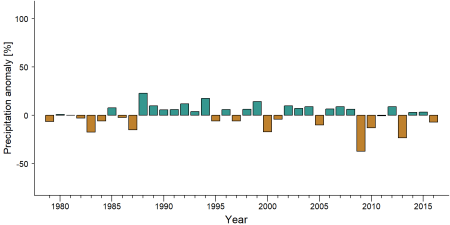
Precipitation anomaly in Mount Otzi Forest Reserve -
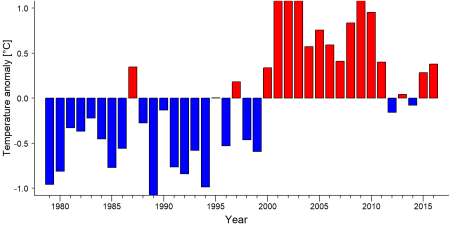
Temperature anomaly in Mount Otzi Forest Reserve


External links
References
BirdLife International. (2024). Important Bird Area factsheet: Mount Otzi Forest Reserve (Uganda). Retrieved November 25, 2024, from https://datazone.birdlife.org/site/factsheet/mount-otzi-forest-reserve-iba-uganda
Butynski, T. M., & de Jong, Y. A. (2017). Biogeography, taxonomy, abundance, and conservation status of the primates of northeast Uganda and west Kenya. Unpublished report to National Geographic Society, Washington, DC. http://www.wildsolutions.nl
Byaruhanga, A., Kasoma, P., & Pomeroy, D. (2001). Important Bird Areas in Africa and associated islands—Uganda. In Fishpool, L. D., & Evans, M. I. (Eds.), Important Bird Areas in Africa and associated islands: Priority sites for conservation (pp. 975–1003), Cambridge: BirdLife International.
Castren, T. (2023). Uganda–Investment in Forests and Protected Areas for Climate-Smart Development Project.
Key Biodiversity Areas Partnership. (2024). Key Biodiversity Areas factsheet: Mount Otzi Forest Reserve. Retrieved November 25, 2024, from https://www.keybiodiversityareas.org/site/factsheet/7063
Masters, E. (2008). A tree ethnobotany of the Madi sub-region, northern Uganda.
Ministry of Water and Environment (MWE) (2021). Investment in Forests and Protected Areas for Climate-Smart Development Project. Kampala, Uganda: Ministry of Water and Environment.
National Forest Authority. (2023). Getting to know Uganda’s diverse forests. https://www.nfa.org.ug/
USAID. (2015). Uganda environmental threats and opportunities assessment (ETOA).
Plumptre, A. J., Cox, D., & Mugume, S. (2003). The status of chimpanzees in Uganda. Albertine Rift Technical Report Series No. 2. Wildlife Conservation Society, New York. link
Page created by: Steven Joel Basiibye Date: 2024-11-25 20:14:00