
Kasokwa-Kityedo Forest Project
East Africa > Uganda > Kasokwa-Kityedo Forest Project
Français | Português | Español | Bahasa Indonesia | Melayu
Summary
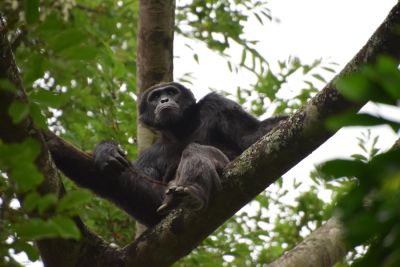
- Eastern chimpanzees (Pan troglodytes schweinfurthii) are present in the Kasokwa-Kityedo Forest Project.
- Approximately 25 to 30 individuals occur in the Kasokwa-Kityedo forest fragments.
- The chimpanzee population trend is stable.
- The site has a total size of 1.8 km².
- Key threats to chimpanzees are human encroachment, and hunting snares and traps intended for other animals.
- Conservation activities have focused on education and raising awareness; the presence of a research project also provides some protection.
Site characteristics
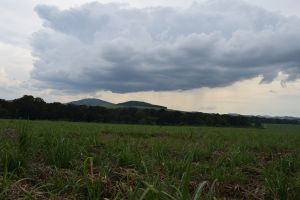
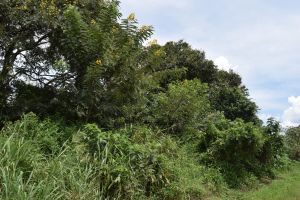
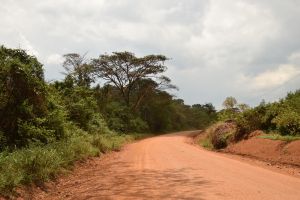
This site is part of a series of forest fragments that historically would have been connected to the greater Budongo Forest. Two main fragments are the focus of the project. Kasokwa Central Forest Reserve is a tiny riverine forest located along the road from Masindi toward Budongo Forest. The Kityedo forest area is located entirely within the property of Kinyara Sugarworks.
Table 1. Basic site information for Kasokwa-Kityedo Forest Project
| Species | Pan troglodytes schweinfurthii |
| Area | 1.8 km² |
| Coordinates | Lat: 1.615965 , Lon: 31.628337 |
| Type of site | Non-protected area |
| Habitat types | Subtropical/tropical dry forest, Agricultural land |
| Type of governance | Private governance |
Types of sites Governance types Habitat types
-
© Janette Wallis -
© Janette Wallis -
© Janette Wallis


Ape status
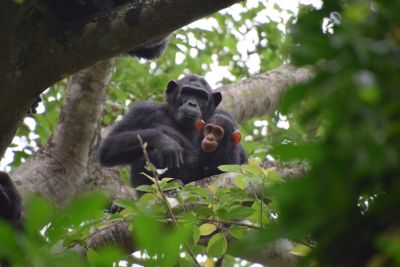
No formal survey has been done. The area is small; chimpanzees in the area are known. The focus was originally limited to the small Kasokwa forest that had only 12 chimpanzees. The initial goal was just to protect them by keeping a human/research presence and build trust with local communities. The inhabitants of Kasokwa Forest adopted a trend of moving between their original forest and the Kityedo Forest (Wallis pers. comm 2020). Some of the original inhabitants have not been seen for a couple of years, so they may have moved even further into another fragment. The population estimate of the study group was approximately 26 to 30 in 2020 (Wallis pers. comm. 2020). Over time, the chimpanzee community has re-located to Kityedo forest and joined a group of five females already living there. Recently, three additional females (apparently from a fragment further to the south) have joined the community. With all the new females - and resulting offspring - there is a community of 32 chimpanzees (Wallis pers. comm. 2024).
Table 2. Ape population estimates reported for Kasokwa-Kityedo Forest Project
| Species | Year | Occurrence | Encounter or vistation rate (nests/km; ind/day) | Density estimate [ind./ km²] (95% CI) | Abundance estimate (95% CI) | Survey area | Sampling method | Analytical framework | Source | Comments | A.P.E.S. database ID |
|---|---|---|---|---|---|---|---|---|---|---|---|
| Pan troglodytes schweinfurthii | 2024 | 32.0 | Kityedo forest | Full count | Wallis pers. comm. 2024 | ||||||
| Pan troglodytes schweinfurthii | 2020 | 26-30 | Kasokwa and Kityedo forests | Full count | Wallis pers. comm. 2020 |
Sampling methods Analytical frameworks
-
© Janette Wallis -
© Janette Wallis


Threats
The most important ongoing threat is the setting of snares by local hunters and encroachment on the forest by local people occasionally cutting trees.
Table 3. Threats to apes reported for Kasokwa-Kityedo Forest Project
| Category | Specific threats | Threat level | Description | Year of threat |
|---|---|---|---|---|
| 2 Agriculture & aquaculture | 2.1 Annual & perennial non-timber crops | Low (up to 30% of population affected) | Kityedo forest lies within the property of a sugar plantation. It is a low threat as this area is not flat enough to include in the sugar planting - and local people use it for firewood collection (Wallis pers. obs. 2020, 2024). | 2020-Ongoing (2024) |
| 4 Transportation & service corridors | 4.1 Roads & railroads | Medium (30-70% of population affected) | Road running along the north of Kasokwa Forest is occasionally crossed by the chimpanzees visiting crops (Wallis pers. obs. 2020). Chimpanzeed have moved from Kasokwa to Kityedo. Mostly no chimps in this area now (Wallis pers. obs. 2024). | 2020-Ongoing (2024) |
| 5 Biological resource use | 5.1 Hunting & collecting terrestrial animals | Medium (30-70% of population affected) | Unintentional effects. I.e., people do not hunt chimpanzees, but chimpanzees risk being accidentally ensnared in snares and traps set for other animals (Wallis pers. obs. 2020, 2024). | 2020-Ongoing (2024) |
| 5 Biological resource use | 5.1.5 Persecution/human wildlife conflict | Low (up to 30% of population affected) | Sugar plantation and local small-holder farmers growing sugar (and other crops) result in "raiding" and occasional conflict (Wallis pers. obs. 2020, 2024). | 2020-Ongoing (2024) |
| 5 Biological resource use | 5.3 Logging & wood harvesting | Low (up to 30% of population affected) | Collection of firewood (Wallis pers. obs. 2020, 2024). | 2020-Ongoing (2024) |
| 6 Human intrusions & disturbance | 6.3 Other human disturbances | Low (up to 30% of population affected) | Local people use the forest areas, so there is some potential for pollution of water or other disturbance of the habitat (Wallis pers. comm. 2020). | Ongoing (2020) |
Conservation activities
The presence of a research project in the area provides some level of protection for the chimpanzees. Occasionally, sessions for education are organized, but more often the education and information sharing is informal (Wallis pers. comm. 2020).
Table 4. Conservation activities reported for Kasokwa-Kityedo Forest Project
| Category | Specific activity | Description | Implementing organization(s) | Year of activity |
|---|---|---|---|---|
| 2 Counter-wildlife crime | 2.6 Regularly de-activate/remove ground snares | Field staff are always on alert for snares as they patrol the forest. They remove these and report them (Wallis pers. comm. 2020). | Kasokwa-Kityedo Forest Project | Ongoing (2020) |
| 3 Species health | 3.1 Wear face-masks to avoid transmission of viral and bacterial diseases to primates | Done during COVID, but not on a regular basis (Wallis pers. comm. 2024). | Kasokwa-Kityedo Forest Project | 2020-2021 |
| 3 Species health | 3.2 Keep safety distance to habituated apes | Field staff stay a safe distance from the chimps at all times. Data collection is on general behavioral ecology, not requiring close presence (Wallis pers. comm. 2020, 2024). | Kasokwa-Kityedo Forest Project | 2000-Ongoing (2024) |
| 4 Education & awareness | 4.1 Educate local communities about apes and sustainable use | We have a good relationship with local communities, providing informal and formal (in schools) education about various conservation issues (Wallis pers. comm. 2020). | Kasokwa-Kityedo Forest Project | 2006-Ongoing (2020) |
| 4 Education & awareness | 4.2 Involve local community in ape research and conservation management | Field staff are local residents and work with local communities (Wallis pers. comm. 2020, 2024). | Kasokwa-Kityedo Forest Project | 2000-Ongoing (2024) |
| 8 Permanent presence | 8.1 Run research project and ensure permanent human presence at site | Kasokwa-Kityedo Forest Project | Ongoing (2020) |
Challenges
As with other sites, money is always a problem. Better funding would allow us to expand our educational efforts and develop some local initiatives to general income and improve community standards (Wallis pers. comm. 2020).
Table 5. Challenges reported for Kasokwa-Kityedo Forest Project
| Challenges | Specific challenges | Source | Year(s) |
|---|---|---|---|
| 2 Resources and capacity | 2.3 General lack of funding | Wallis pers. comm. 2020, 2024 | 2020-Ongoing (2024) |
Enablers
Table 6. Enablers reported for Kasokwa-Kityedo Forest Project
| Enablers | Specific enablers | Source | Year(s) |
|---|---|---|---|
| 3 Engaged community | 3.6 Local community engagement and support | Wallis pers. obs. 2024 | Ongoing (2024) |
| 1 Site management | |||
| 2 Resources and capacity | |||
| 4 Institutional support | |||
| 5 Ecological context | |||
| 6 Safety and stability |
Research activities
Research activities are conducted by the Kasokwa-Kityedo Forest Project. General information is collected on the movement, diet, and social interactions of the chimpanzees to compare these to other sites (Wallis pers. obs. 2020). The field staff live in local villages, and the director visits at least annually. Daily follows and observations, supplemented by a system of camera traps (Wallis pers. obs. 2024).
Documented behaviours
Table 7. Behaviours documented for Kasokwa-Kityedo Forest Project
| Category | Behavior | Observation type | Prevalence | Observation dates | Source | Habituation | Species | Comment |
|---|---|---|---|---|---|---|---|---|
| honey extraction with tool | Wallis pers. obs. (2024) | |||||||
| leaf sponge | Wallis pers. obs. (2024) |
Exposure to climate change impacts
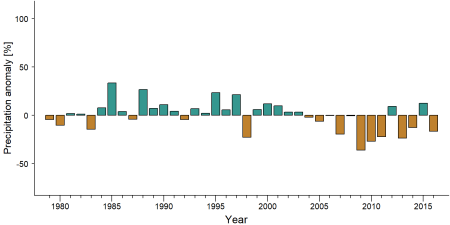
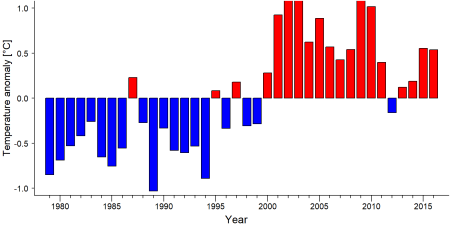
As part of a study on the exposure of African great ape sites to climate change impacts, Kiribou et al. (2024) extracted climate data and data on projected extreme climate impact events for the site. Climatological characteristics were derived from observation-based climate data provided by the Inter-Sectoral Impact Model Intercomparison Project (ISIMIP, www.isimip.org). Parameters were calculated as the average across each 30-year period. For 1981-2010, the EWEMBI dataset from ISIMIP2a was used. For the two future periods (2021-2050 and 2071-2099) ISIMIP2b climate data based on four CMIP5 global climate models were used. For future projections, two Representative Concentration Pathways (RCP) were used. RCP 2.6 is a scenario with strong mitigation measures in which global temperatures would likely rise below 2C. RCP 6.0 is a scenario with medium emissions in which global temperatures would likely rise up to 3C by 2100. For the number of days with heavy precipitation events, the 98th percentile of all precipitation days (>1mm/d) was calculated for the 1979-2013 reference period as a threshold for a heavy precipitation event. Then, for each year, the number of days above that threshold was derived. The figures on temperature and precipitation anomaly show the deviation from the mean temperature and mean precipitation for the 1979-2013 reference period.
The estimated exposure to future extreme climate impact events (crop failure, drought, river flood, wildfire, tropical cyclone, and heatwave) is based on a published dataset by Lange et al. 2020 derived from ISIMIP2b data. The same global climate models and RCPs as described above were used. Within each 30-year period, the number of years with an extreme event and the average proportion of the site affected were calculated (Kiribou et al. 2024).
Table 8. Estimated past and projected climatological characteristics in Kasokwa-Kityedo Forest Project
| Value | 1981-2010 | 2021-2050, RCP 2.6 | 2021-2050, RCP 6.0 | 2071-2099, RCP 2.6 | 2071-2099, RCP 6.0 |
|---|---|---|---|---|---|
| Annual precipitation [mm] | 1292 | 1304 | 1387 | 1229 | 1497 |
| Max no. consecutive dry days (per year) | 24.8 | 25.6 | 29.8 | 27.7 | 29.1 |
| No. days with heavy precipitation (per year) | 6.1 | 5.2 | 4.9 | 5.8 | 8.8 |
Table 9. Projected exposure of apes to extreme climate impact events in Kasokwa-Kityedo Forest Project
| Type | No. of years with event (2021-2050, RCP 2.6) | % of site exposed (2021-2050, RCP 2.6) | No. of years with event (2021-2050, RCP 6.0) | % of site exposed (2021-2050, RCP 6.0) | No. of years with event (2070-2099, RCP 2.6) | % of site exposed (2070-2099, RCP 2.6) | No. of years with event (2070-2099, RCP 6.0) | % of site exposed (2070-2099, RCP 6.0) |
|---|---|---|---|---|---|---|---|---|
| Crop failure | 5 | 1.04 | 4.5 | 0.06 | 5 | 0.59 | 10 | 0.22 |
| Drought | 0 | 0 | 0 | 0 | 0 | 0 | 0 | 0 |
| Heatwave | 0 | 0 | 0.5 | 50 | 0 | 0 | 1 | 100 |
| River flood | 2.75 | 0.65 | 6.5 | 0.9 | 1.5 | 0.32 | 8.25 | 1.28 |
| Tropical cyclone | 0 | 0 | 0 | 0 | 0 | 0 | 0 | 0 |
| Wildfire | 30 | 1.58 | 30 | 1.61 | 29 | 1.23 | 29 | 1.26 |
-
Precipitation anomaly in Kasokwa-Kityedo Forest Project -
Temperature anomaly in Kasokwa-Kityedo Forest Project


External links
References
Kiribou, R., Tehoda, P., Chukwu, O., Bempah, G., Kühl, H. S., Ferreira, J., …, & Heinicke, S. (2024). Exposure of African ape sites to climate change impacts. PLOS Climate, 3(2), 1-19. doi:10.1371/journal.pclm.0000345
Page created by: Janette Wallis Date: 2020-11-12
Page updated by: Janette Wallis Date: 2024-12-28